
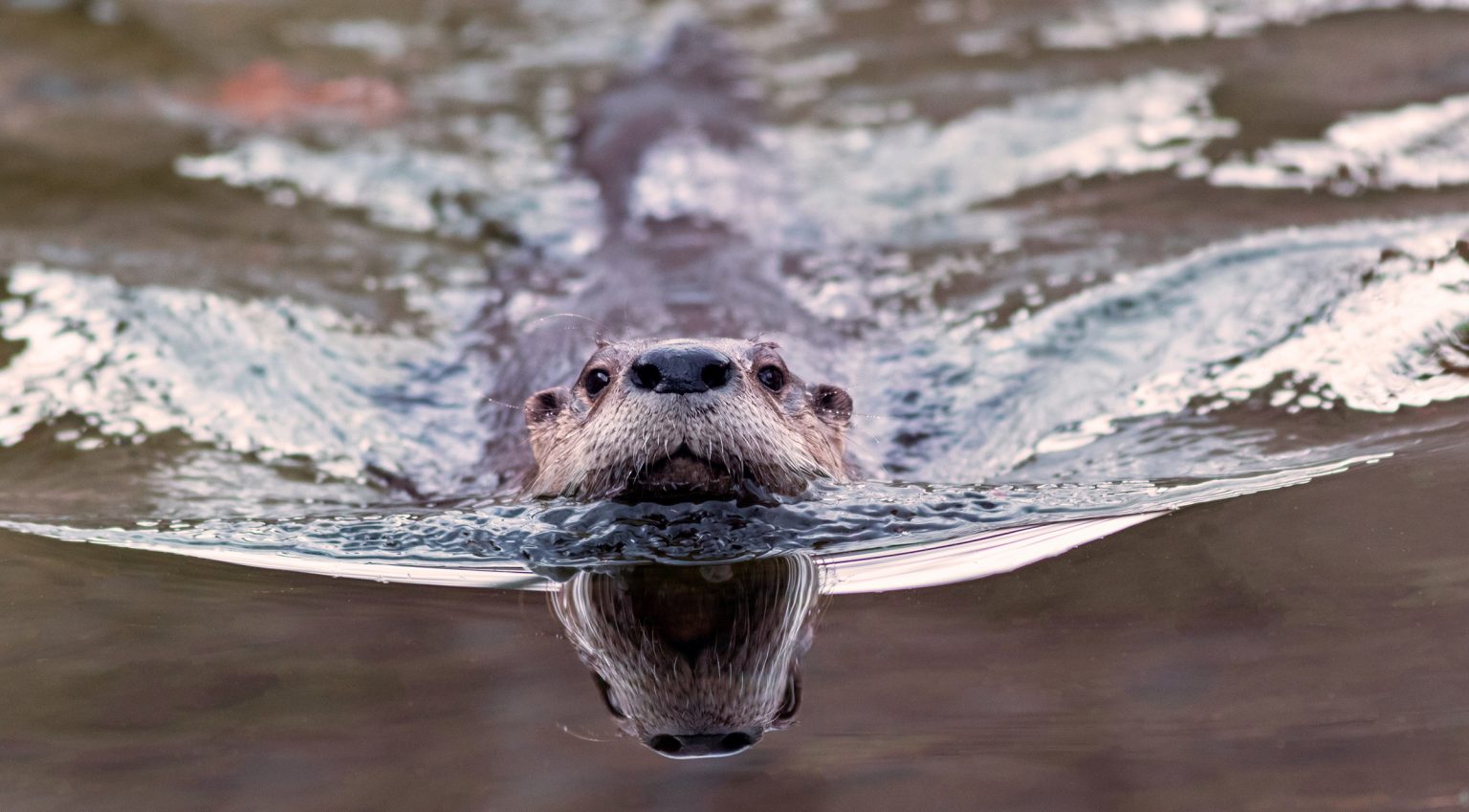
A Little Help From Some Friends? River Otter Diet in Makah Bay and What It Means for European Green Crab
Guest contributor Bobbie Buzzell conducted her Master’s research at Western Washington University looking at river otter diets in Makah Bay. She currently works as a green crab biologist for Lummi Natural Resources where she has been trapping green crab since 2021.
Food webs offer a visual understanding “who eats who” in the natural world. Interconnectedness of food webs can be lost with the loss or gain of even a single species, and sometimes, these changes can cause ecosystem collapse.
Arguably one of the most famous food web connections, discovered in the 1970s, was the role of sea otters (Enhydra lutris) in nearshore communities along the coast of California. Scientists found that sea urchins heavily feasted on kelp beds, turning once lush kelp forests into biodiversity deserts. Sea otters are a major predator of sea urchins and so, have a heavy influence on limiting sea urchin populations, but had been hunted out of most of their historic range in the northeast Pacific Ocean. In areas where sea otters were able to re-establish along the California coast, sea urchin numbers dropped which in turn reduced grazing on kelp forests, allowing them to flourish once again and invite back a host of life. In this example, reintroducing sea otters back into a food web helped to stabilize the ecosystem. But adding species can create imbalances too, particularly when, like invasive green crab, the species is evolutionarily unfamiliar to the web.
Green Crabs as Ecological Disruptors
Because of the impacts they have had elsewhere in the world, resource managers and scientists often draw awareness towards the species that green crabs might eat; and rightfully so—there is a lot of concern that green crabs will consume native crabs, juvenile clams and oysters, and alter tidal landscapes.
But on the opposite side of the food web, it’s also fair to ask: who might eat green crab?
Research on green crab from their native range in Europe and along established regions on the US East Coast tells us that green crabs in other parts of the world are heavily preyed on by a variety of creatures, including various species of fish, shore birds and mammals. Green crabs can also be their own worst enemy and can be heavily cannibalistic, which has shown to provide some level of population control in certain specific conditions.
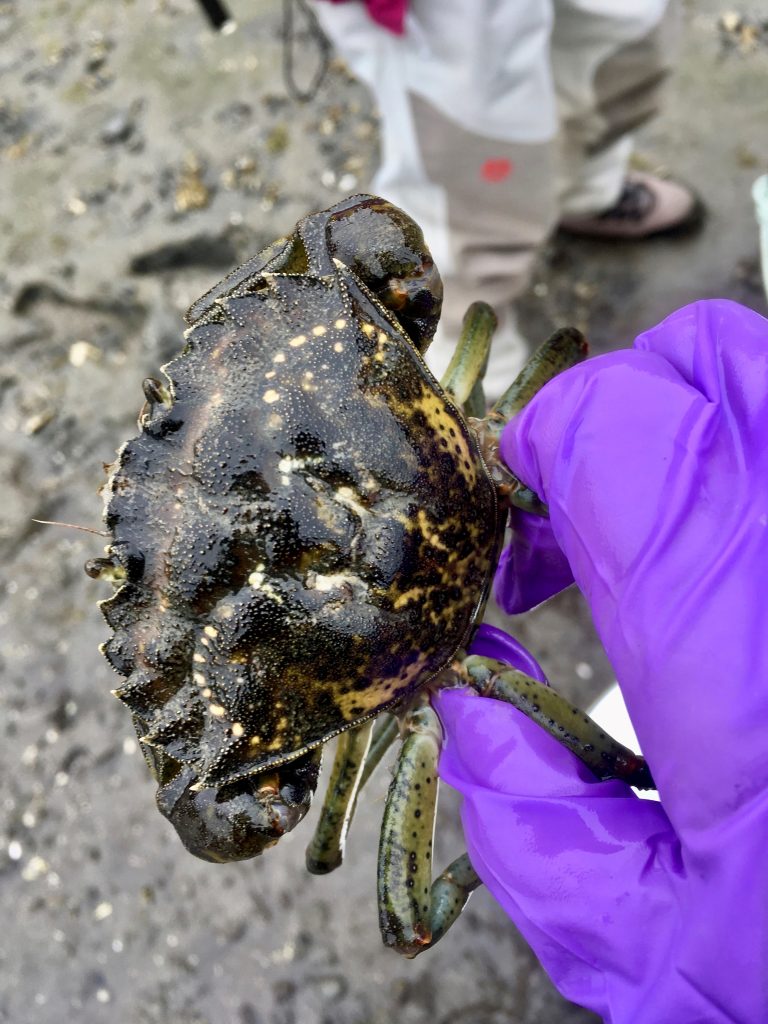
European green crab captured by Makah Fisheries. Could this evolutionarily novel crab be food for someone? Photo courtesy of Bobbie Buzzell
As one might imagine, the green crab food web is quite intricate when incorporating both prey and potential predators, but documenting this dynamic is essential for predicting how green crab will integrate into new habitats and influence systems where they have already established. In the best-case scenario, local predators taking a fancy to green crab could offer passive and “natural” population control. While local predators will likely not eradicate green crab, they could help limit habitat use and abundance of green crabs.
Who are the best candidates for green crab predators? Some of the large native cancrid crabs, like red rock crabs, have been shown to kill (and eat?) green crabs – at least in the confines of laboratory experiments (read more in this issues Creature Feature). Some fish species like sculpins can be important predators of juvenile native crabs, and so they also might eat young green crabs.
So far, there are a few documented observations of possible predation on green crab in Puget Sound. In 2017, Crab Team monitors with the Padilla Bay NERR discovered a dismantled green crab along the bank of Big Indian Slough along with some mammal tracks believed to be either raccoon or river otter. In 2019, members of the public witnessed two separate instances of gulls eating green crabs in Whatcom County.
River Otters: Green Crab Predators?
While trapping along the Wa’atch River in the summer of 2018, green crab trappers with the Makah Tribe stumbled upon an odorous river otter (not to be confused with sea otters which are a different species) latrine—latrines are where river otters mark and defecate as a way of communicating among groups or individual river otters. Based on where the latrine had been found, it was clear river otters were foraging in areas where green crab were being captured. Could river otters be eating green crab?
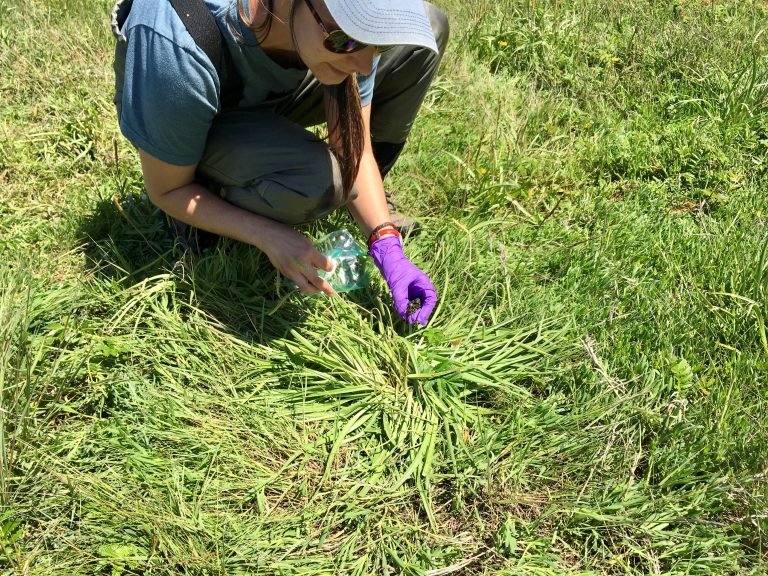
Bobbie Buzzell collects river otter scat samples as part of her master’s research at Western Washington University to determine what otters are eating, and whether they might prey on green crabs.
Between 2018 and 2019, I was part of a team with the Makah Fisheries department, and we collected more than 700 scats at latrines from banks along the Wa’atch River and Tsoo-Yess River estuaries. Identifying physical remains from scat is not a simple task. By the time prey passes through the digestive tract, it is a jumbled mess of fragments and pieces, but with careful attention to detail and some investigative science, a comprehensive snapshot of diet can be reconstructed. Among all the river otter scats sieved through, 11 of 453 scats collected along the Wa’atch estuary contained remnants of green crab, and none of the 269 scats collected from the Tsoo-Yess latrines contained evidence of green crab. Young Dungeness crabs were the most commonly eaten crustacean, followed by crayfish. Because fish tend to comprise a large portion of river otter diet in marine habitats, it was not surprising that green crab consumption was low. However, it was a surprise scats did not contain any green crab on the Tsoo-Yess, where abundances of green crab have been typically higher than in the Wa’atch. We also looked at numbers of Dungeness crabs that were incidentally trapped with green crab—young Dungeness crabs were overall a lot more numerous than adult green crabs in both rivers.
River otter diet often reflects prey that are most abundant and easy to catch in their environment. In freshwater habitats, river otters consume a variety of smaller fishes like sculpins, and hard-shelled creatures such as crayfish. In marine and estuarine areas, their diet becomes a bit more complex with a higher diversity of prey—in our study alone there were more than 30 prey families recorded! Some of the rarer prey species might turn up in their diet by sheer luck while actively searching for food; for example, a washed-up carcass, or fish stuck in the intertidal after the tide recedes.
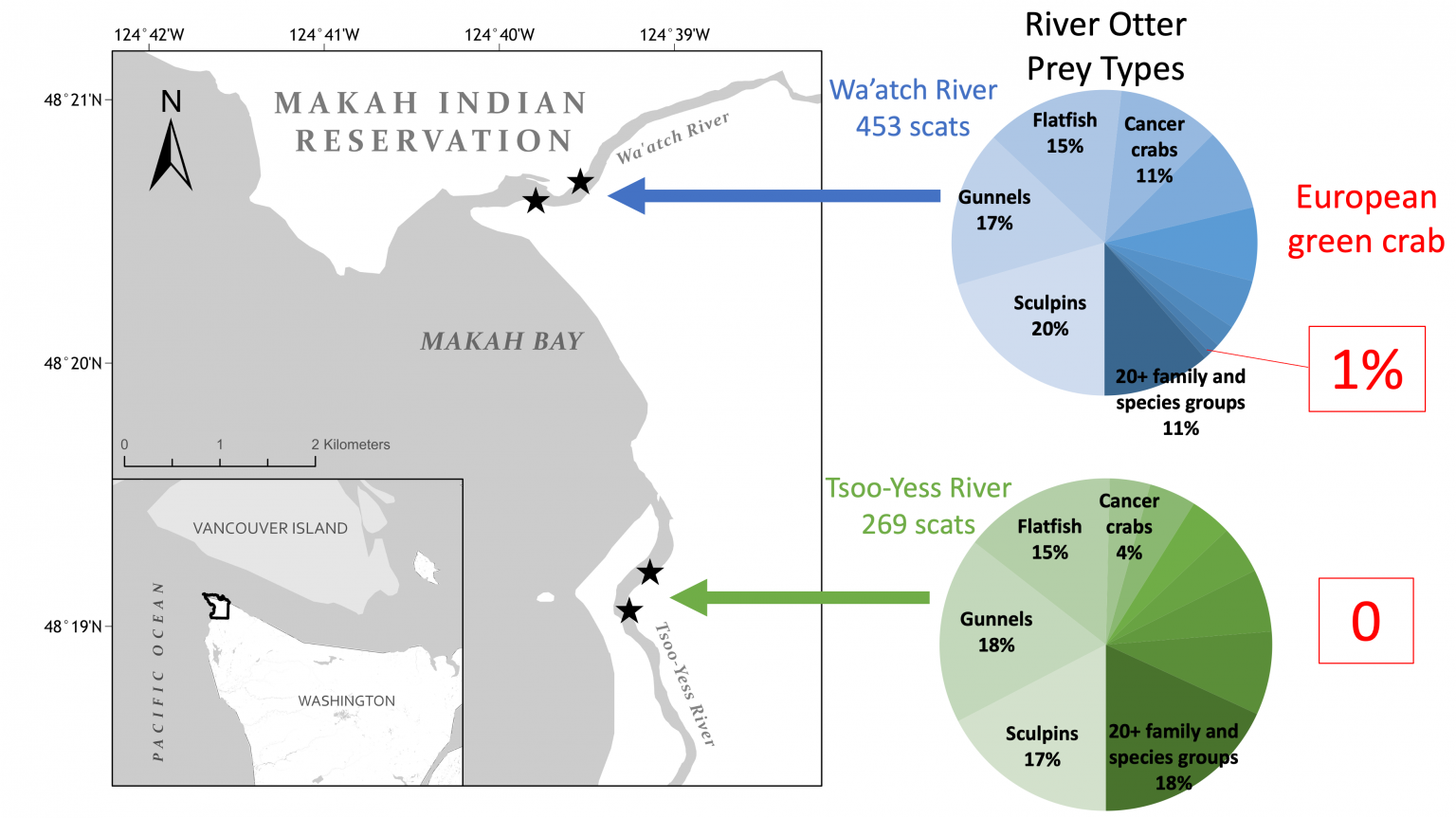
Map of the top items in the river otter diet in Makah Bay. Data from Buzzell et al. 2023
If you have ever handled a green crab, you know they can be quite feisty, and river otters might think so too. Green crabs are also adept hiders, either burrowing into the mud or taking refuge in eelgrass or other vegetation. Either scenario might make green crabs less preferred or findable than Dungeness crab or a large batch of schooling fish.
It felt anti-climactic that river otters were not eating as many green crab as we had hoped—such a relationship might have indicated more predatory forces were at work than we were aware of. But one thing was clear—river otters at Makah are recognizing green crab as a bite to eat and the concept of river otters acting as a natural mitigator of green crab is not off the table. While river otters are unlikely to eradicate green crab, they could help keep numbers in check if green crab populations reach higher densities, but follow-up is needed. This study provided a baseline of river otter diet during the early stages of green crab invasion in Makah Bay. Since the completion of this study, a new project is underway to hopefully reveal if river otters are eating more green crabs following a significant population increase there. No doubt the increase is concerning, but when there is more crab, there is more to eat.
-Bobbie Buzzell
You can access the full thesis here or the published note with Fishery Bulletin here.
Citation: Buzzell. B.M., A.M. Akmajian, A. Acevedo-Gutierrez. (2023) Exploring the biotic resistance of the invasive green crab (Carcinus maenas) by examining the diet of North American river otters (Lontra canadensis). Fishery Bulletin. 121 (1-2): 30-35. DOI: 10.7755/FB.121.1-2.3.