
On this page you’ll find the tools of the Molt Search trade, including guides, learning resources and frequently asked questions about participating.
Tools
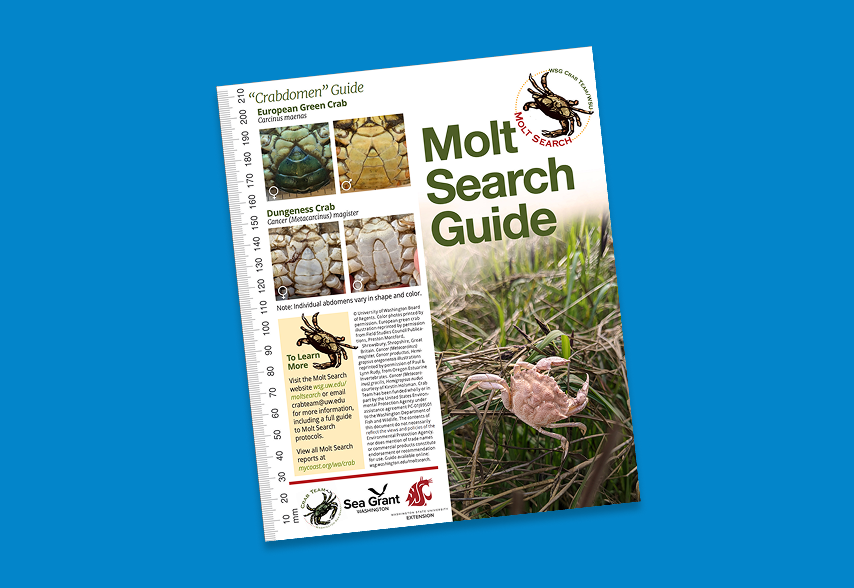
Molt Search Guide
This PDF provides images and brief descriptions for the most common crab molts found in Washington. It also provides a quick-start guide to the Molt Search protocol.
The MyCoast App
MyCoast is where you will submit your survey findings. You can submit a report through the MyCoast website, or by downloading the app for Apple or Android.
Identification Resources
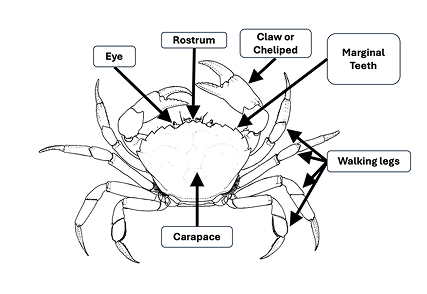
Identifying European Green Crab
This resource summarizes the distinctive features of European green crab and links to additional identification resources.
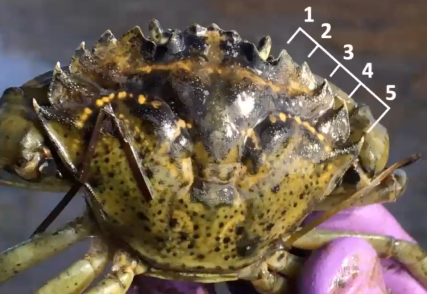
Green Crab Identification Tutorial
This video tutorial by Marine Ecologist Emily Grason provides a concise overview of how to identify European green crab.
Flashcard Resources
Need help distinguishing similar crabs? These decks of flashcards are designed to help you distinguish among common crab species.
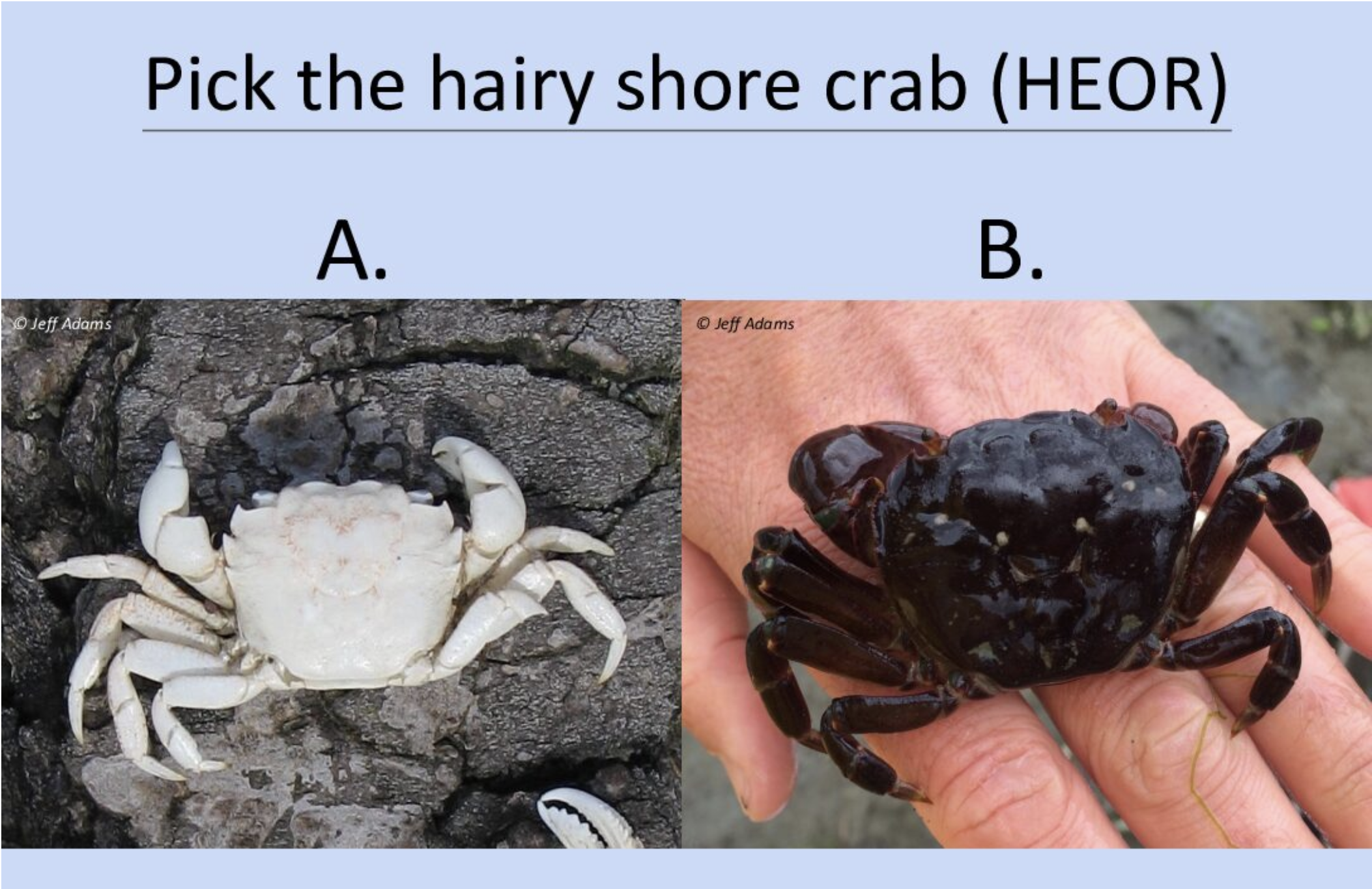
Similar shore crabs: hairy shore crab vs. purple shore crab
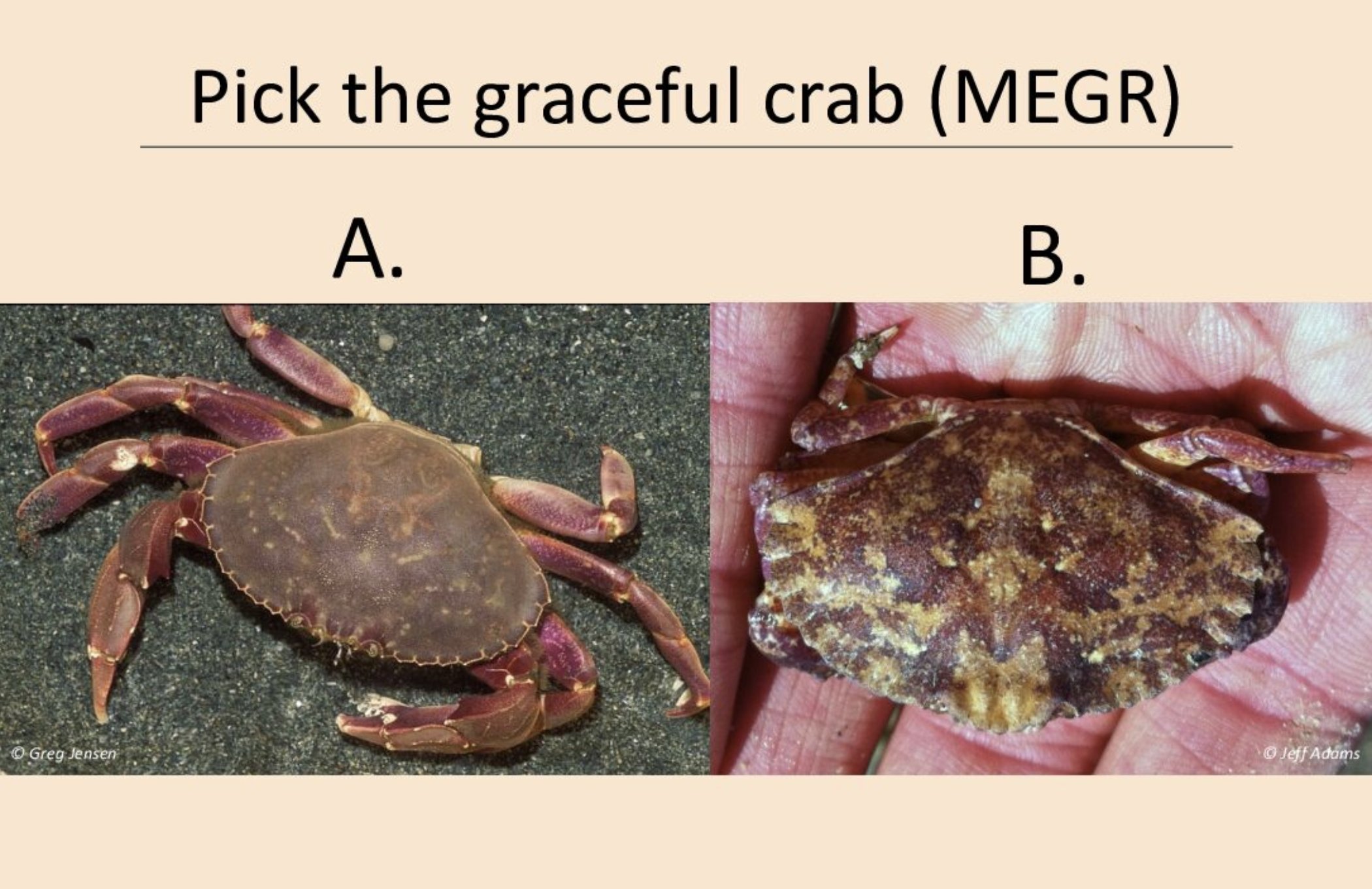
Comparing Cancrids: Dungeness vs. Graceful vs. Red Rock crabs
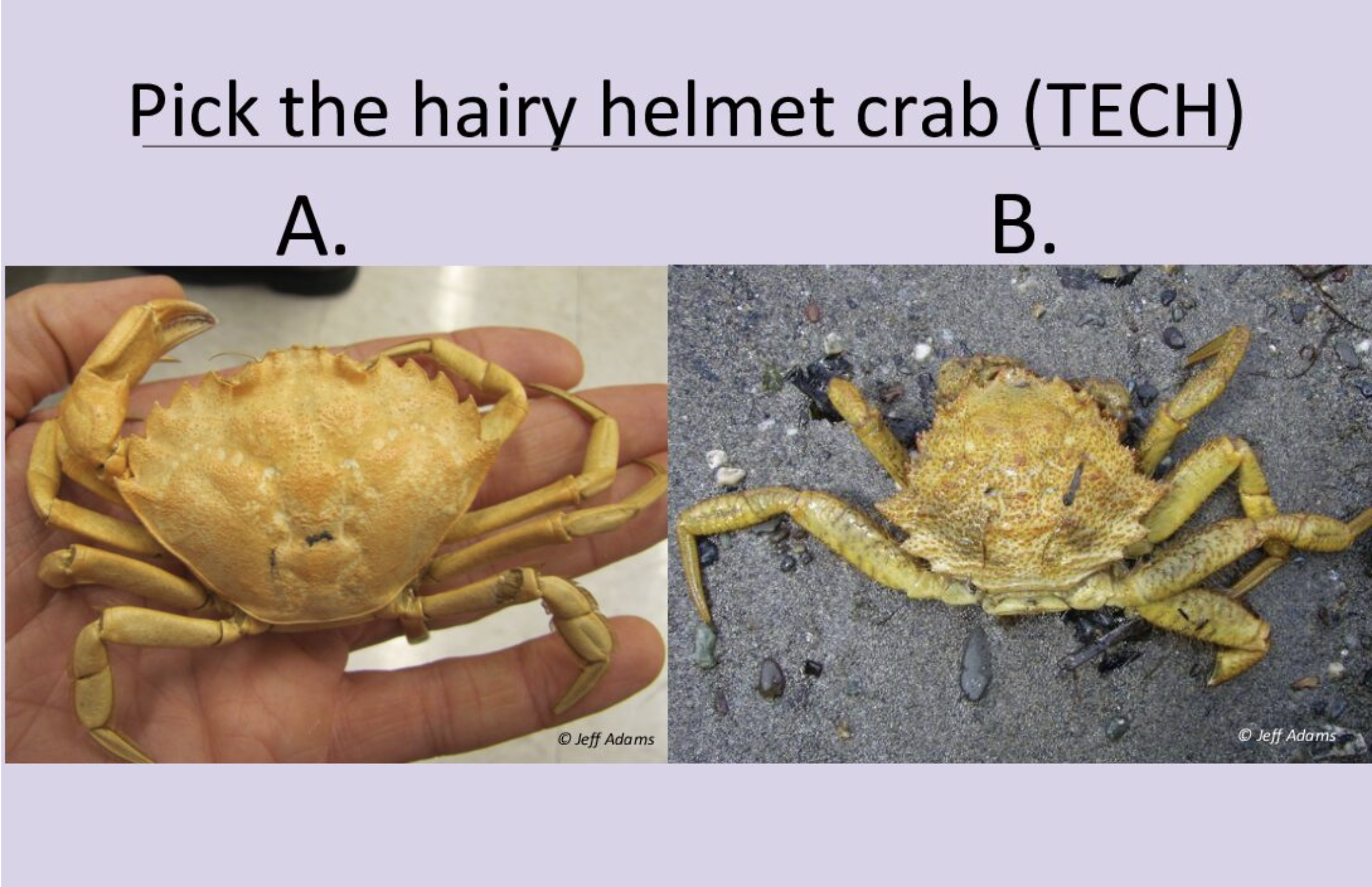
Rare finds: native hairy helmet &. spider crabs vs. invasive green crabs
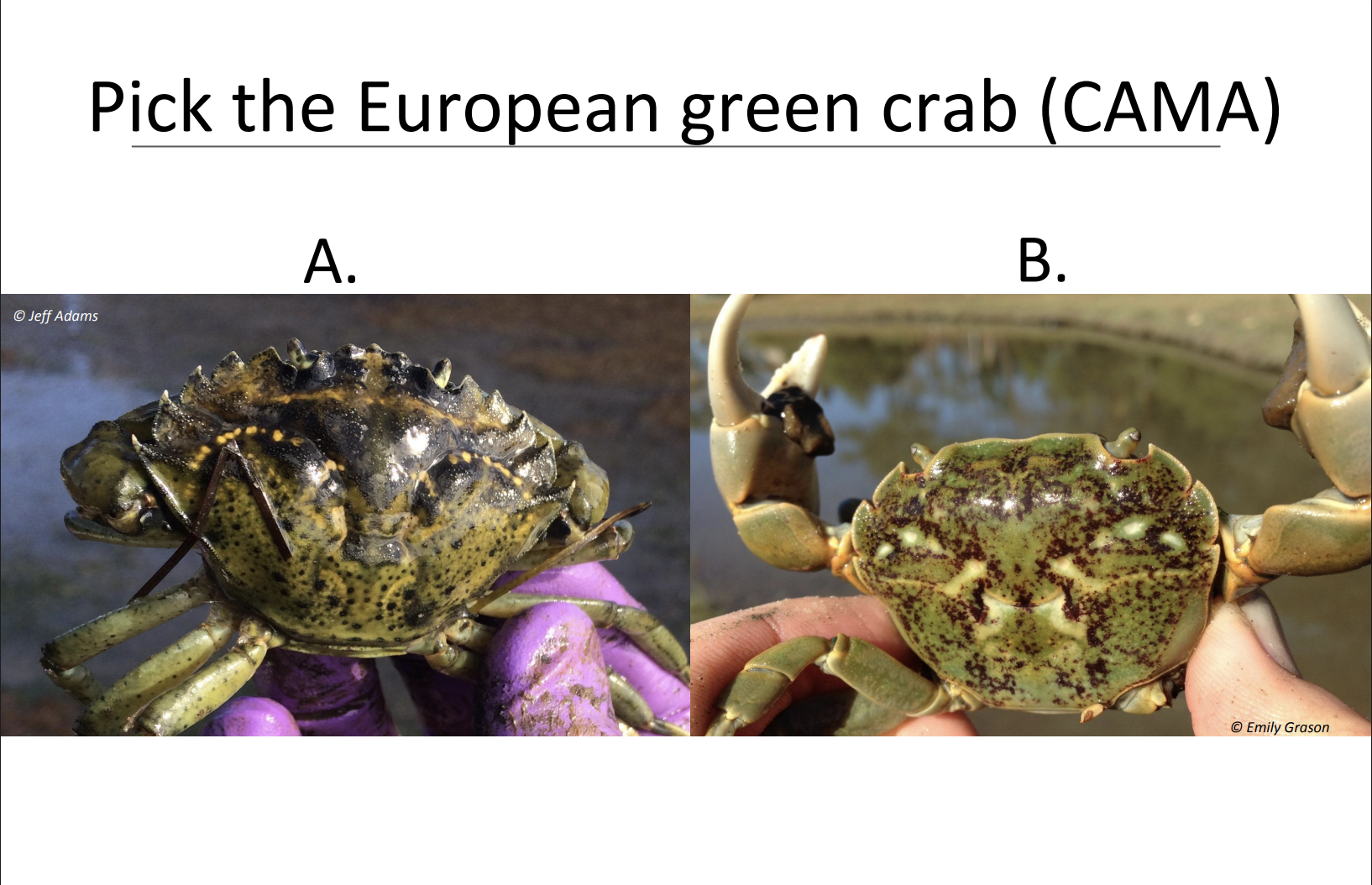
Find the invader: invasive green crabs vs native crabs
Frequently Asked Questions
Where should I do a survey?
This program is designed to get more eyes on more shorelines to help managers detect new populations of green crab. For this reason, your surveys are most valuable on shorelines of Washington’s Salish Sea. Surveys from shorelines along Washington’s pacific coast may also help us compare known populations of green crab with molt patterns on shore. Molt Searches can be done on any shoreline where you have safe, legal access. Be aware of local collection and access regulations. Take a look at the map of where previous Molt Searches have been submitted. The more coverage, the better!
Note: Molt Searches are welcome on Washington State Park shorelines, too! Scientific Research Permit #230603 covers these activities.
When should I do surveys?
Surveys are welcomed from any time of day or year. Because molts are a result of crabs outgrowing their shell, you’ll likely find more during warmer months (May-October) when crabs are growing more quickly. You are welcome to conduct Molt Searches as frequently or seldom as you’d like. A monthly survey from a shoreline near you would be a great contribution to the dataset!
Can my friends join me on a Molt Search?
Yes! Molt Searches can be done in teams of up to 4 people, and only one of those must be trained. To help us maintain our data integrity, anyone who hasn’t yet attended a volunteer monitoring workshop should rely on a trained volunteer to direct the search and submit the group’s report via their MyCoast account. Have fun working together to gather and identify all the molts you can find!
If your friends want to do more molt searches on their own, help them find an upcoming training to learn how to submit their own data.
How do I know if I’ve found a molt or a dead crab?
It can be tricky to discern whether the shell in your hand is a molt or a dead crab. To help you get to the bottom of it, we’ve outlined four questions you can ask yourself. More details about distinguishing molts and dead crabs are outlined on our blog. That being said, because we’re interested in the presence or absence of Dungeness and green crabs, participants don’t need to worry too much about this distinction.
1. Is there any obvious trauma? Some predators will leave specific clues behind after munching on crab shells. Looking for these clues may help you distinguish between a molt or a dead crab that met an unfortunate demise.
2. How heavy is it? Molts are typically much lighter than dead crabs with tissue still in-tact.
3. Does it open? Because molting crabs essentially climb out the back of their shells, the shell of a molt should easily open on a hinge (much like a jewelry box). If it’s hard to open, it’s likely a dead crab.
4. What’s inside? Molted shells should be quite clean inside, while dead crabs may contain goo or crust of internal tissue. Remember that feathery gill tissue appears in molts too.
If you’re unsure, feel free to submit additional photos of the individual in question with your report and add any notes or observations in the Field Notes/Comments section on the last page of the MyCoast reporting form.
What if I find a species I can’t identify?
The Molt Search guide has many of the species that we think you are likely to see in your molt surveys, but it doesn’t include everything and every beach is different. It also can take some practice to feel confident in your species identifications!
If you find anything you can’t identify, make sure the molt is in your collection photo and leave us a note in the Field Notes/Comments section on the last page of the MyCoast reporting form. You can also include an additional, close-up photo of your mystery molt.
Can I edit a report after I submit it?
You can edit or delete reports from your computer via the MyCoast website. From there, log in to your MyCoast account and then use the top menu bar to navigate to “My Account” > “My Reports” to view, edit, and delete your submitted reports. If you have trouble, feel free to send us an email with any notes or amendments.
What happens to my data after I submit my survey?
Each and every report you submit gets monitored by Washington Sea Grant staff for reports for European green crab findings. Visit the MyCoast webpage to view all the reports.
All confirmed detections of European green crabs in a new water body are directly communicated to the Department of Fish and Wildlife and relevant local partners. From there, managers may initiate a follow-up trapping effort to determine the extent of the location population. Based on the outcome of that assessment, managers and scientists discuss what ongoing efforts may be appropriate for the site—ranging from continued monitoring, repeated assessments, or intensive control trapping. Learn more about how European green crabs are managed in Washington at WDFW’s European Green Crab Hub.
How can my group host a Molt Search training?
There are currently two ways your group can hold a local Molt Search training.
1. Send a representative to our annual train-the-trainers workshop, where they’ll learn how to organize a public-facing Molt Search workshop and teach these protocols in your local community. Workshops given by facilitators who attend a “train-the-trainers” are supported by Molt Search advertising and materials.
2. Host a Molt Search training at your group’s next meeting. When staffing capacity allows, a Molt Search trainer can join even private events to bring Molt Search trainings to your community.
Start a planning conversation by sending us an email.