
Crab Team was founded to detect and monitor European green crab through targeted trapping and molt surveys.
Yet from day one, Crab Team has been about more than just green crabs. Research and data from the Crab Team monitoring network has informed best practices for community science and scientific studies of other species along Washington’s shorelines.
Tracking the range of a non-native shrimp
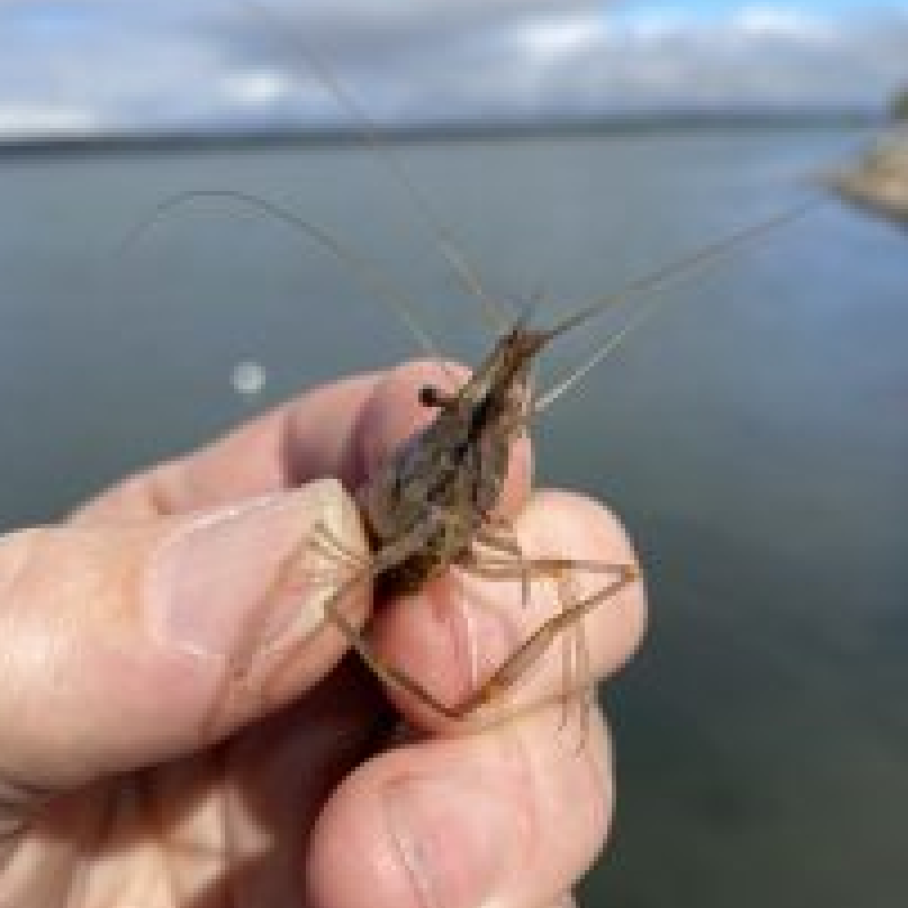
Though Crab Team was designed to target and monitor green crab, by collecting observations of all other species encountered, the monitoring network provided a unique opportunity to capture the unanticipated range expansion of a non-native shrimp species, Palaemon macrodactylus, into the Washington portion of the Salish Sea. Crab Team worked with Jessica Pineda, a student in the UW School of Aquatic and Fisheries Sciences, to carefully assess and compare shrimp to those in other parts of their invasive range worldwide.
Understanding the resilience of pocket estuaries to extreme heat
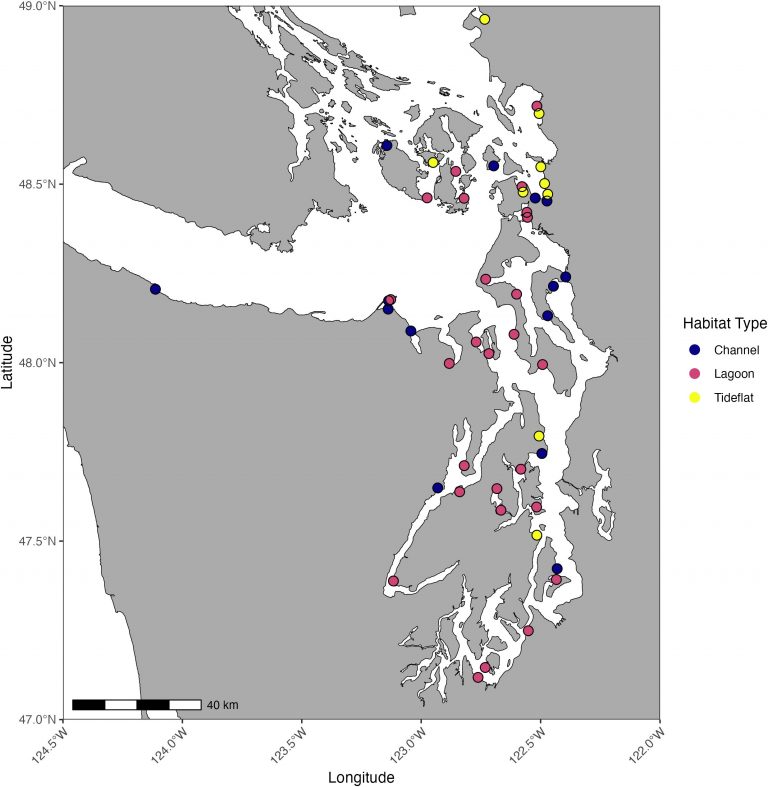
The salt marsh channels, lagoons, and tidal flats that comprise the monitoring network have overlapping species, but differences in physical features can affect their resilience to weather and other conditions. A decade of seasonal and annual data from this region helps us study the question, how much do these communities change on seasonal and annual bases, and what is their response to heat stressors?
With data collected by the Crab Team network, we compared responses to the 2021 “Heat Dome” across pocket estuaries of the Salish Sea.
Building a detection and response program
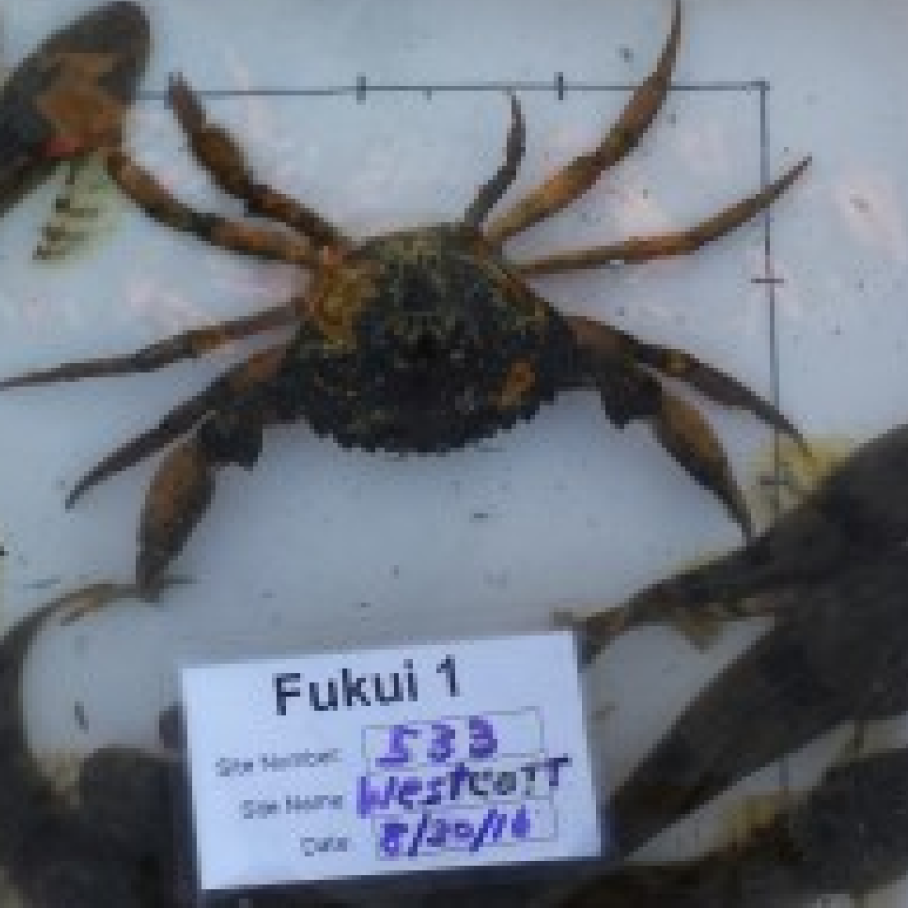
Crab Team monitors detected the first confirmed evidence of green crab along the Washington portion of the Salish Sea in 2016. In response, Crab Team scientists arrived at the site days later to trap as many green crabs as possible. This paper describes how Crab Team built this effective early detection and rapid response program, using a community science approach that connects broad interest in shoreline protection with scientific expertise.
Monitoring Network Dataset
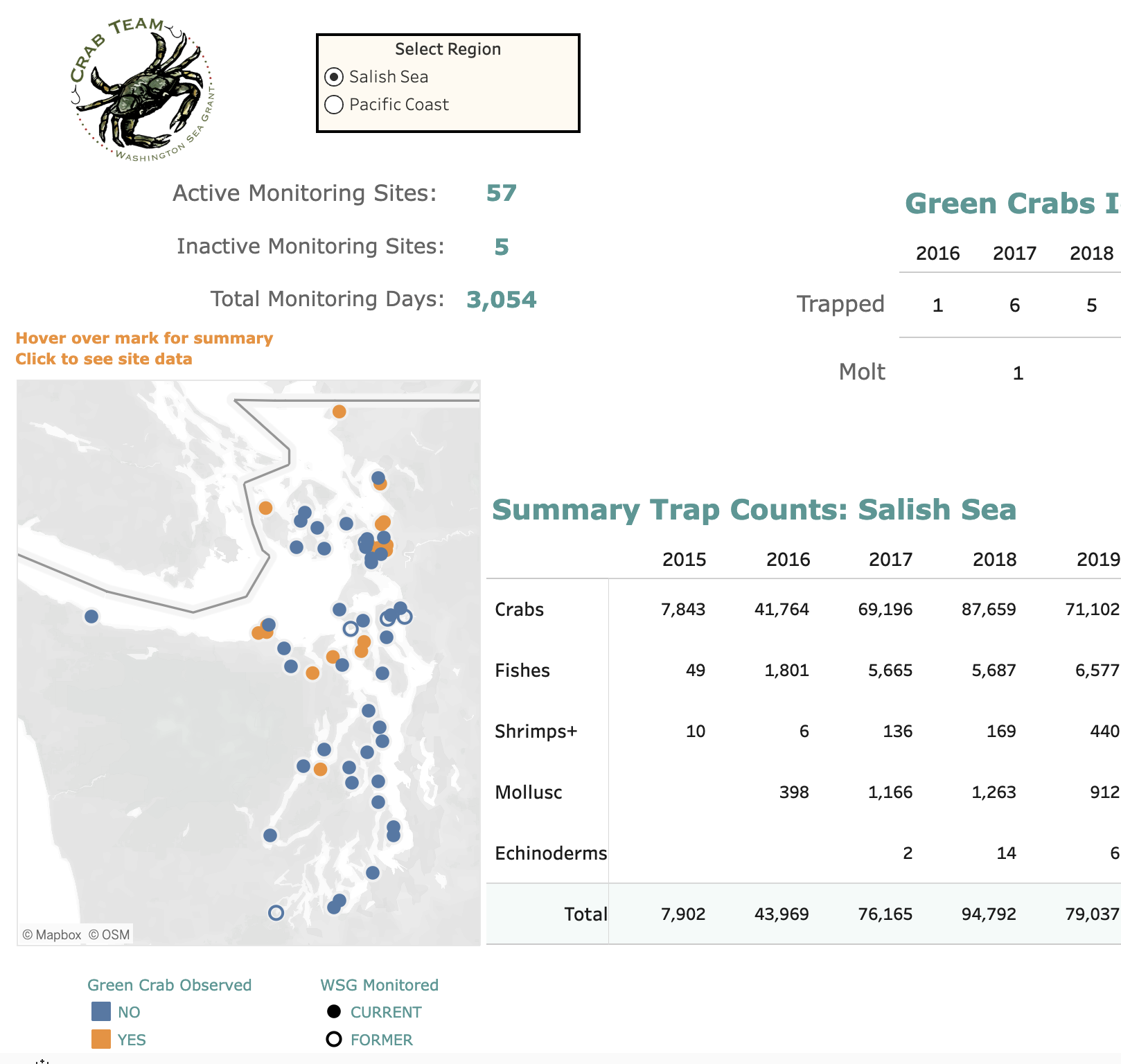
Crab Team tracks European green crab (and bycatch) through targeted trapping and molt surveys. Our dataset includes systematic and quality controlled observations from nearly 70 sites across state shorelines, some of which have been consistently monitored since 2015. A summary preview of the data is available via the dashboards in Tableau.