
Crab Team Deep Dive: Exploring the Impacts of the 2021 Heat Dome on Salish Sea Pocket Estuaries
A Deep Dive into Shallow Habitats
From day one, Crab Team has been about more than just European green crabs. In addition to conducting efficient early detection monitoring for the global invader, Crab Team is all about getting to know the locals, too – the isolated communities that inhabit pocket estuaries. In addition to being habitats likely to be most impacted by green crabs, pocket estuaries are chronically understudied compared to other iconic marine shorelines like the rocky intertidal. The salt marsh, tidal stream channels, and salty tidal lagoons that comprise pocket estuaries are often geographically small and disconnected from each other. Their isolation and scale could make them more variable and possibly vulnerable to disturbances (including green crab invasion) than larger, more continuous habitat types.
Crab Team monitors have been amassing observations and records of every non-green crab animal in traps for the last decade – and at most sites, the majority of the catch isn’t green crabs. While some might call them “bycatch,” these other local crabs, fish, shrimps, gastropods and even echinoderms (!) are just as important to the core mission of the monitoring network: to track changes in these habitats wrought by green crab AND to evaluate the health of pocket estuaries in their own right.
A new Crab Team paper aimed to do just that, and we’re pleased to share these hot-off-the-[virtual] presses findings. Former Crab Team postdoc, Ben Rubinoff, led the analysis and subsequent paper titled, “High-resolution monitoring of Salish Sea estuarine communities through participatory science” and it appears in the most recent issue of Frontiers in Marine Science.
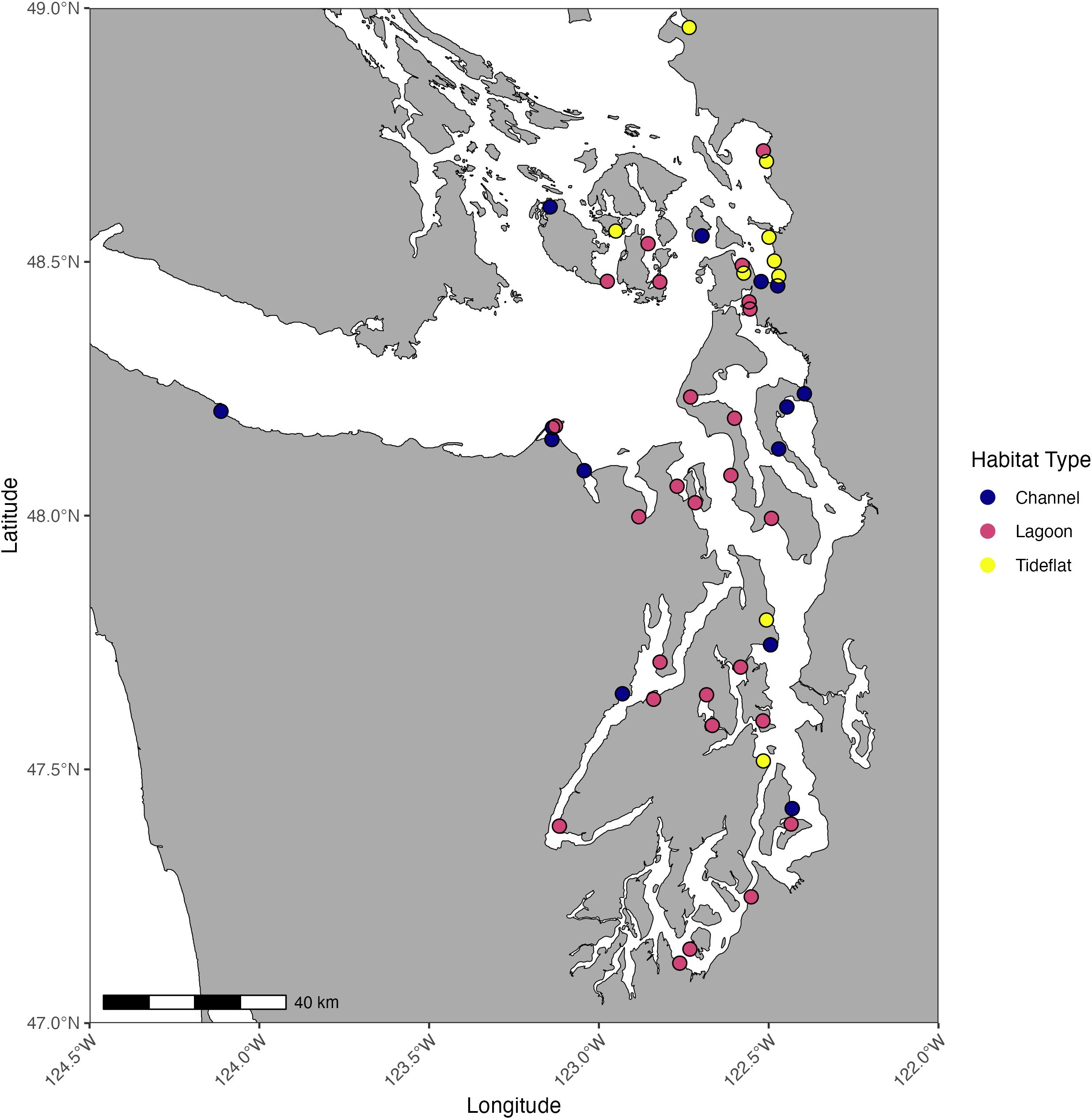
Figure 1 from Rubinoff et al. (2025) showing the Crab Team sites included in the analysis broken down by habitat type. Click to enlarge.
Getting to Know the Locals
The goal of the investigation was to explore the pocket estuary communities at Crab Team sites that remain relatively less impacted by European green crab, which are those within the Salish Sea, and ask:
- Do these ecological communities vary by the type of habitat? Do lagoons have different or a different number of animals in traps than channels or tidal flats?
- How much do these ecological communities change over time? Do we see any directional changes over the decade of sampling?
- Were these ecological communities impacted by the 2021 “Heat Dome” and, if so, did they recover? Did impacts and recovery differ depending on habitat type?
Given we expect from the outset that each individual pocket estuary likely differs from any other, we would need a very large sample of pocket estuaries to answer these questions. And given that some inherent month-to-month or year-to-year changes are also likely, in order to find any large directional or disturbance-related (e.g., caused by the 2021 Heat Dome) changes, we would also need to track these sites over a long period of time. This sounds like just the job for the Crab Team monitoring network! The Salish Sea portion of the network has 57 sites, monitored monthly since 2015 (minus a few years for some newer sites), stretching broadly over space and now more than a decade.
Live Batillaria attramentaria among eelgrass. Batillaria are more likely to be found in tide flats than channel and lagoon habitats. Click to enlarge.
Who Lives Where?
- Crab Team trapping data shows that the three habitat types have different ecological communities, a distinction driven by the consistent differences in abundance of a few key species across habitats.
-
- Purple shore crabs are most abundant in channels, while graceful crabs are more common on tideflats, and rock crabs and hairy hermits are most abundant in Lagoons.
- Of the fish, the large numbers of stickleback that can be found in lagoons compared to the other two habitats was important to driving the distinction.
- The invasive mud snail, Batillaria is on average six times more numerous in tidal flats than either of the other two habitat types.
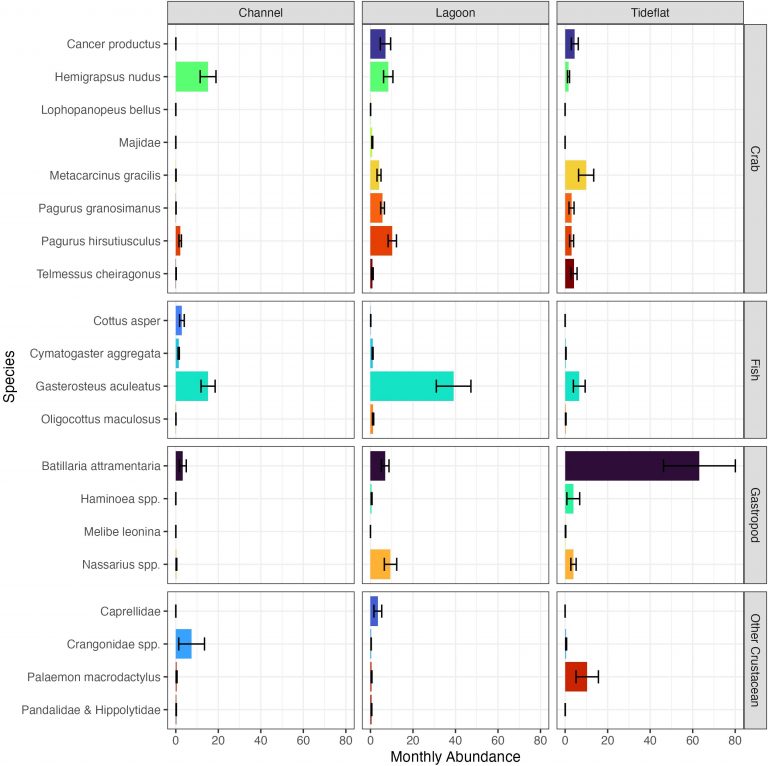
Figure 2 from Rubinoff et al. (2025) showing the monthly abundance of key species across the three different habitat types. Click to enlarge.
- Lagoons, on average, had the most organisms in traps of any of the three habitat types – an average of 315 individuals of all species combined across the six traps per monthly sample.
- The habitat type with the greatest “diversity” depended on how you define diversity, but channels were always considered the lowest diversity sites.
- On average, the greatest number of species was found in Lagoons (least in channels)
- Correcting for the relative abundance of each species, tideflats are actually more diverse than the other two habitat types. This accounts for scenarios where only a single species, let’s say hairy shore crab, just for an example, might comprise the vast majority of all individual animals in a habitat. Intuitively, even if there are more species in such a habitat, the dominance of a single species doesn’t make it feel very diverse.
- The community of animals living in these habitats is highly variable within a season, but this high level of variability is consistent over time. Estuarine communities are inherently dynamic due to the regular changes in environmental conditions – tides, inputs from terrestrial, ocean, and freshwater habitats. While this results in changing communities, and though those communities differ by habitat type, these changes and differences are consistent over time. That is to say they are consistently inconsistent!
Where Heat Meets Habitat
The atmospheric heat dome in 2021 did result in warmer water temperatures at sites where Crab Team had temperature loggers, and the heat dome’s impact on water temperature was greatest in channel sites. Channels are more susceptible to changes in air temperatures because, for a given volume of water, these linear features have a greater surface area, meaning more water in contact with the air. We might have expected animal abundance to decline significantly at Crab Team sites if the heat dome had raised water temperatures enough to cause mortalities. However, regardless of habitat type, we didn’t see that happening- we didn’t see a significant decrease in the abundance of the species that commonly appear in traps from May to July of 2021. But looking for a change from May to July in 2021 is only part of the story.
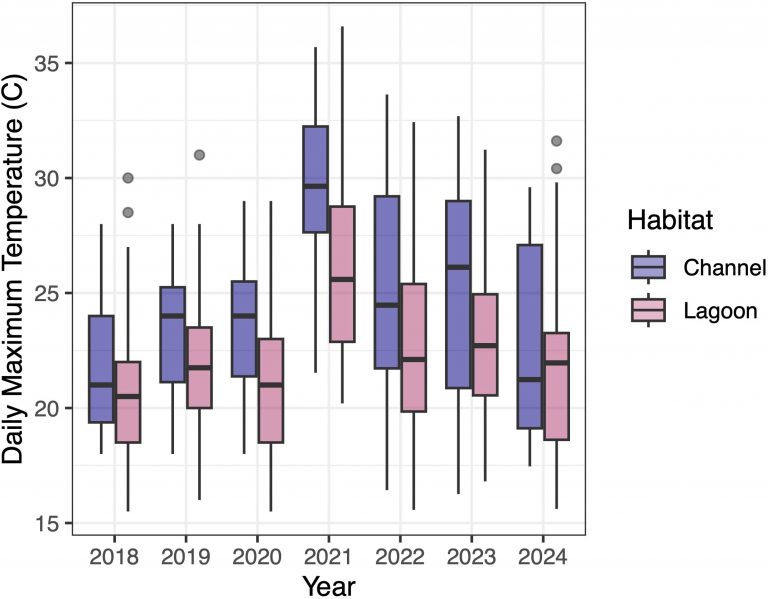
Figure 4 from Rubinoff et al. (2025) showing a box plot of the daily maximum temperature in 22 Crab Team sites (15 channel and 7 lagoon) during the 2021 heat dome. Click to enlarge
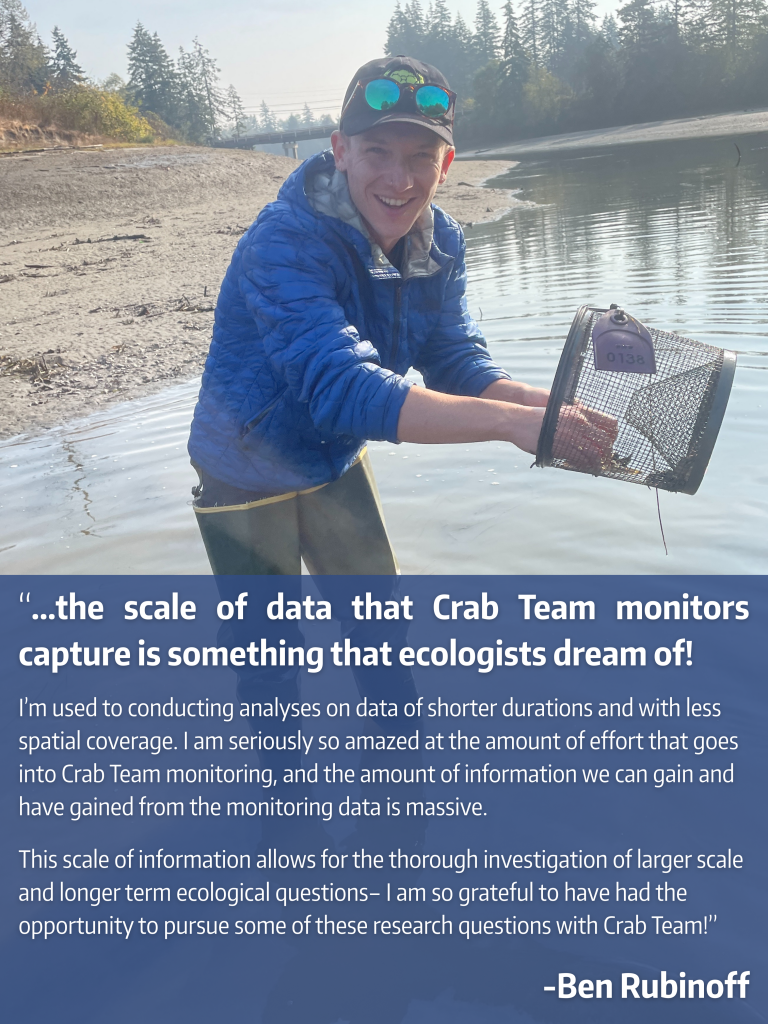
Ben Rubinoff reflects on their experience working with Crab Team monitor data. Click to enlarge.
Generally, we expect to catch more organisms in July than May of each year, so what if the impact of the heat dome wasn’t a decrease in organisms between those two time periods, but a smaller than usual increase? We tested this by looking at the same May vs. July comparison for all other years in the dataset, but didn’t find any habitats where 2021 stuck out as a particularly “bad” year for any of the species we captured.
This might be occurring because the organisms that we measure in trapping are mobile, so they might already have evolved behavior to cope with temperature extremes, retreating to a shady burrow where the temperature is attenuated by mud, or migrating out with the ebbing tide. Organisms in intertidal environments have already evolved to cope with extreme swings in temperature, salinity, and even presence of water(!), on hourly time scales. It stands to reason they might be able to withstand short-term, infrequent disturbances like this heat dome – at least on the population level. In support of this possibility was the observation that though water temperatures at sites were higher during the 4-day period of the heat dome than the same 4-day period in other years, nearly all sites experienced temperatures as or more extreme during other times of year.
However, if the severity, frequency, or duration of these extreme climate events increase, it is possible that this resilience could be pushed past a “tipping point.” This is exactly why Crab Team monitoring matters. Every trap set, every organism recorded, adds to our understanding of how these communities function, and how they might change. The decade of data Crab Team monitors have collected so far has already revealed how resilient these pocket estuaries can be. Now, we continue watching together, not just for the globally invasive green crabs, but for all the locals that call these shallow habitats home.
-Emily Grason and Lisa Watkins
Citation: Rubinoff, B, EW Grason, PS McDonald, L Watkins (2025) High-resolution monitoring of Salish Sea estuarine communities through participatory science. Frontiers in Marine Science. Vol 12. doi: 10.3389/fmars.2025.1584193