
Finding European green crab quickly when they move into a new area, and tracking their populations, is critical to green crab population control. Identifying the most effective tools and approaches for early detection and monitoring is an important area of research for Crab Team.
Using environmental DNA to detect green crab
In collaboration with Ryan Kelly and Abigail Keller, both of UW School of Marine and Environmental Affairs, and Washington Department of Fish and Wildlife, we refined and tested an environmental DNA (eDNA) assay for green crab. The assay was validated against traditional trapping-based detection methods across the state to compare detection probabilities for the two techniques.
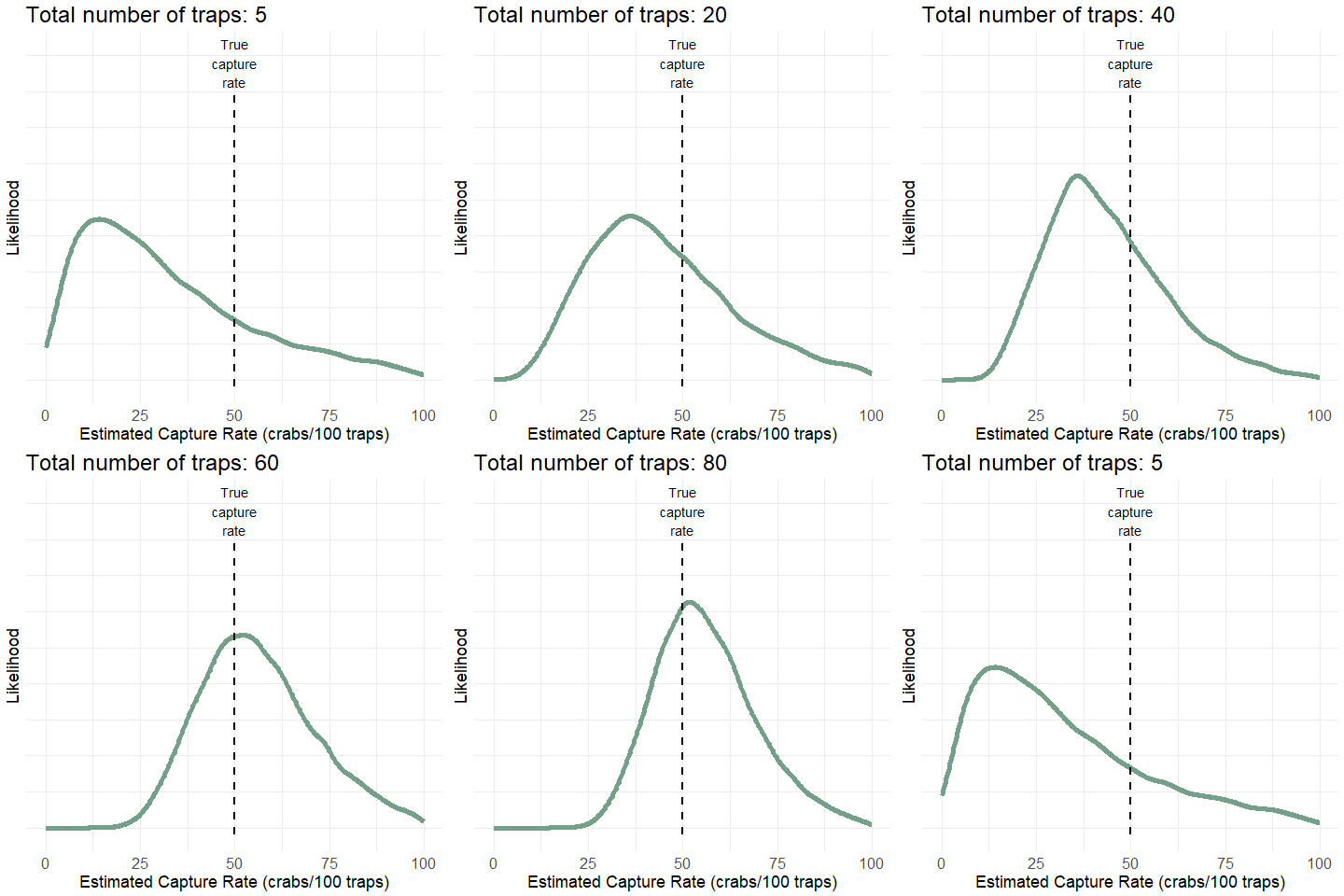
Using probability to support tracking
Abigail Keller, then a Ph.D. candidate with the School of Environmental and Forestry Sciences, developed a web application that helps trappers use models of detection probability to plan and interpret results from trapping and eDNA surveys. The tool was developed from a Bayesian model that incorporates several trap types and sampling schemes, enabling trappers to scale parameters based on priorities (targets, confidence) and constraints (time, gear), and directly upload survey results to evaluate outcomes. Washington Sea Grant collaborated on this project and provided financial support.
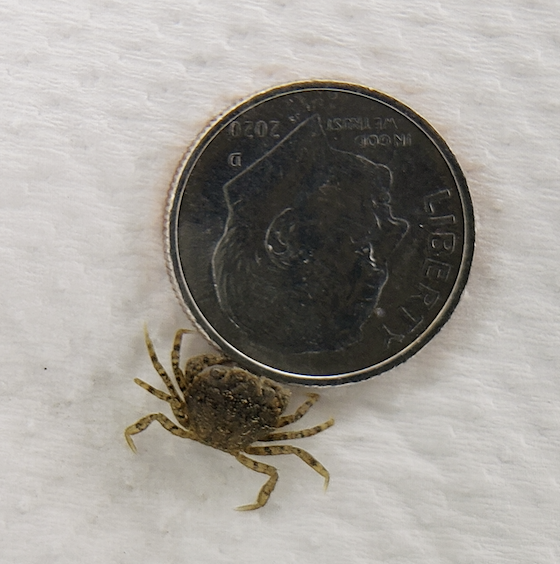
Comparing early detection methods
Crab Team leads a subgroup of the Washington Green Crab Research Taskforce, hosted by Washington Department of Fish and Wildlife. This working group brings together experts from WDFW, the US Geological Survey, NOAA, and Fisheries and Oceans Canada, to evaluate and compare different methods for green crab early detection. The aim is to identify the most effective and feasible methods of green crab early detection. These efforts will be distilled into a technical document written for managers, with an expected release in spring 2026.