
Invasive green crab has caused significant damage to ecosystems across the world. Based on decades of global research, scientists expect green crab to substantially impact species and habitats in Washington, too. Expected impacts include preying on smaller species, competing with larger species for food and habitat, and damaging ecosystems, particularly eelgrass.
But there are limitations to applying global research to Washington’s unique climates and ecosystems. So while global research can draw an outline of potential green crab impacts in Washington, it can’t show us the whole picture. To help fill in the gaps, Crab Team leads and contributes to research on green crab impacts specific to local species and habitats.
Understanding green crab prey and competition
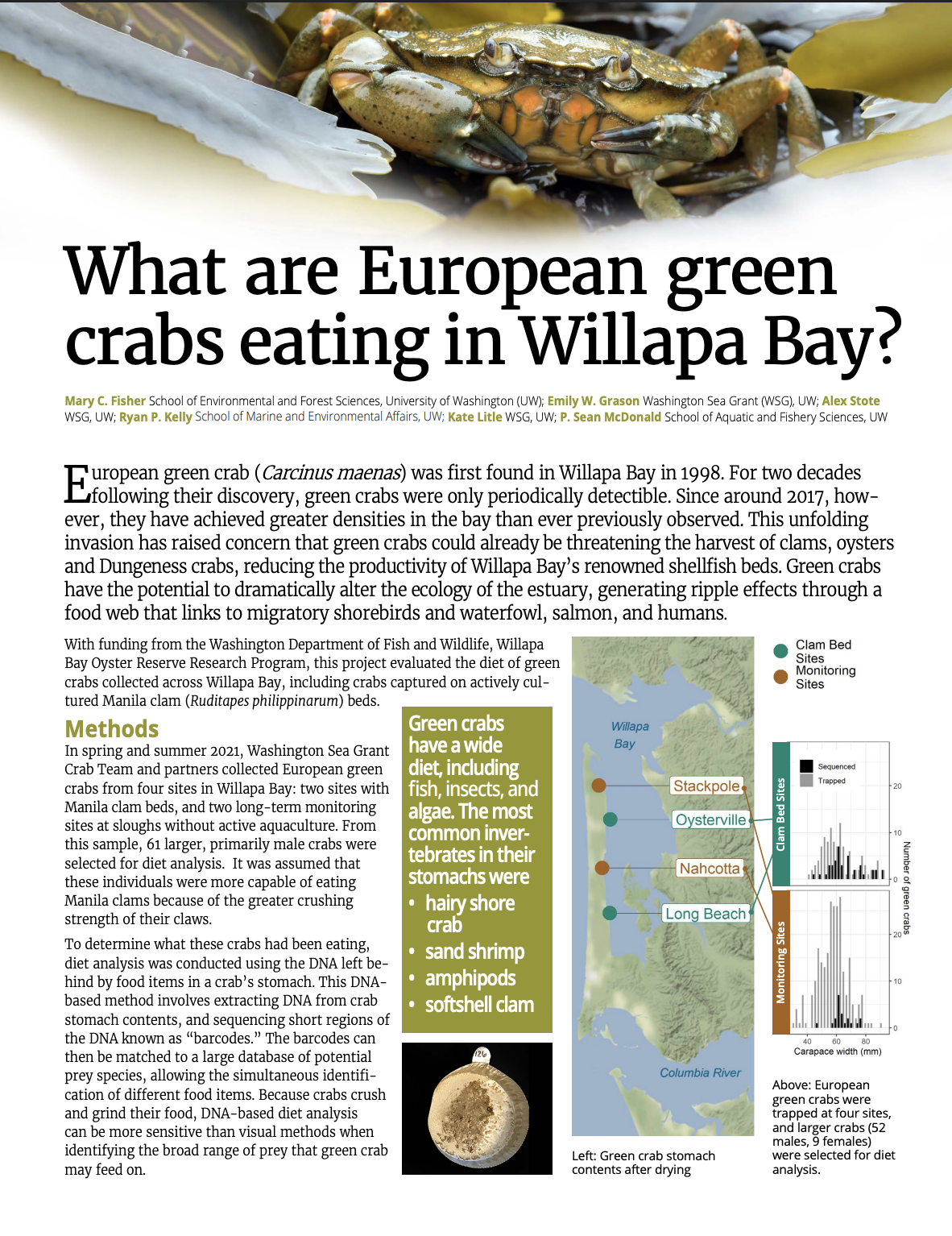
Crab Team collaborated with Mary Fisher to evaluate the diet of green crabs on and off commercial clam beds in Willapa Bay. Fisher, then a Ph.D. candidate in the UW School of Environmental and Forest Sciences, studied the DNA in the stomachs of green crabs to find evidence of their diet, and developed specialized assays for local prey items. This project helps illuminate the species green crabs are likely to prey on — and who they compete with for food.
Assessing green crab impacts on Manila clam harvests
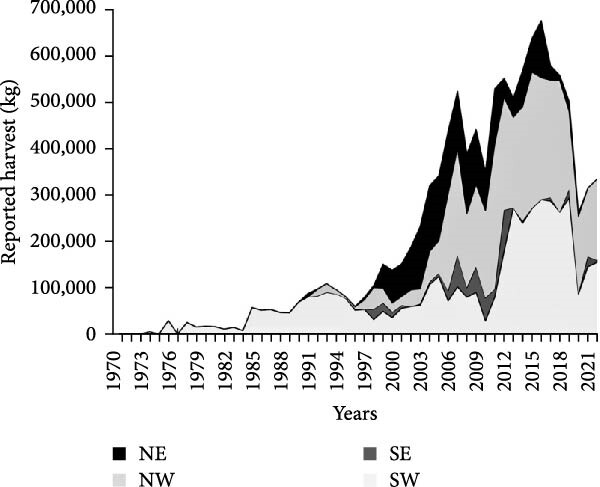
In Willapa Bay, Manila clam (Ruditapes phillipinarum) growers have expressed concern that green crabs could be implicated in recent harvest declines. In a series of field experiments and observational studies, we have collaborated with Jennifer Ruesink and Lidia Garcia, both of UW Biology, to assess evidence that green crabs could be implicated in reducing survival of Manila clams on aquaculture beds in Willapa Bay. We have found that while green crabs are living in areas with clam aquaculture, to date there is no evidence that green crabs are directly implicated in decreasing clam abundance and survival.
We published one scientific paper on this work in 2025, and another publication is currently in review.