Number: 380
Region: Skagit County
Launched: 2016
Site Captain: Paul Dinnel
If you asked many joggers and cyclists in the Anacortes area where to go for a beautiful jaunt, they’d probably point you to the Tommy Thompson Trail. It crosses shallow Fidalgo Bay along the top of an old railroad trestle. If you timed it right, under the eastern terminus of that Bay-bisecting trestle, you’d find volunteers hard at work.
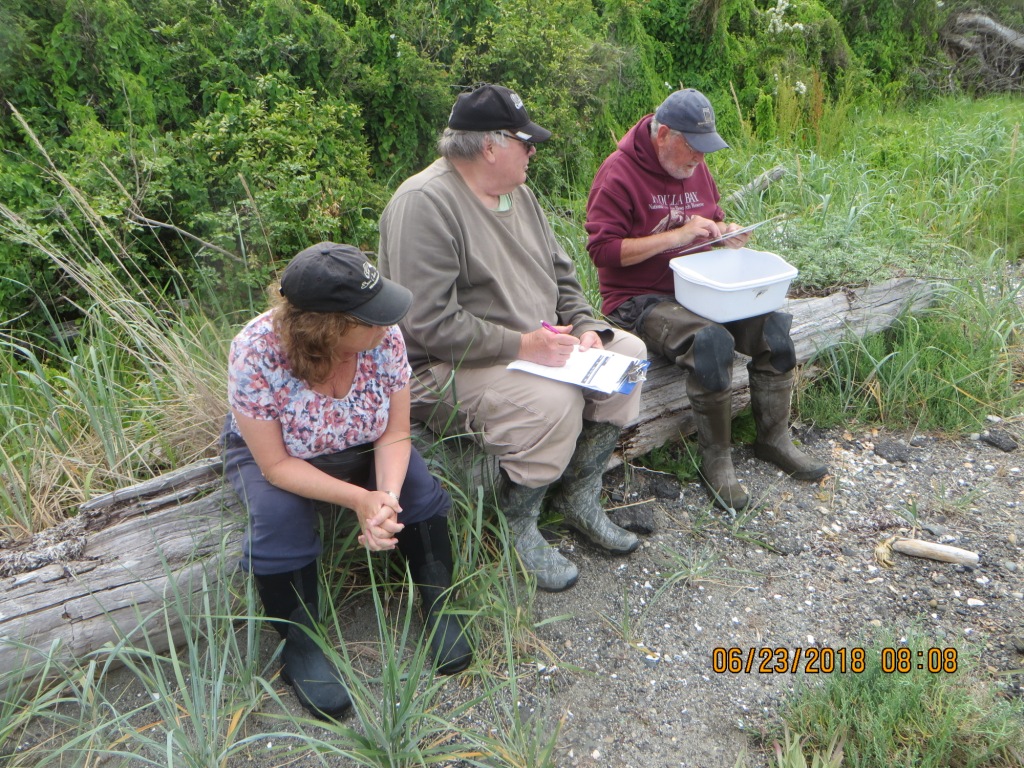
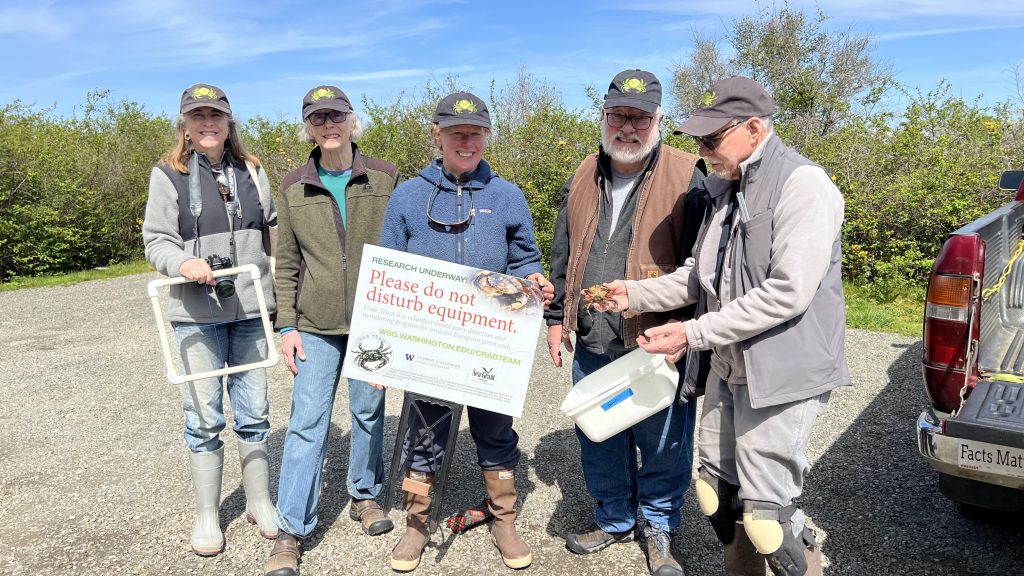
Crab Team established a monitoring site at Fidalgo Trestle in 2017, which continues to be supported 7 years later by Paul and Erik Dinnel and Barry and Laurie Rotner, all original monitors who have stuck around since the start. Like many Crab Team sites, the experience for this team has included “good work and fun and lots of critters”, with treasured memories formed “in the park-and-ride lot pulling boots on and catching up”, according to Pete Haase, the fifth member of that original team, who continues to be a supporter even though he has retired his waders.
Crabs at the Trestle
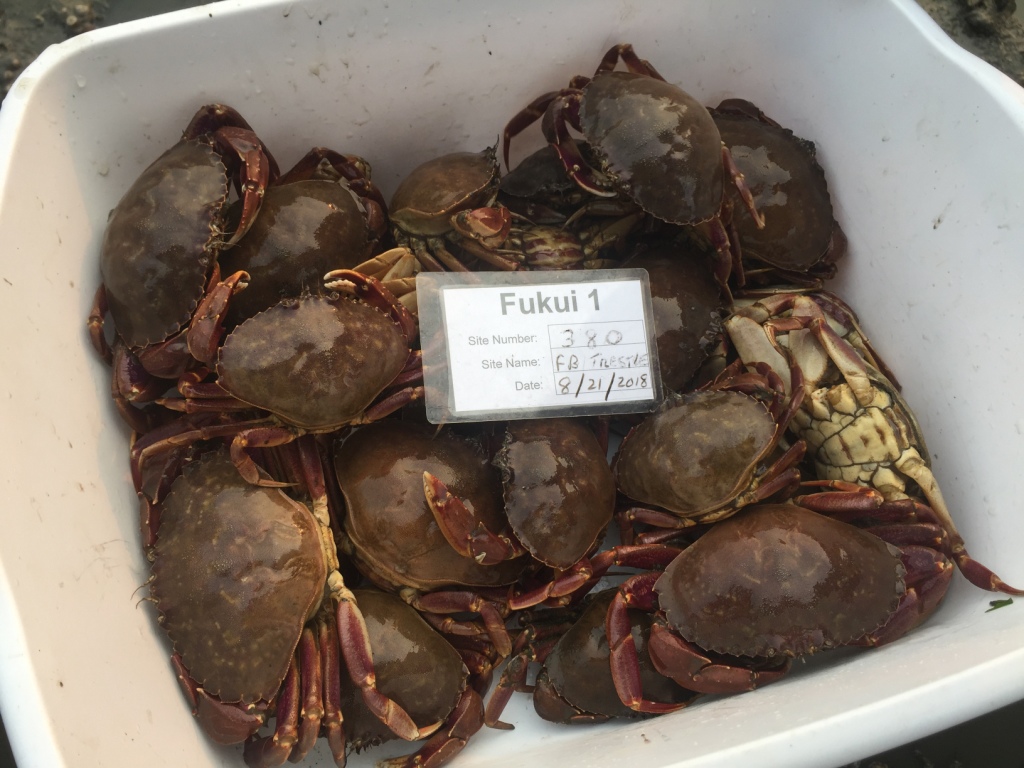
What the team captures at the trestle site is a bit unusual for a Crab Team survey. Monitors consistently report a large number of cancrid crabs, most commonly graceful, as well as helmet crabs in their traps. Even once a lemon peel nudibranch! However, this site rounds out the geographic and habitat range covered by the three monitoring sites in Fidalgo Bay – the others being Crandall Spit and Sharpe’s Corner. Situated between these two sites, the trestle itself is a potential green crab attractant. In other nearby bays like Samish and Padilla Bays, trappers have found concentrated green crab populations near structures like the trestle pillars provide.
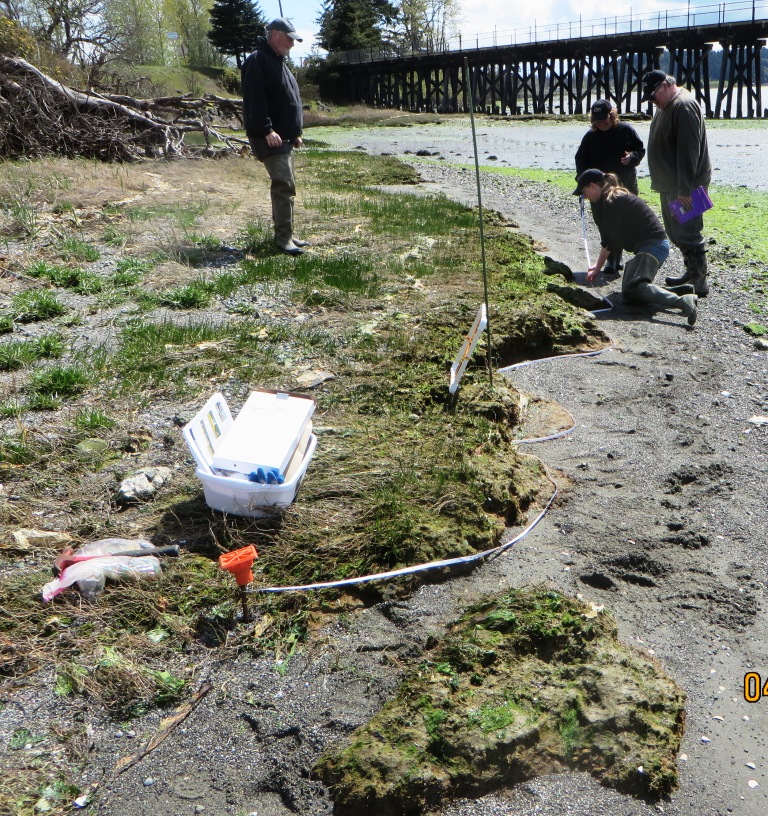
In September 2022, Fidalgo Trestle team found a molt of a 22mm male green crab during their molt hunt shortly after a huge 700 trap, nine organization collaborative assessment effort turned up zero live green crabs, underscoring just how important complementary methods for green crab detections can be while local populations remain so low. To date, only two other green crab detections have been made in Fidalgo Bay, both by DNR efforts– a molt found in 2018 just north of the Trestle, and a live crab captured near Crandall Spit in August 2023 by staff with Washington Department of Natural Resources.
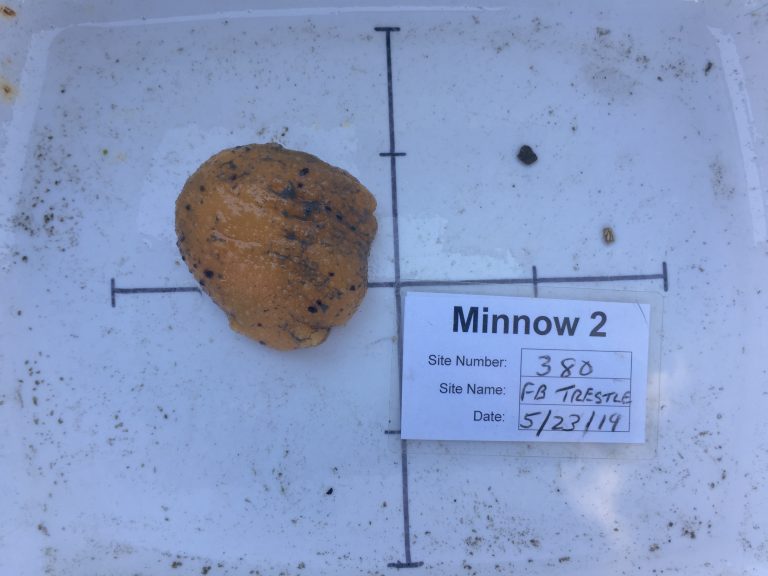
A lemon peel nudibranch that ended up in a minnow trap at the Fidalgo Trestle site.
“Super” Volunteers
As is often the case, team members at the trestle site are deeply engaged in their marine stewardship community. Both Paul and Pete have been active members of the Skagit County Marine Resources Committee, and played a role in the growth of Crab Team during the early days. They obtained funding from the Northwest Straits Foundation to purchase additional gear and coordination coverage that supported Crab Team monitoring sites across the seven MRC counties. Team members also participate in other citizen science projects as “super volunteers,” including COASST, forage fish and salmon spawning surveys, and have been recognized for the breadth and depth of their contributions to volunteer stewardship.
“Crab Team is incredibly lucky to benefit from participation by community members who are truly leaders of marine conservation in their areas. Folks who have their fingers in many pots share the knowledge and connections they have across multiple projects. This is a powerful way that time and interest that is already donated to the effort goes even further to protecting and restoring shorelines.” reflects program lead, Emily Grason.
Olys on the Rise
Crab Team isn’t the only monitoring that happens under the trestle. Since 2002, Fidalgo Bay has been home to a long-term Olympia oyster (Ostrea lurida) restoration project, a collaboration of Skagit County Marine Resources Committee, Puget Sound Restoration Fund, Washington Department of Fish and Wildlife and others. What was initially an introduction of 50,000 hatchery seed oysters is now an established population of an estimated 5.5 million oysters as of 2023. It’s an example of an incredibly successful population enhancement.
A variety of monitoring methods have been used to assess the recovering populations of Olympia oysters. Bags full of oyster shells (“culch”) emptied at an annual timescale to count and measure all juvenile oysters who’ve taken up residence; stacks of glazed tiles checked twice monthly to count recently settled oyster larvae (“spat”); lowtide quadrat sampling to quantify oyster density and size. All of these efforts were supported by a substantial amount of hours donated by a pool of 21 dedicated volunteers over the last 5 years (and more spanning into the earliest days of the restoration).
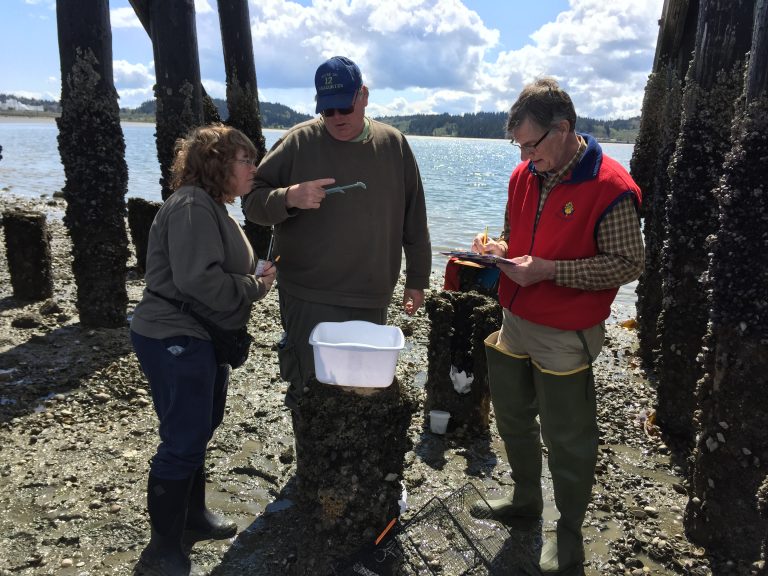
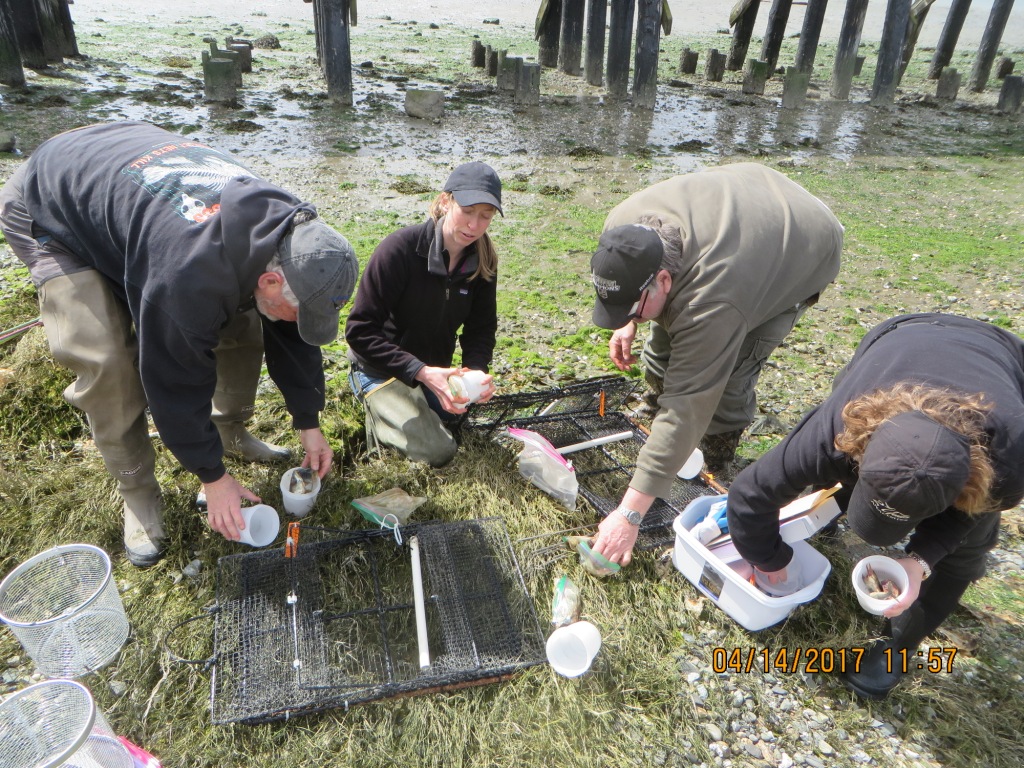
The Fidalgo team hard at work in 2017 measuring crabs. Photo credit: Paul Dinnel
The unique overlap in monitors between these two efforts adds a depth of experience that only sparks more questions for site captain Paul Dinnel, including, “will green crab prey on Olympia oysters [and] will the newly established oyster beds prove to be good habitat for green crabs?” Crab Team is particularly lucky to have Paul as a participant, because he has decades of research experience with Dungeness crab research and blue king crab, and knows more than almost anyone about how crabs use habitats in the region. His perspective brings an additional layer of context and expertise to monitoring in Fidalgo Bay. Thanks to the sustained efforts by Paul and other volunteer monitors on both topic areas, the questions about how green crabs could fit into the local picture may someday get answered.
–Lisa Watkins and Emily Grason
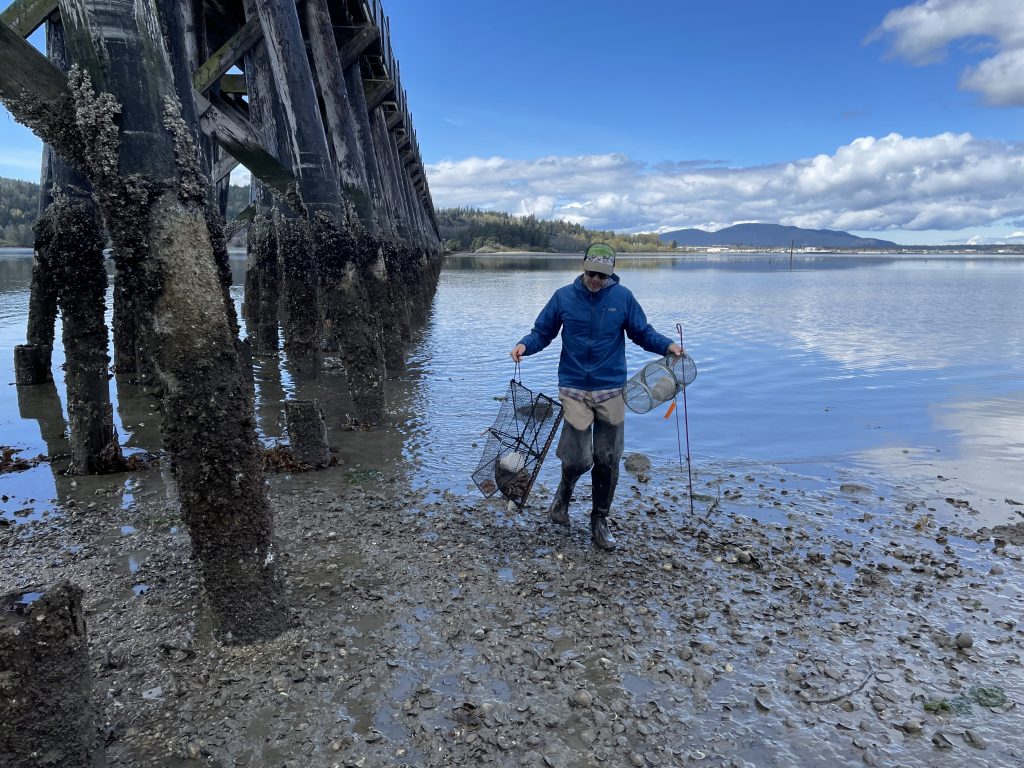
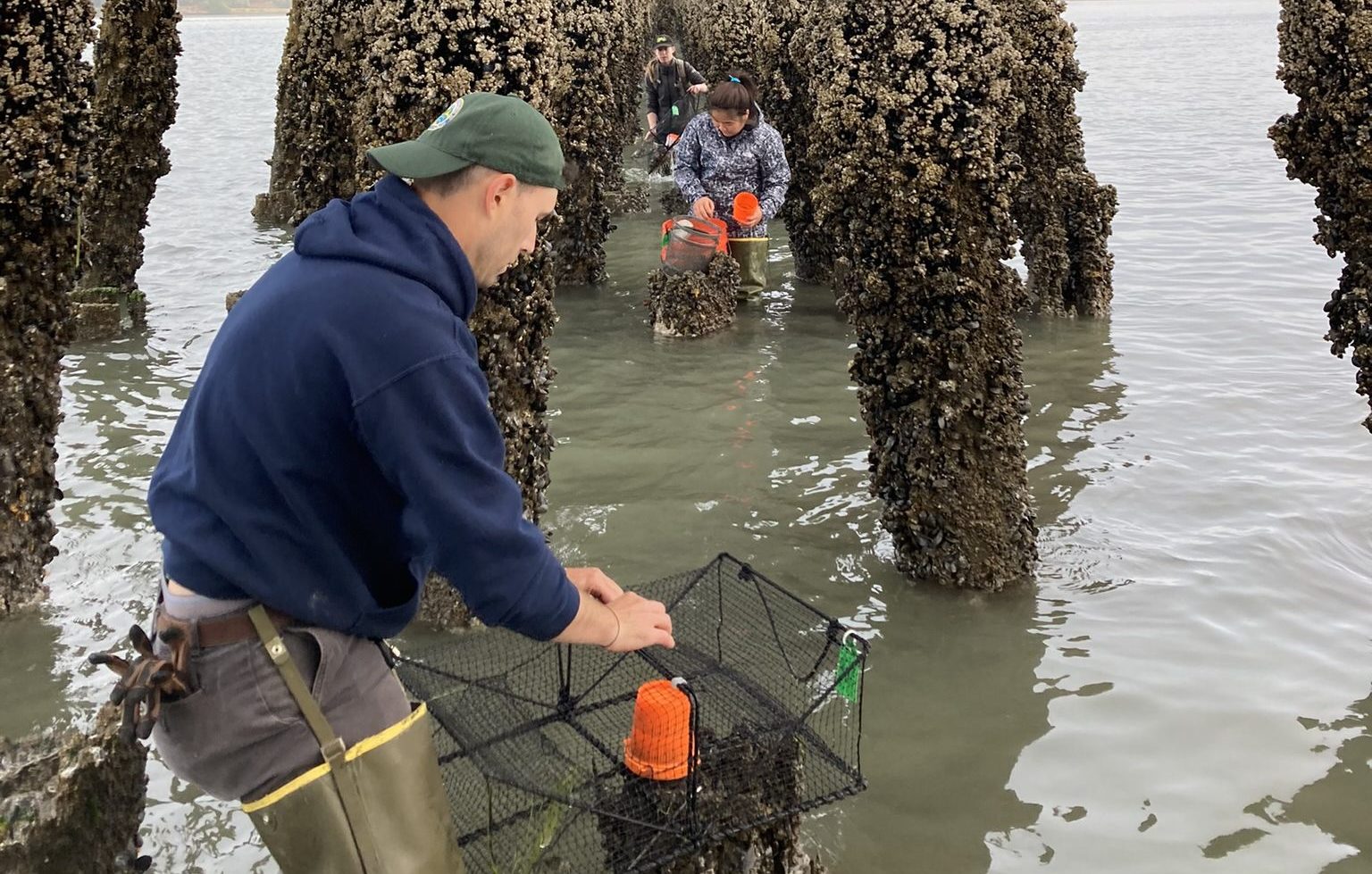
Header image caption: Monitors placed Fukui and minnow traps with bright orange bait jars for assessment trapping under the trestle in August 2022. Photo credit: Claire Cook
Photo Gallery
We love to get the virtual experience of monitoring with all of the Crab Team volunteers. Do you have a photo to share? Send it to crabteam@uw.edu. (Click on arrows to scroll, and photos to enlarge for more detail.)