2025 Volume 1
Greetings From… Washington Harbor
Number: 207
Region: Strait of Juan de Fuca
Launched: 2017
Team Captain: Sue Bonomo
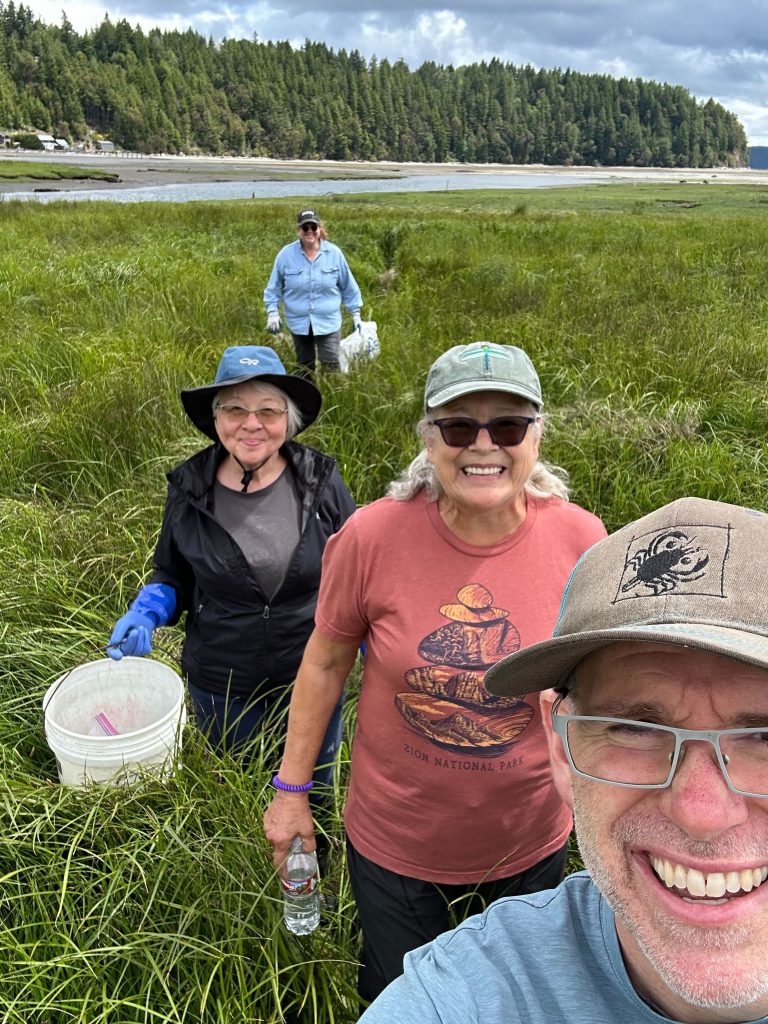
The dedicated team of monitors at Washington Harbor isn’t afraid to get their hands– and paws– muddy looking for European green crab. Washington Harbor has its very own furry mascot named Yuko, a yellow lab who excels at leaping over the site’s meandering channels, spotting molts, and then rinsing off in the harbor when her work is done! It’s a special place to romp–the largest pocket estuary on the Strait of Juan de Fuca and the site of a significant restoration effort led by Jamestown S’Klallam Tribe, where in 2013 a 600 foot bridge replaced two small culverts to reconnect the marshes with the bay, dramatically improving fish passage and sediment transport in the area.
Team members Sue Bonomo and Shanon Dell have been monitoring the recovery since the start of the site and were joined the following year by Brian Marts and Gail Clark. Their full team of four (plus Yuko!) has been on-site together nearly every month, including throughout the pandemic-challenged monitoring season of 2020. We are grateful to the Washington Harbor team and Yuko for their years of un-fur-gettable dedication to the program!
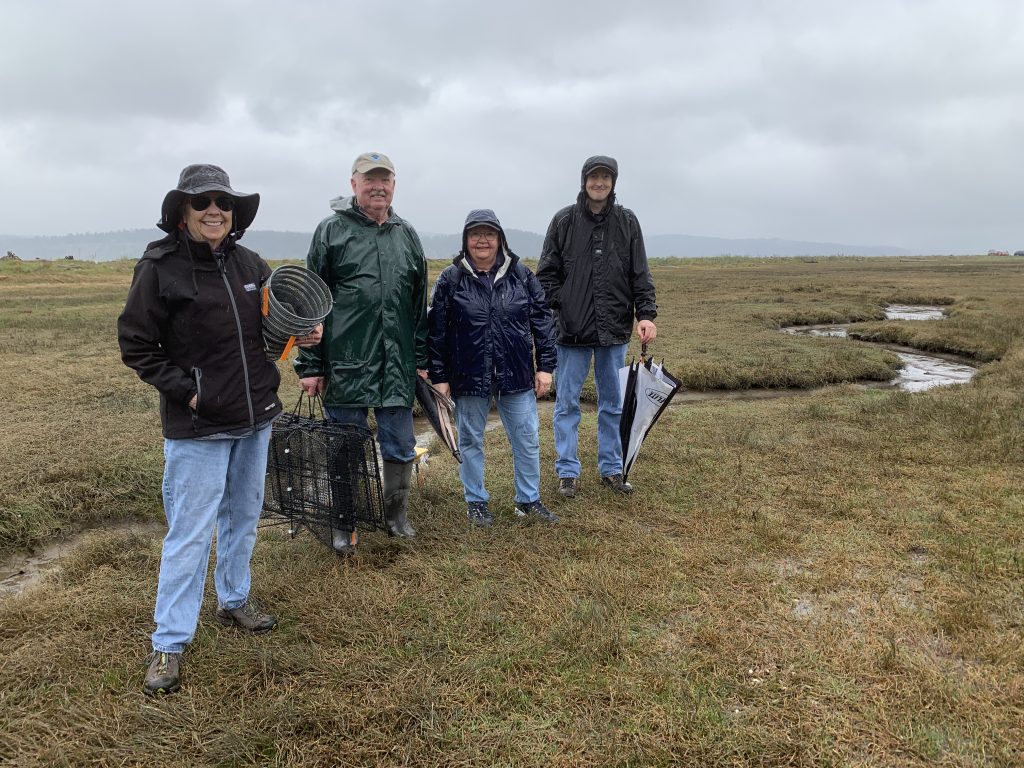
A rainy May day in 2022. Photo credit: Amy Linhart
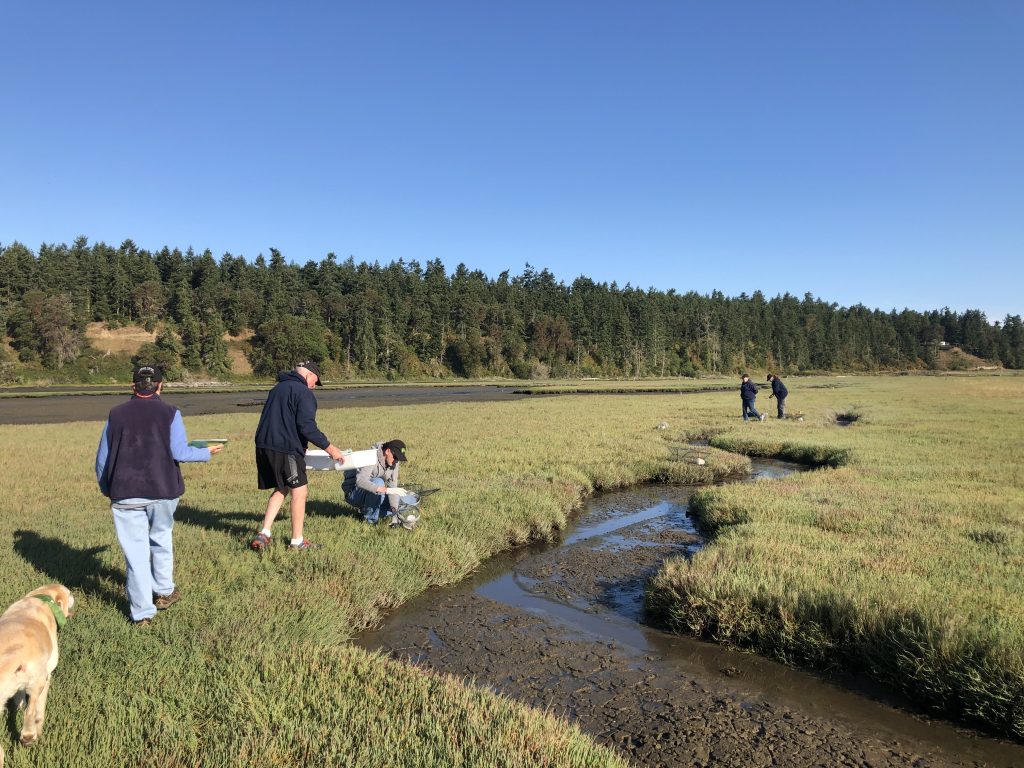
Trap retrieval along the channel. Photo credit: Emily Grason
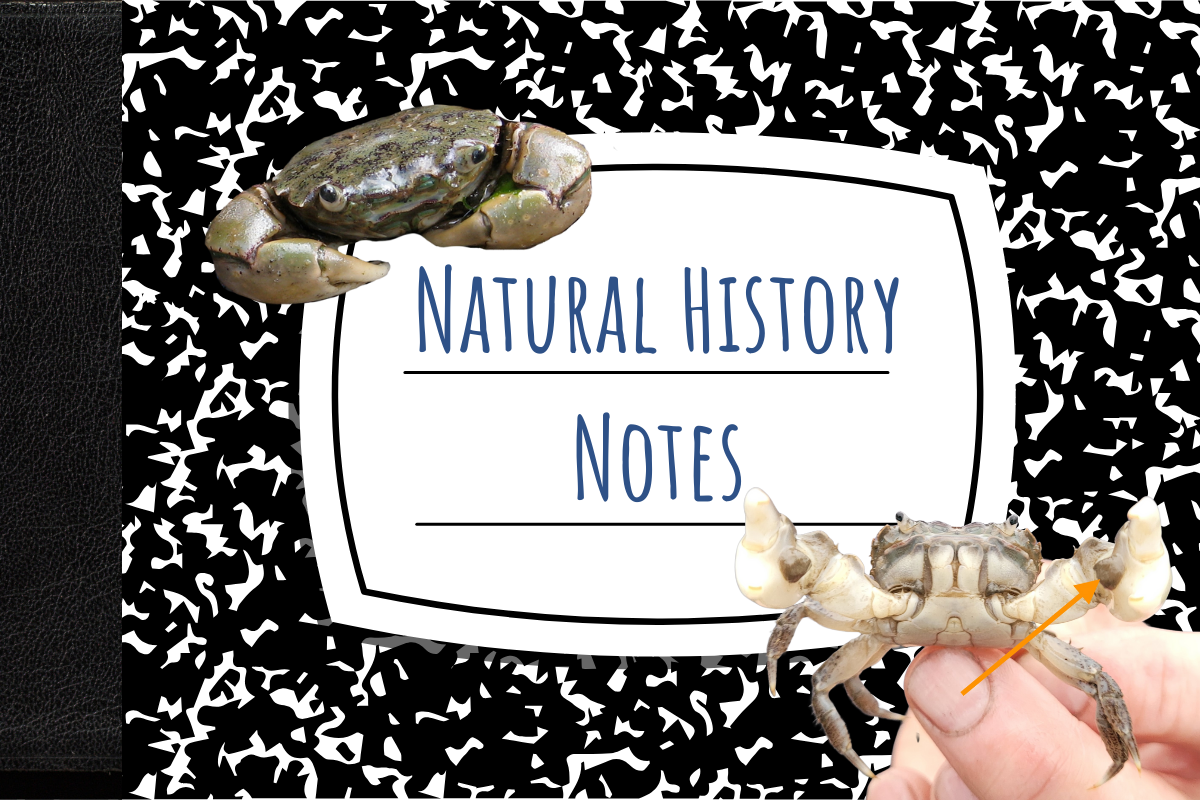
Natural History Notes: HEOR Tufts
What are those blobby things on shore crab claws?
You may have occasionally noticed fleshy blobs on the inside of shore crab claws. They are most evident on males, which have larger claws than females. In fact these are tufts of setae, or fine hair-like structures, that emerge from the shell near the claw joint. The best way to get a good view of the structure is to get the claw in water and take a close look. The use of these is not well understood. They are most prominent in males, suggesting they might play a role in reproduction. These setae have chemosensory or smelling receptors at their base. Could these tufts help males locate females that are ready to molt and mate?
More info: Setae are important for all sorts of crab things. Read more about them in our previous newsletter article.
Photo Gallery
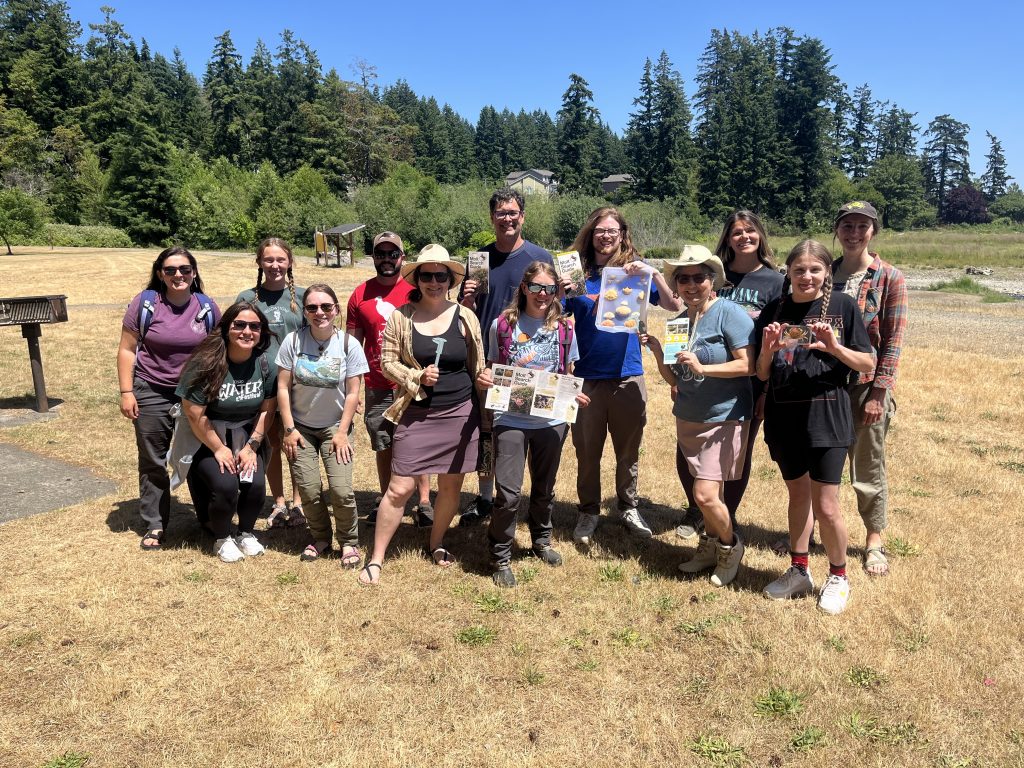
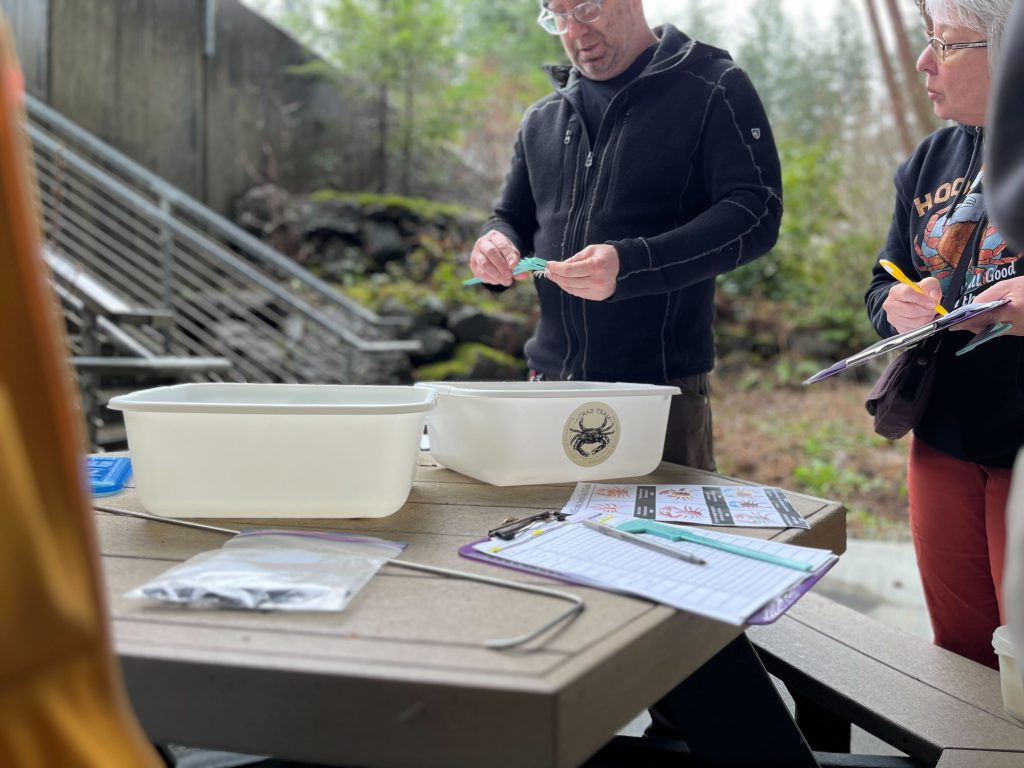
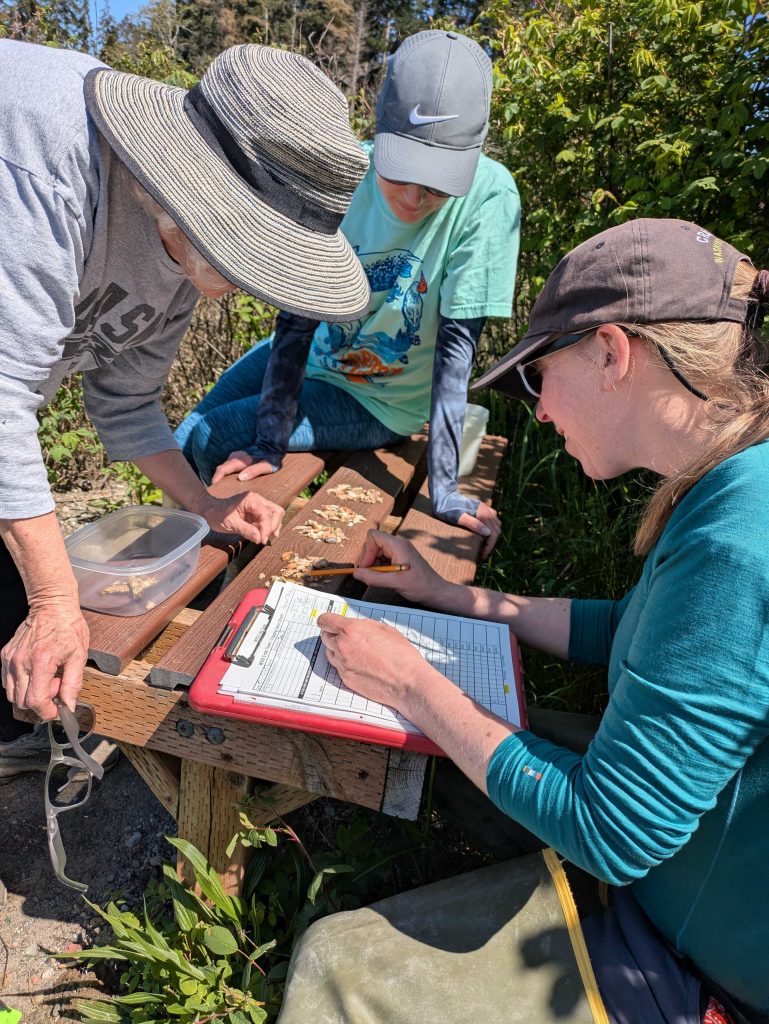
We love to get the virtual experience of monitoring with all of the Crab Team volunteers. Do you have a photo to share? Send it to crabteam@uw.edu. (Click on the photos to enlarge for more detail.)