
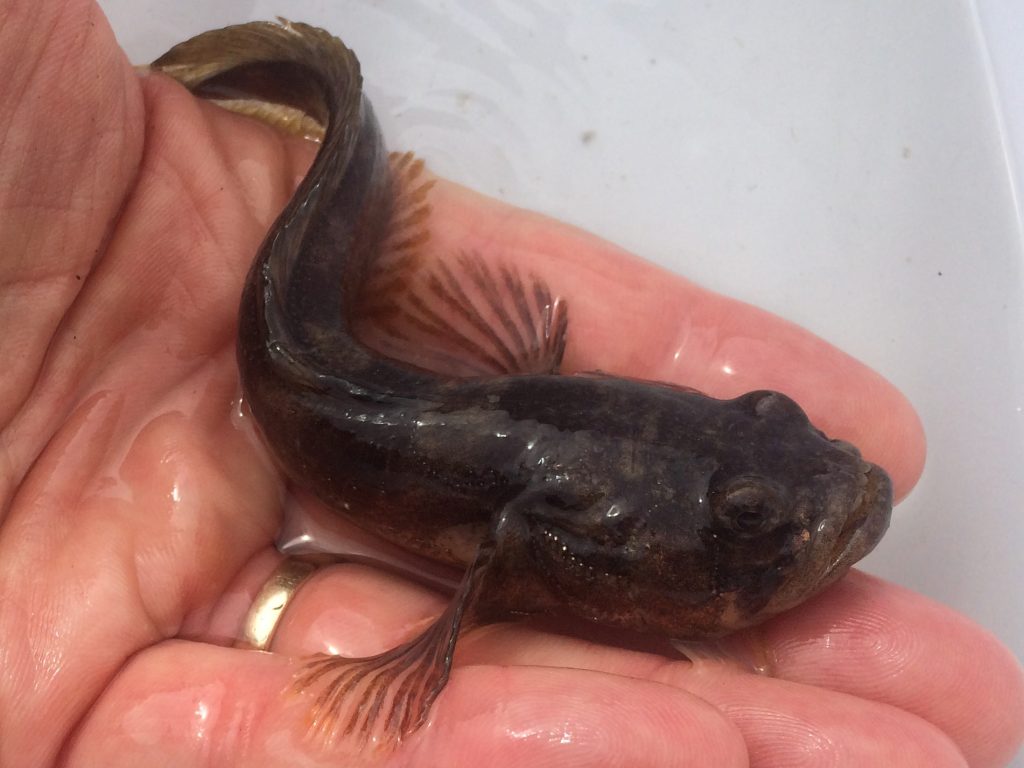
A small midshipmen held out of water showing off striped pectoral fins.
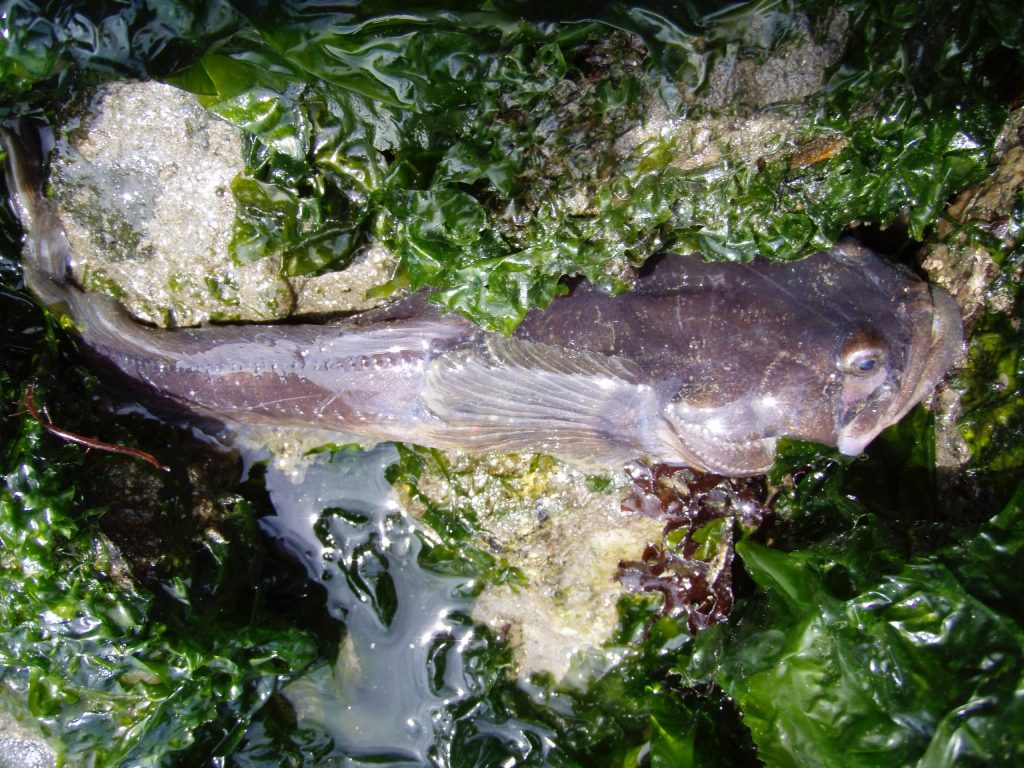
A purple colored midshipmen in a shallow tidal pool
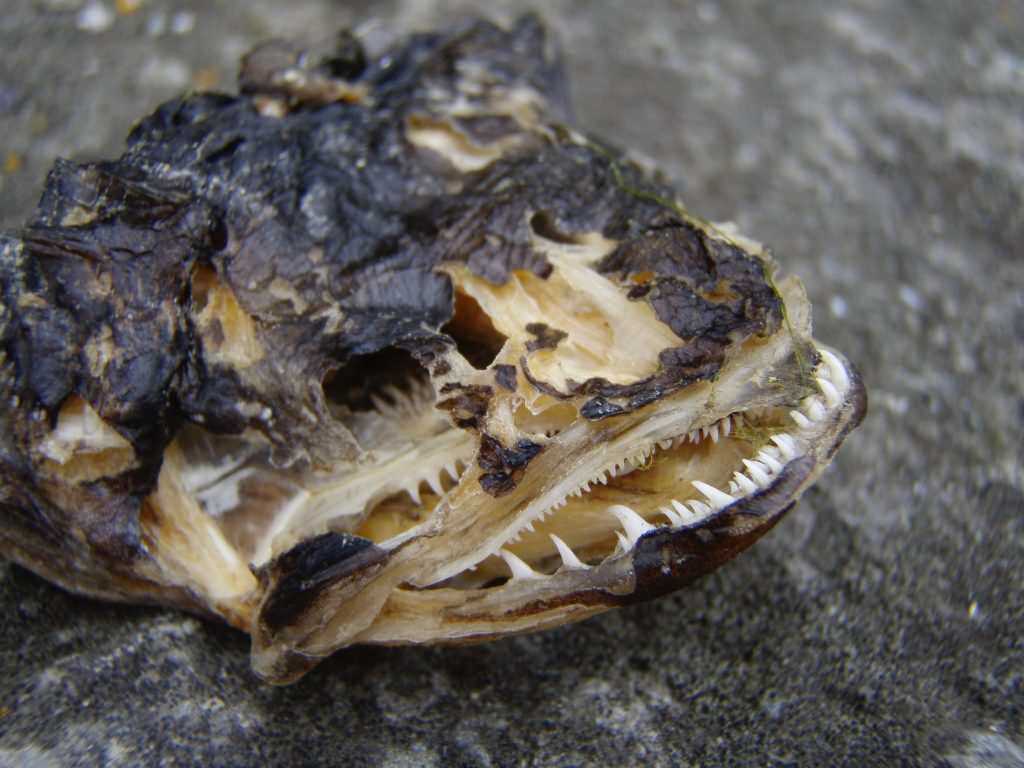
A partially decomposed midshipmen skull showing small sharp teeth
Species Name: Porichthys notatus
Common Name: Plainfin midshipman
Species Code: PONO
Geographic Range: Eastern Pacific, Sitka, AK to Southern Baja California, Mexico.
Size: Maximum length 30cm
Habitats: Intertidal shoreline to deep sand and mud bottoms
A Hum in the Night: The Peculiar Plainfin Midshipman in the Salish Sea
The plainfin midshipman (Porichthys notatus) has long been an enigma to shoreline residents and explorers. Most have never heard of the fish until they’ve heard the fish. That was certainly the experience of houseboat residents in Sausalito, California; for years they reported disturbing droning noises that lasted through the night, impacting their sleep and stirring up concerns about malfunctioning equipment. However, the true source of the hum wasn’t human-made; it was the unique vocalization of the male midshipman. Male midshipman fish produce a continuous humming sound during their summer breeding season, using specialized muscles around their swim bladders to amplify their call and attract females to their nests.
This unexpected revelation has led to local fascination with this “singing fish,” inspiring even a festival in Sausalito. Though also widespread in the Salish Sea portion of Washington’s coastline, midshipman vocalizations have not yet been implicated in local noise disturbances, but the fish plays an essential role in our local ecosystem and has attracted the attention of scientists and conservationists.
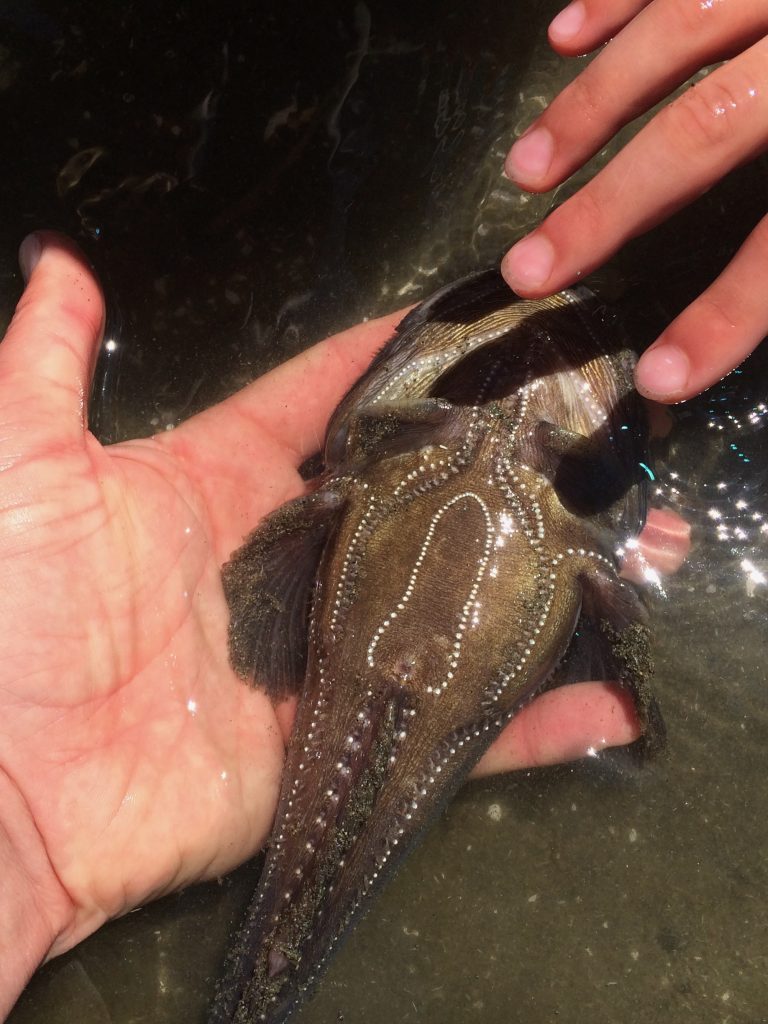
The “silver button” photophores along a midshipmen’s belly. Photo: WSG/Jeff Adams
In addition to the males’ nocturnal “songs”, the plainfin midshipman is known for their distinctive physical traits. Their flat, broad head and wide mouth sometimes confuse them for a sculpin. But rows of light-emitting photophores along their belly give them an almost otherworldly appearance. These bioluminescent organs resemble the buttons of a naval uniform, which inspired their name, and are only activated during courtship season. Interestingly, although they have the same photophore anatomy, midshipman in Puget Sound do not actually luminesce*, which could be explained if their diet does not include the necessary ingredients for the chemical reactions. It begs the question of whether they have to make up for this courtship deficit with better, or louder, singing.
How Do They Sing? Understanding the Midshipman’s Nocturnal Calls
The sounds that midshipman fish make are more than just quirky—they’re a critical part of their reproductive strategy. Dr. Joseph Sisneros at the University of Washington has led groundbreaking research into the mechanisms behind these fish calls. Sisneros and his collaborators, including Dr. Paul Forlano from Brooklyn College, have examined how midshipman males generate these hums to lure females into their nests during the summer breeding season. Males contract their sonic muscles, which are located around their swim bladders, at incredibly fast rates—up to 100 times per second! This turns the swim bladder into a resonating chamber, amplifying the hum that can be heard by humans both above and below the water.
Much like birds, frogs, and even humans, the plainfin midshipman has evolved to communicate through sound in social contexts, primarily for mating. Dr. Andrew Bass and colleagues have mapped the neural pathways that control sound production; the male midshipman brain is literally wired to make sound. Additionally, Dr. Sisneros has characterized how, during the summer breeding season, female midshipmen undergo hormonal changes that enhance their auditory system, making them particularly attuned to the male’s hum. That hum really is…
A Song to Get Them in the Mood
During the breeding season, male plainfin midshipman construct nests under rocks or in other concealed locations in the intertidal zone. These nests are essential for the reproduction of the species, as the males must not only attract females but also care for the eggs once they are laid. Large, healthy males build the highest quality nests, and it’s no coincidence that these males also produce the loudest calls.
Once a female responds to the male’s call and approaches his nest, she will deposit her eggs, which adhere to the nest’s ceiling or walls. The male then fertilizes the eggs and takes on the role of protector, guarding the nest from predators and occasionally fanning the eggs with his fins to ensure they receive adequate oxygenation. Males are known to fiercely defend their nests, and they remain in the nest to care for the developing eggs for several weeks.
Interestingly, not all males engage in humming. Research by Dr. Bass and his team have shown that plainfin midshipmen exhibit two distinct male morphs: the “Type I” males, which are larger, produce the humming sounds, and actively guard nests, and the “Type II” males, which are smaller, do not hum, and adopt a sneaker strategy. Type II males try to sneak into nests guarded by Type I males to fertilize the eggs in an opportunistic manner. This reproductive strategy is relatively rare in the animal kingdom but has been observed in other fish species as well.
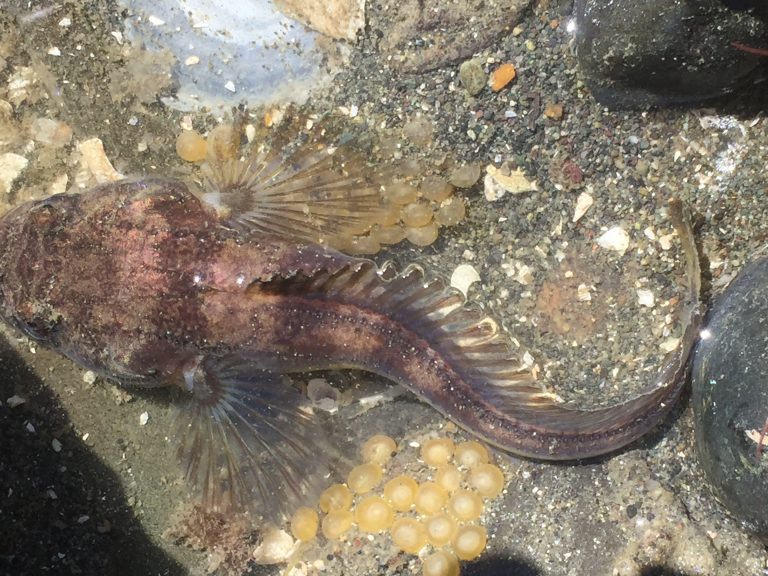
A male midshipmen guarding eggs in a shallow nest. Photo: P. Sean McDonald
A Resident of Washington’s Waters, including Crab Team Sites
Crab Team monitors have occasionally encountered plainfin midshipman during regular sampling surveys, both inside and beyond the traps. Although these fish aren’t the focus of Crab Team’s work, and they spend quite a bit of time as adults in relatively deep or open water, documenting them in traps still offers valuable insight into local biodiversity and use of habitats likely to be impacted by green crabs. From 2015 to 2023, only 10 midshipman fish were captured in WSG Crab Team monitoring, all of which are sites within the Salish Sea, i.e., none at coastal locations. It may be no coincidence that all 5 of the sites were lagoons, which provide the calm, shallow waters midshipmen prefer for nesting. The timing of these captures, from May through August, corresponded with the species’ breeding season, suggesting that the main way Crab Team documents this local species is related to breeding behavior. That said, a juvenile was recorded at Nick’s Lagoon in September 2024, further contributing to the emerging picture of their seasonal movements and life cycle and how they might overlap with green crabs.
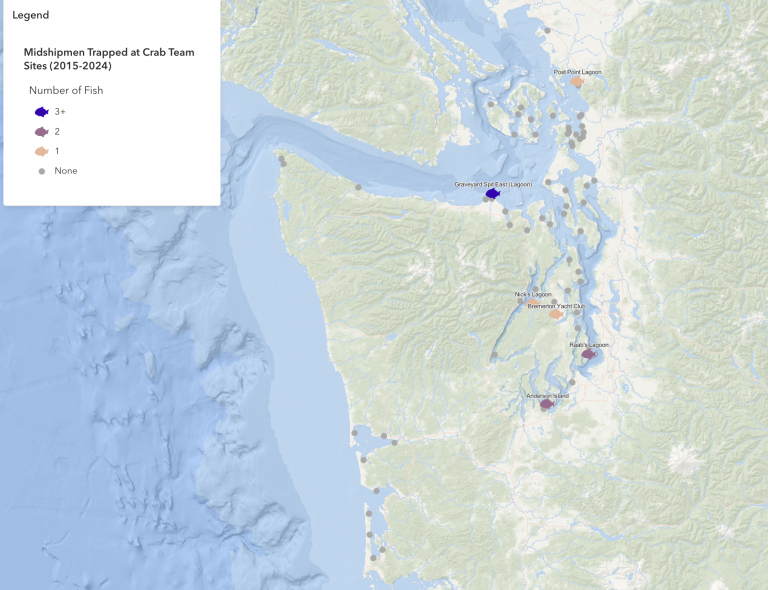
Map of Crab Team sites that have caught midshipmen from 2015-2024.
Conservation Concerns: The Impact of Climate Change
While the midshipman’s haunting hum and occasional capture in crab traps might seem like amusing quirks, these fish, like many marine species, are not immune to the pressures of environmental change. One significant event that has highlighted their vulnerability was the Pacific Northwest’s unprecedented heatwave in June 2021. Temperatures reached as high as 115°F in some areas, devastating marine life along the coast. Beaches were littered with dead marine creatures, including clams, mussels, and even fish.
Plainfin midshipman were among the casualties, specifically because their nests were exposed to extreme temperatures during low tides. Anecdotal reports from local residents and scientists described abandoned midshipman nests and dead fish along the shores, as the intense heat dried out intertidal zones where the fish were breeding. These conditions likely caused stress for nesting males, which, without cooler water to retreat to, could not protect their nests or remain in their shallow-water breeding habitats. While the full extent of the damage is difficult to quantify, it raises concerns about how climate change might affect species like the midshipman, whose reproductive success is tied to specific environmental conditions.
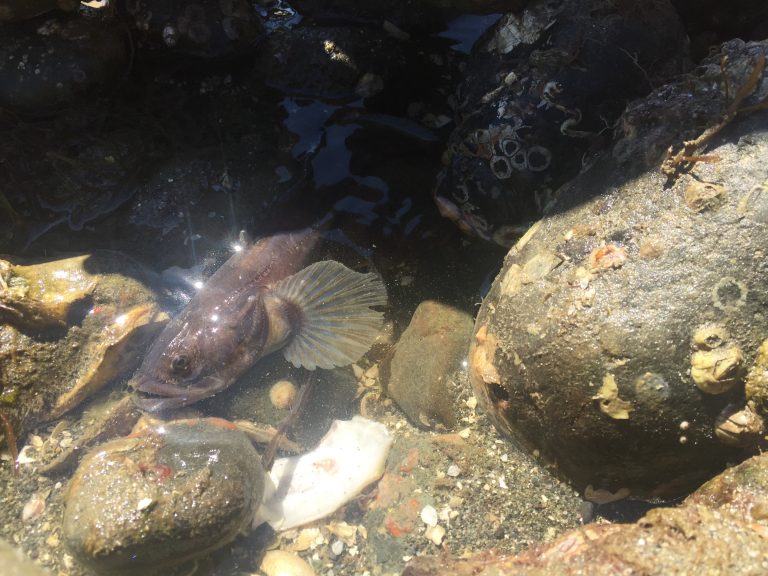
A midshipman in a shallow tide pool. Photo: P. Sean McDonald
Plainfin Midshipman and Ecosystem Health
The plainfin midshipman plays an important role in the food web of the Pacific Northwest. As a bottom-dwelling predator, they feed on invertebrates like shrimp, crabs, and small fish, while also serving as prey for larger marine mammals, birds, and even humans. Harbor seals, sea lions, and other large predators are known to feed on midshipman, particularly during their shallow-water breeding season when the fish are more vulnerable. This role as both predator and prey, connecting the nearshore sea floor to the open waters, makes the midshipman a key species in maintaining the balance of coastal ecosystems.
Climate-related challenges, like the 2021 heatwave, pose significant threats to this delicate balance. In addition to temperature stress, other changing ocean conditions might also make life difficult for midshipman. For instance, increasing ocean acidification could affect the availability of suitable nesting sites and the health of juvenile fish. Noise pollution from maritime traffic also poses a potential threat to midshipman communication. Research into how human-generated noise affects their ability to reproduce is an area of growing interest. Scientists have pointed to the delicate balance between natural and anthropogenic soundscapes, raising concerns about how noise pollution might disrupt the reproductive success of species like the plainfin midshipman.
Looking Ahead: What’s Next for the Plainfin Midshipman?
Crab Team’s work—whether it’s tracking invasive crabs, recording unusual sightings like plainfin midshipman, or engaging the community in hands-on science—continues to be a critical part of marine conservation efforts in Washington. By keeping a close eye on ecosystem and biodiversity, monitoring helps to ensure that even peculiar residents, like the singing midshipman, are part of the larger conversation about the health of the Salish Sea.
As researchers continue to study the plainfin midshipman’s auditory capabilities and reproductive behaviors, new questions are arising about how the species will cope with future environmental changes. Whether humming away in the dark or quietly living beneath the surface, the plainfin midshipman reminds us that every species, no matter how small or strange, plays a crucial role in the ocean’s complex web of life.
— P. Sean McDonald
*While we try to link you directly to the research we reference, some of the studies cited in this article are not open access. If you have any questions about any of the works cited here, please feel free to reach out to crabteam@uw.edu.