
Site Spotlight:
Kala Krabbers
Site: Kala Lagoon (204)
Region: Port Townsend
Captain: Chris Jones
Launched: August 2015
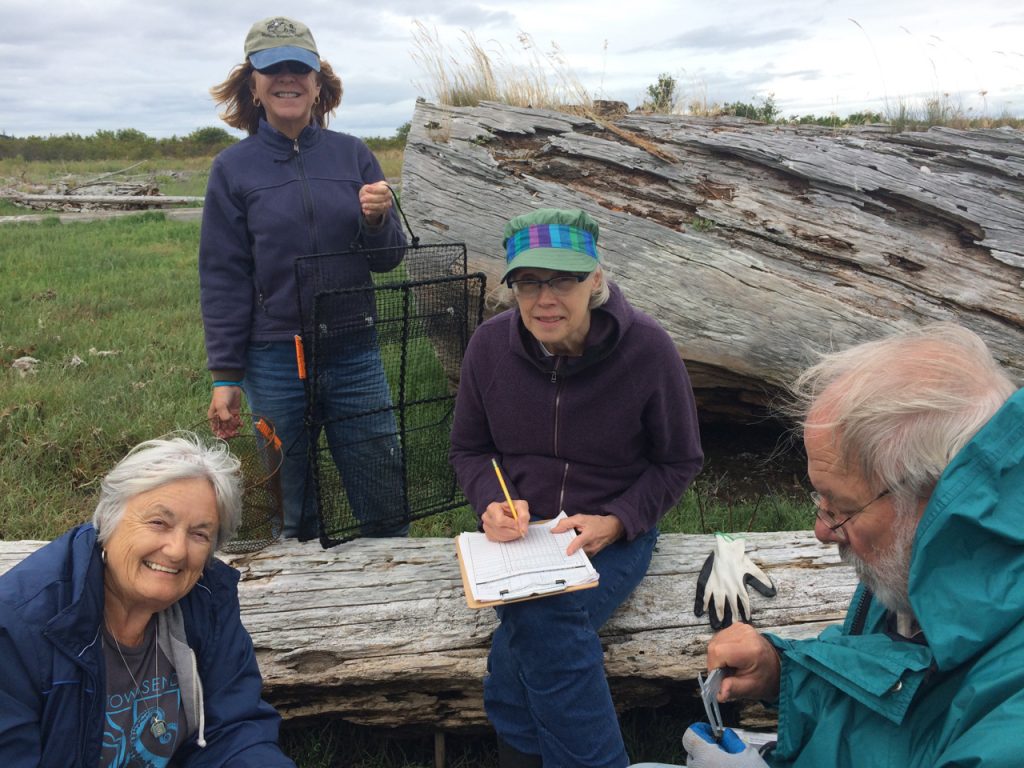
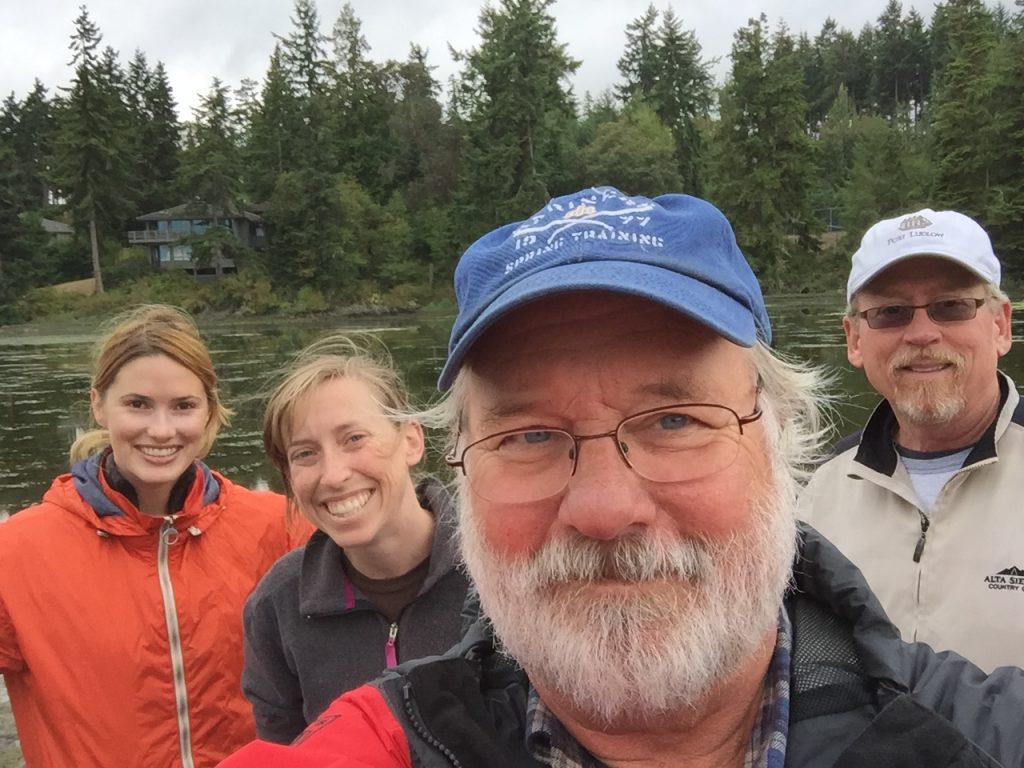
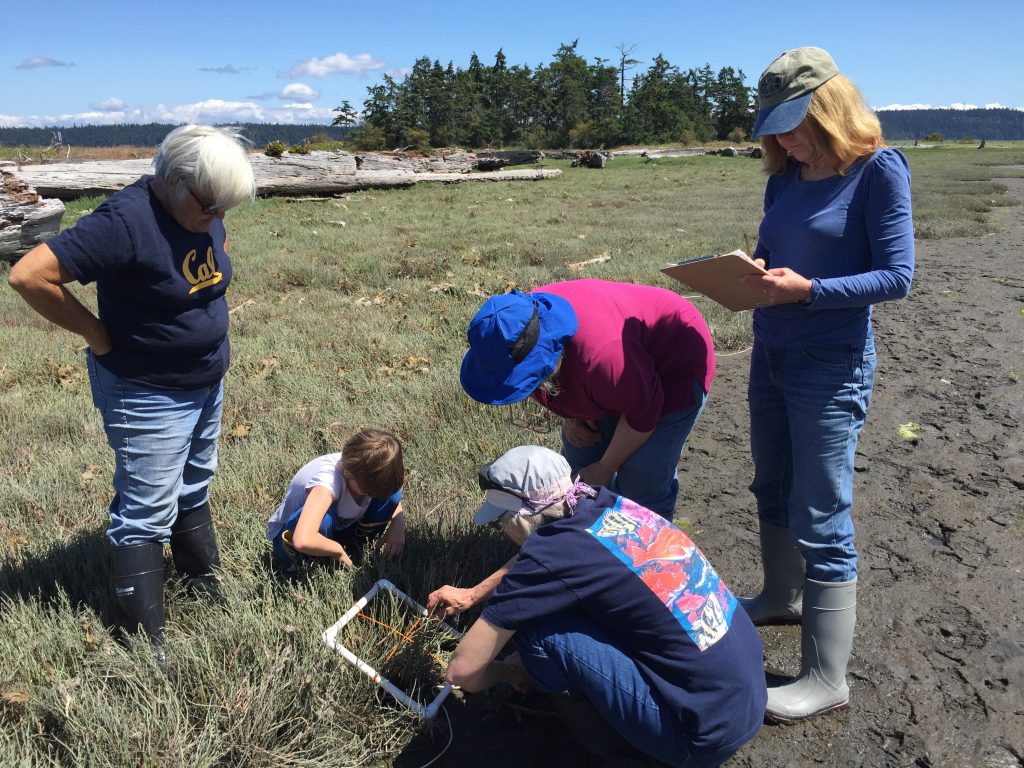
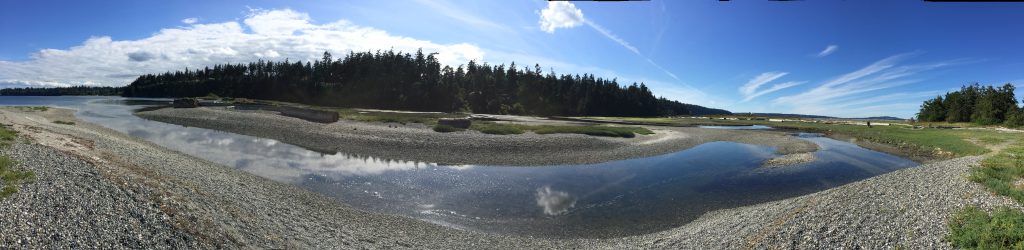
In addition to being a fantastic Crab Team crew, the Kala Krabbers are stars of radio drama, recently lighting up the airwaves of KPTZ Port Townsend Radio. Nan Evans, host of Nature Now, followed Captain Chris Jones, and Krabbers Eileen Cooney, Wendy Feltham and Katherine Jensen into the field with a microphone in July, and gave us all the chance to listen in to the sounds of Crab Team at work. Episode one tracked the group as they searched for molts, examined the shoreline, and set the traps, ending with the irresistible cliffhanger, “Tune in next time to see what they caught!” Episode two brought a sigh of relief when they didn’t turn up with any invasive green crabs.
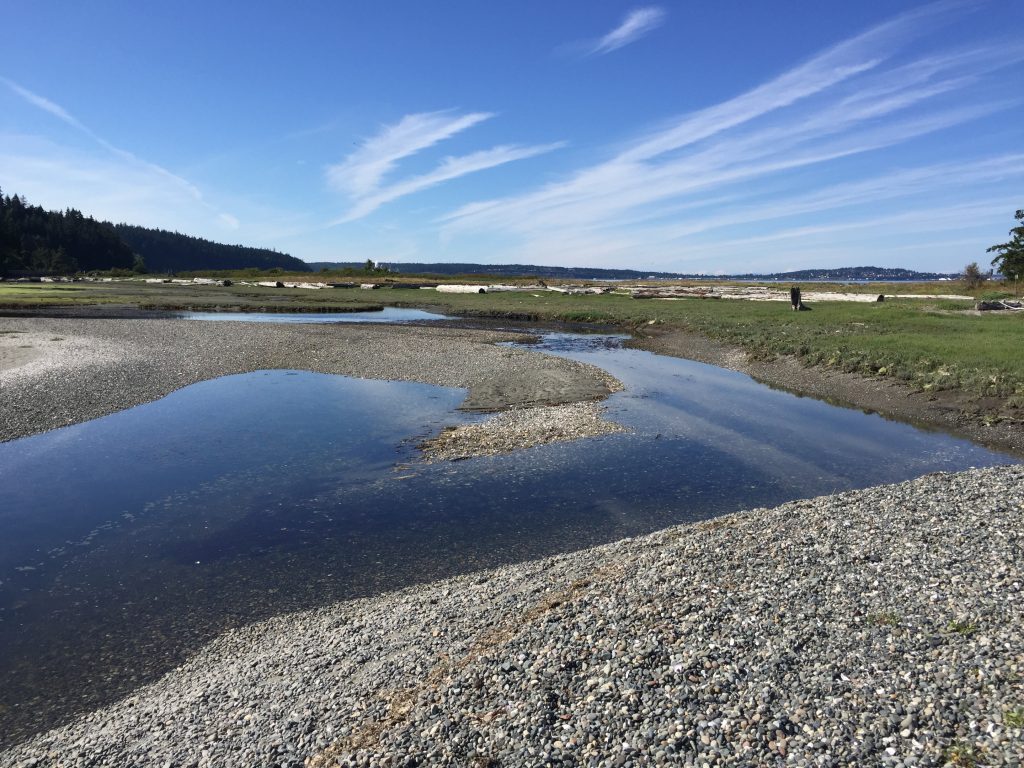
This is the second year Chris has captained the Crab Team site at Kala Lagoon, where we have received special permission from the Kala Point homeowners association to sample this private lagoon. During 2015, our pilot year, Kala Lagoon was the closest monitoring site to the established population of green crabs in Sooke Inlet, BC. The question of exactly where and when green crab larvae could get washed onto Washington shorelines is a complex one, but habitats that are closer to a known source population have a greater chance of being invaded. It was important to us to make sure we were looking at high-risk habitats like Kala. Chris helped launch the site last year with two additional pioneering volunteers, Bonnie and Jay, whose work helped assure us that green crabs had not yet made it that far. This year, Captain Chris has trained up a crew of new recruits and, as you can hear on the radio program, the group works extremely well together – whatever the weather!
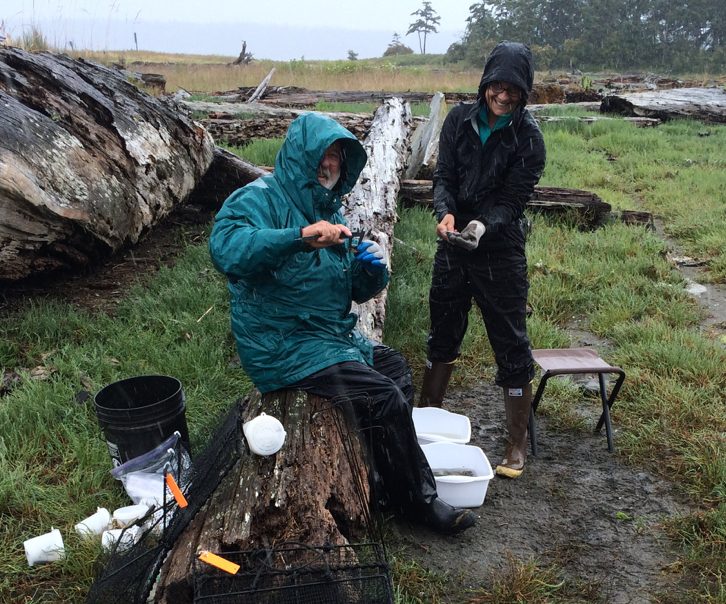
Kala Krabbers braving a squall in the name of measuring every shore crab they catch! (W. Feltham)
The lagoon is extensive, about 13 acres, but shallow across most of its area, and hosts among the densest populations of shore crabs of any our sites. So far this year, the Kala Krabbers have already counted 1,509 live shore crabs, and 1,163 molts. You can imagine that it takes a well-oiled machine to patiently but efficiently work your way through all of those crabs. Small Hemigrapsus are the most likely to be confused with European green crabs, because, of all of our native crabs, they are the closest in shape, size, and habitat. Sorting carefully to make sure a young green crab didn’t sneak by undetected in the crowd requires focus.
We know that the Kala Krabbers are always on the lookout, both while sampling and just cruising the beach. They helped us run a “Green Crab Preparedness Drill” earlier this year, when Wendy was out on the beach with Nan, and found a crab they had never seen before. Moreover, it appeared this female was carrying eggs! Thinking it could be a European green crab, Wendy quickly called several members of the Crab Team, sending photos via email. While we typically try to respond quickly to such contacts, this time, we were all unable to take Wendy’s call because we were all in a meeting together! Wendy and Nan consulted the nearby Port Townsend Marine Science Center (PTMSC) about the time we were able to get back to her. To our relief, they had found a native black clawed crab (Lophopanopeus bellus). This species isn’t nearly as common as shore crabs, and has a carapace of a similar shape to European green crab, so it was very good they checked! They demonstrated quick thinking and helped us practice our response to possible sightings.
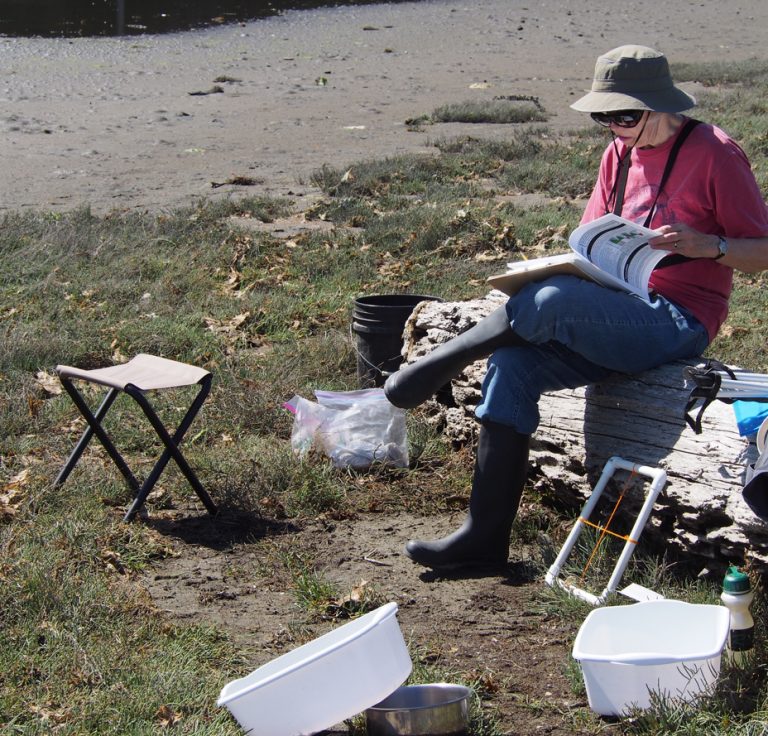
Kamp Kala. On a sunnier day, Eileen sets up base to prepare for sampling. (W. Feltham)
Several of the Krabbers have a background in studying the natural world and the Crab Team benefits from their knowledge and observational skills. Captain Chris has a Husky background, with an M.S. in Fisheries Management from UW, and spent his career studying shellfish and salmon fisheries in Washington and around the world. Wendy is the President of the PTMSC Board, with a wealth of teaching and natural history experience. If you’re ever in the area on a low tide, you’re likely to see her walking the beach, and uploading particularly cool sightings and beautiful photos to the citizen science app iNaturalist. She has even started an iNaturalist project focusing on the Crabs of the World! Katherine joined the program for the thrill of scientific discovery: “it was kind of on my bucket list to participate and see what a real field science project with a formal protocol is like, and I’m hooked now! This is really fun!”
August will mark the one year anniversary of the launch of monitoring at Kala Lagoon (with of course a break in sampling from October through March), and we will start to glean the benefits of multi-year sampling. Already, Chris and other returning veterans from our pilot year have commented that they are starting to notice seasonal changes in the critters they catch, and the habitat at their sites. Even in low-energy spots like pocket estuaries, the shape of the shoreline can change dramatically because of seasonal differences in tides and weather. It can be very gratifying to spend a lot of time studying one place very closely, because you inevitably start to realize that there is a lot more going on below the surface of that shallow lagoon than you first imagined.
Listen to the KPTZ Nature Now series featuring the Kala Krabbers: Episode 1 and Episode 2