
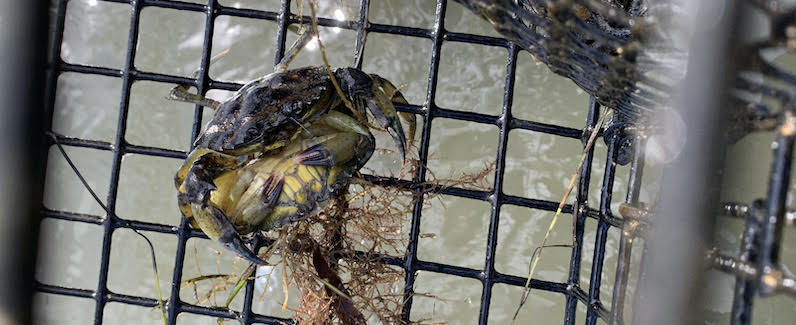
European green crabs literally caught in the act. This mating pair was captured in a shrimp trap. Photo courtesy of Chelsey Buffington, Washington Department of Fish and Wildlife
Let’s talk about sex
It’s no secret that biologists think about sex a lot. I mean, a lot, a lot. After all, reproduction is a cornerstone of the theory of Natural Selection (Williams 1966). Organisms that survive and reproduce perpetuate their genes and those that don’t, don’t. For more than 99.99% of eukaryotes, this reproduction requires sex so it’s no wonder biologists have sex on the brain. In fact, fields like Organismal Biology and Animal Behavior truly boil down to the study of the four F’s: feeding, fighting, fleeing, and – you guessed it – fornicating (Garvey et al. 2020). Invasion Biology is no different and much attention is focused on the topic because, not surprisingly, invasive species tend to be very good at reproducing.
Green crabs are of course no exception, and biologists have long noted the proficiency with which the species can reproduce in new environments. The specifics of how green crabs do the deed have been well-documented over the past 55 years through spicy and voyeuristically titled works like “An observed act of copulation in the shore crab, Carcinus maenas (L.)” (Cheung 1966*), “Multiple matings and sperm competition” (Becker & Bauer 2020), and “Mating behavior of the green shore crab Carcinus maenas” (Berrill & Arsenault 1982). These studies lay out the chemistry, anatomy, and behavior of green crab reproduction in fascinating detail.
What’s going on under the hood?
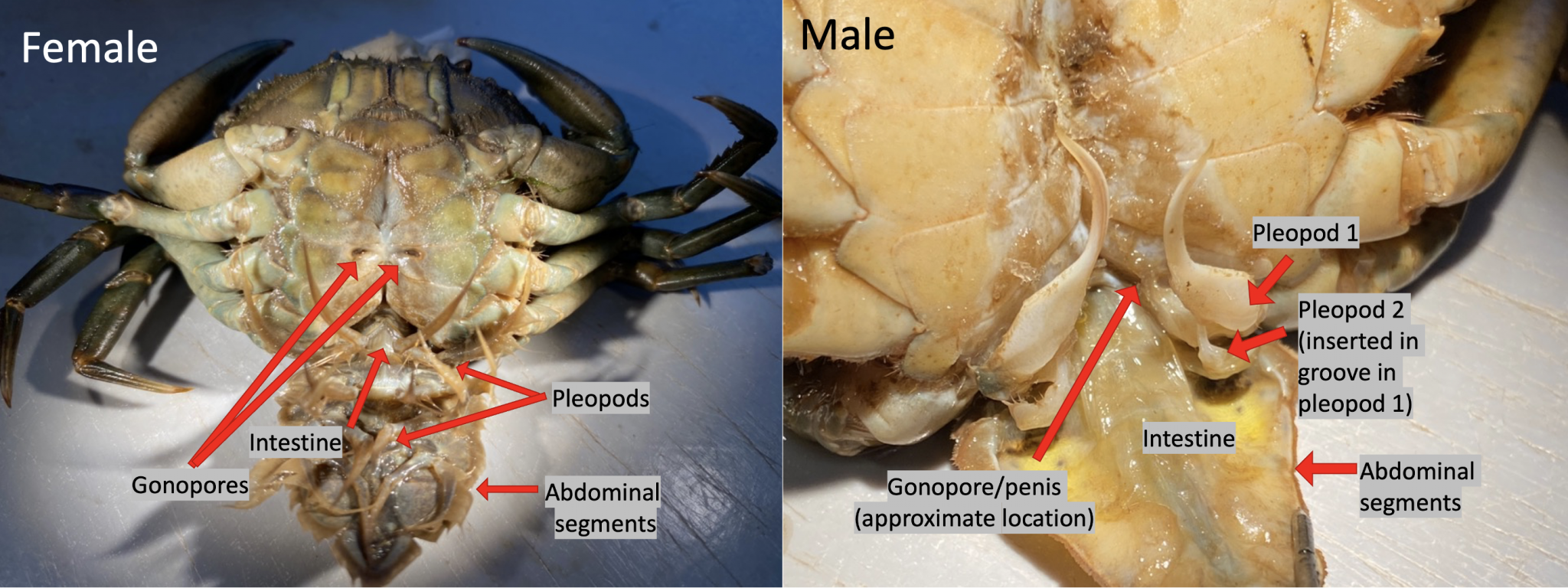
First, an anatomy lesson. We’ve previously discussed how male and female crabs can be distinguished by the shape of their abdomen, but that’s only part of the story; pulling back the flap reveals the more intimate details of the reproductive system. Male green crabs use two pairs of specialized reproductive appendages for mating (Spalding 1942). These appendages, nestled delicately beneath the hard abdominal flap, are essentially modified legs. The first pair are long and hollow, like the barrel of a hypodermic needle, while the second pair are smaller and act like plungers. Together these appendages form twin gonopods and act like a sort of double barrel injection system. One would not be faulted for thinking of these as penises, but actually the penises (yes, plural) are just small, fleshy nubs at the base of each gonopod that load this injection system with spermatophores. Each spermatophore is a cocktail of sperm, fluids, and a sticky chitinous substance that acts to hold everything in place once embedded in the female.
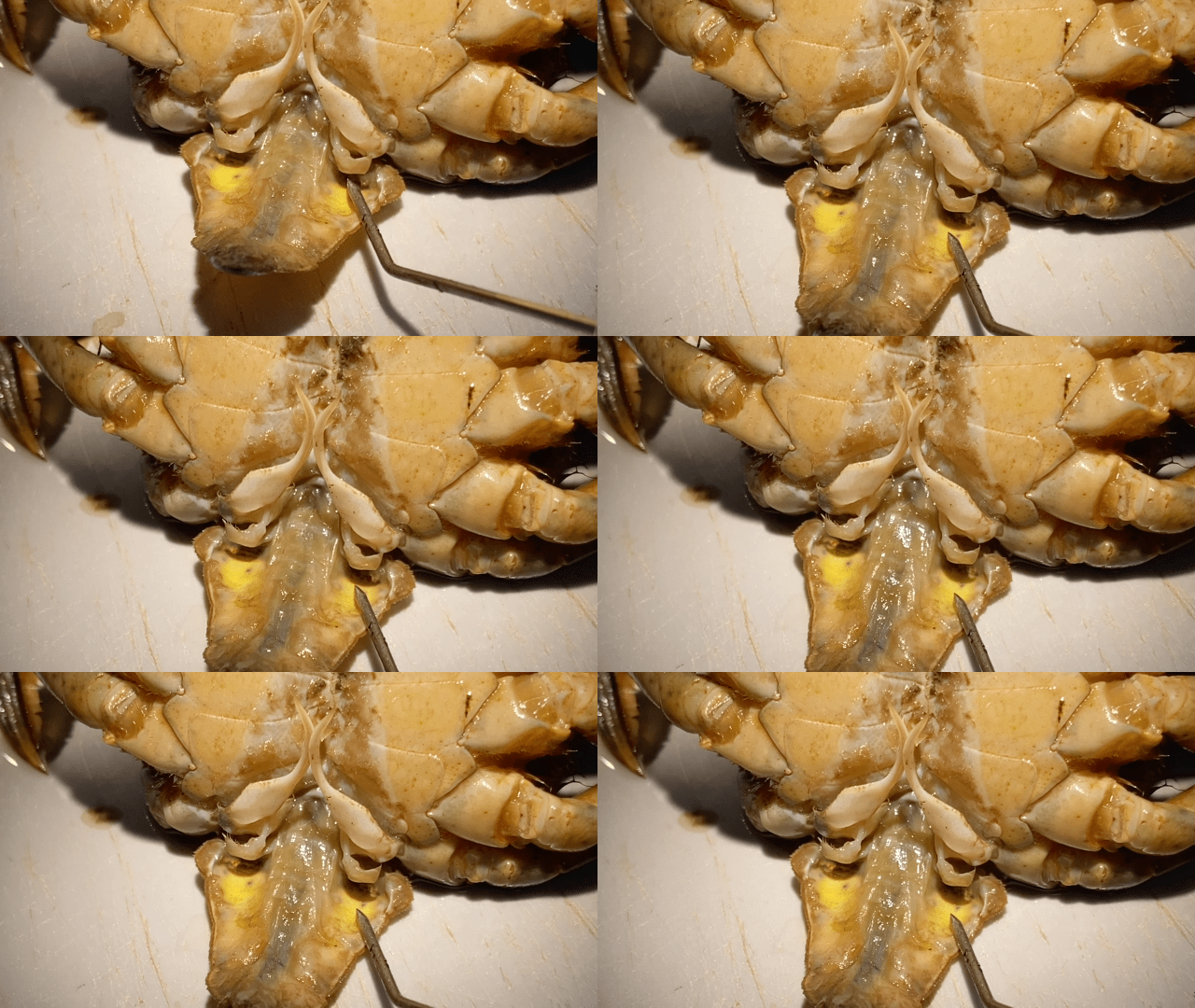
A look inside a male green crab’s abdominal flap. Notice how the 2 pairs of appendages work together, with the bottom pair acting as plungers for the top pair.
The female reproductive anatomy, by contrast, is somewhat cryptic. Beneath the broad abdominal flap are layers of feathery appendages – again, modified legs – that will eventually provide an attachment point for extruded eggs. The only reproductive organs visible are the large paired gonopores that reveal the opening to the two vaginas (Spalding 1942). Internally though, things are much more interesting, with each vagina opening up into an enlarged chamber called the spermatheca, where the spermatophores will eventually be deposited. Female crabs can store sperm for a year or more within the spermatheca and may produce multiple clutches of eggs from a single mating.
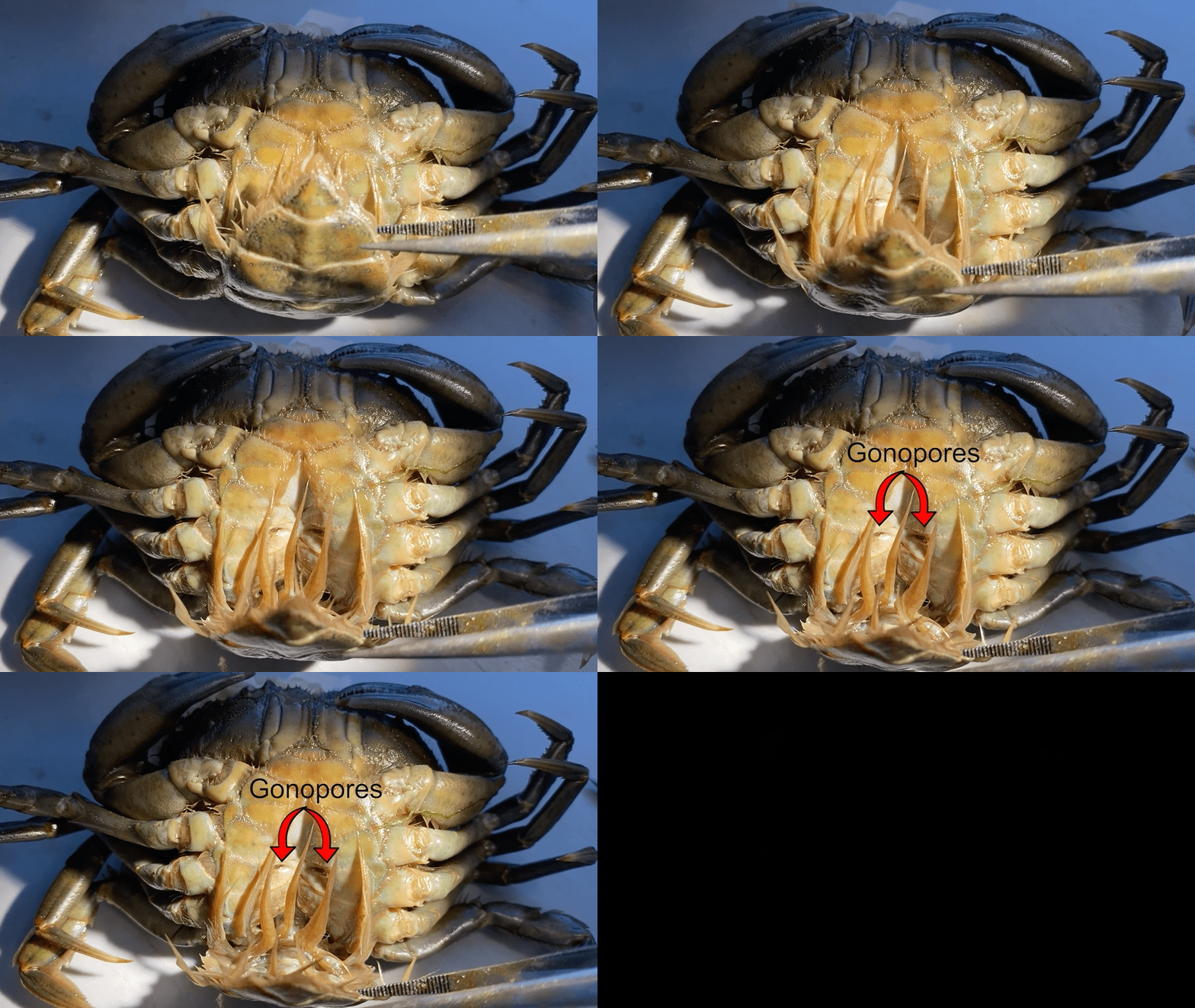
Inside the abdominal flap of a female green crab. Notice the two distinct gonopores and multiple feathery appendages.
Birds do it, bees do it…
Mating in green crabs is complicated. After all, an armored shell is great for defense but it makes sex awkward, if not impossible. Although some crab species can mate ‘hard-shelled’, green crabs cannot. Females must be in a newly-molted, soft condition in order to copulate. Thus, timing is everything. Females attract would-be suitors by exuding chemical attractants, called pheromones, in their urine (Eales 1973*), as their molt approaches. The smell of a ripe female can send males into a frenzy and competition often gets violent, frequently resulting in injury. Larger, older males are more aggressive than their smaller, younger counterparts, and tend to win these contests and drive away rival suitors. Interestingly, females also favor bigger males when given a choice (Sneddon et al. 2003*); receptive females may release more pheromones when a suitable male is present and frequently initiate courtship behaviors with a desired suitor. In these situations, the female may fall backward exposing their abdomen while performing an abdominal flapping motion for a minute or more, before sidling up beneath the male.
Once the male grasps the female in the pre-copulatory embrace, they will remain that way for up to two weeks. In this crustacean equivalent of ‘spooning’, the male carries the female everywhere, using his walking legs to hold her close, while fending off rival males with his claws (note: although neither crab seems very interested in feeding, we still occasionally find pairs in traps, likely driven more by instinct than hunger). When the female signals her molt is imminent, the male releases her briefly, only to grasp her once again in the copulatory embrace. With abdomens folded open, and male and female pressed close together “face to face”**, the pair begins mating. Now upside down, the female holds herself in place with the tips of her walking legs. Whereas for many creatures, the actual act of sex is a fleeting sprint, crab sex is a marathon. On average, green crab sex lasts more than 2.5 days (Berrill & Arsenault 1982)! Typically, the couple find a secluded spot during this time to avoid disturbance, which is critical not only to avoid interruption but to protect the female; with her shell not fully hardened, she could easily be damaged by another male or a predator. In fact, once mating is completed, the male will continue to hold the female in a post-copulatory embrace to provide additional protection in a behavior called mate guarding (Christy 1987). Eventually the male releases the female and the two go their separate ways.
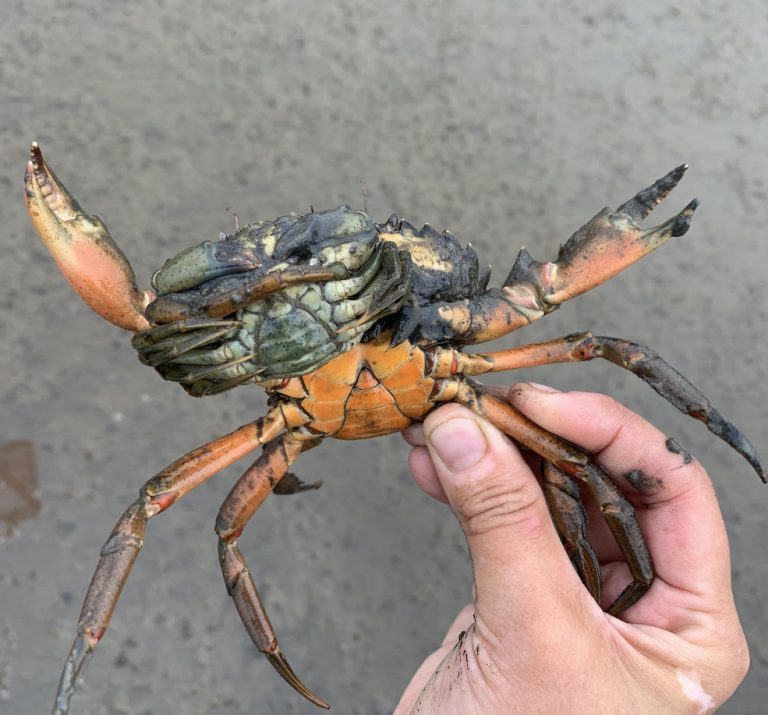
Male European green crab grasps the female in the pre-copulatory embrace. This behavior may continue for up to two weeks. Photo courtesy of Chelsey Buffington, Washington Department of Fish and Wildlife
For biologists, mating systems like this are extremely interesting for evaluating evolutionary questions. For example, one might ask why mate guarding occurs; from a male crab’s point of view wouldn’t it make more sense to mate with as many females as possible rather than investing precious time on a single encounter? That’s where sperm competition theory comes in (Becker & Bauer 2020). If a male releases a female too early, then she will most likely mate again, and male copulatory systems are well-adapted to thwart rival sperm. For example, bristles on the tips of the gonopods, fashioned like a bottle brush, may remove a previous male’s sperm. The shape of the gonopod, which is strongly curved (Clark et al. 2001), also ensures that the last male’s ‘deposit’ is placed more advantageously to ensure fertilization, in a process aptly called, “last male precedence” (Becker & Bauer 2020). And then there’s the spermatophore itself; the chitinous adhesive that holds the sperm in place can form a plug that seals off and segregates sperm from previous males (Beninger & Larocque 1998). Less is known about how female green crab influence this competition, although research in other species, including Dungeness crab (Jensen et al. 1996), suggests that females may ultimately determine which males are successful.
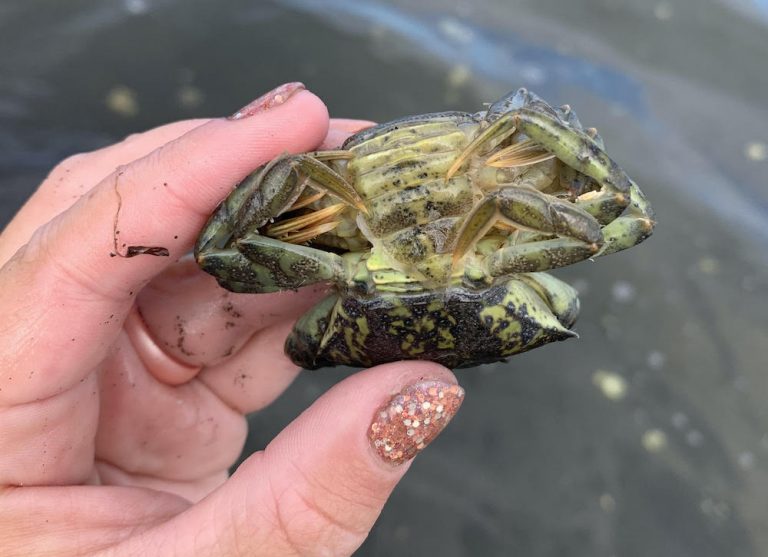
With abdominal flaps open, male and female green crabs mate face to face, often for over 2.5 days. Photo courtesy of Chelsey Buffington, Washington Department of Fish and Wildlife
The truth is that we’re still learning about the interesting sex lives of green crabs. While these new discoveries can be fascinating in their own right, understanding the details of how, when, and where green crabs find mates and reproduce can be incredibly helpful for developing successful approaches for management. For instance, researchers are already hard at work developing artificial sex pheromones that may someday help us attract frisky crabs before they mate. Every new discovery gives us biologists more to think about and could give managers more tools to control invasions.
-P. Sean McDonald
*While we try to link you directly to the research we reference, some of the studies cited in this article are not open access. If you have any questions about any of the works cited here, please feel free to reach out to crabteam@uw.edu.
**Interestingly, “face to face” mating is somewhat rare in the animal kingdom, particularly outside of mammals like the great apes and cetaceans (i.e., dolphins and whales). In fact, it’s so rare in invertebrates that observations of the behavior in Pacific striped octopus were said to have “stunned scientists”.