Site Spotlight:
Cypress Island
Number: 541
Region: Cypress Island, San Juan Islands
Launched: 2017
Site Captain: Erin Stehr
Habitat Type: Lagoon
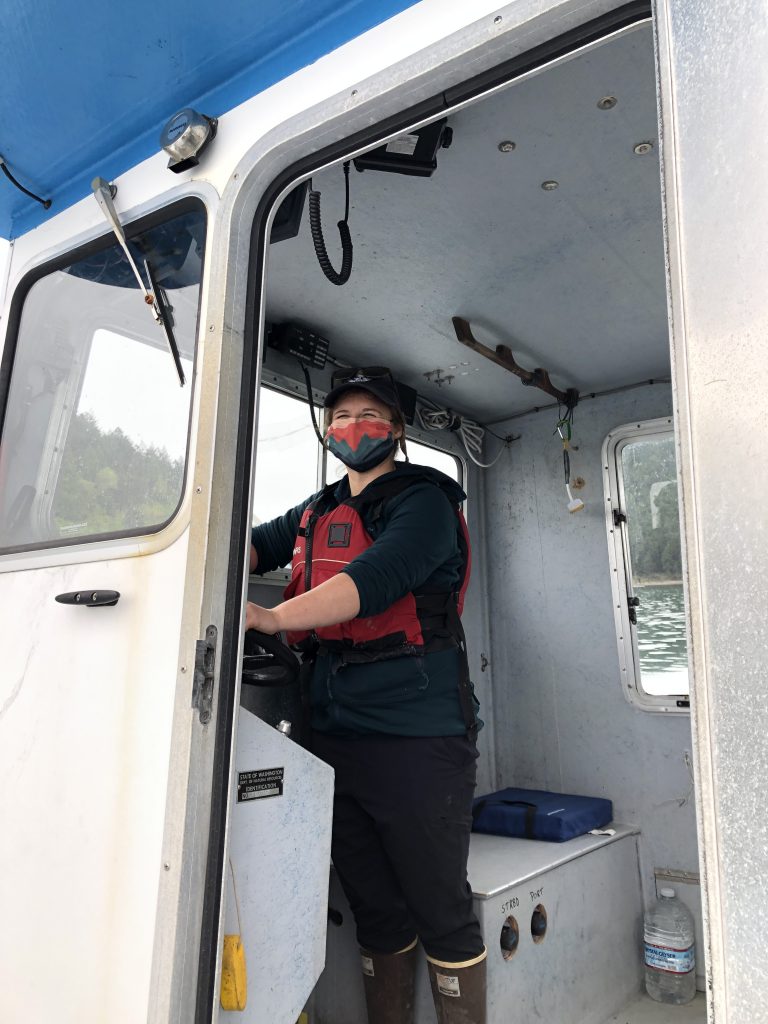
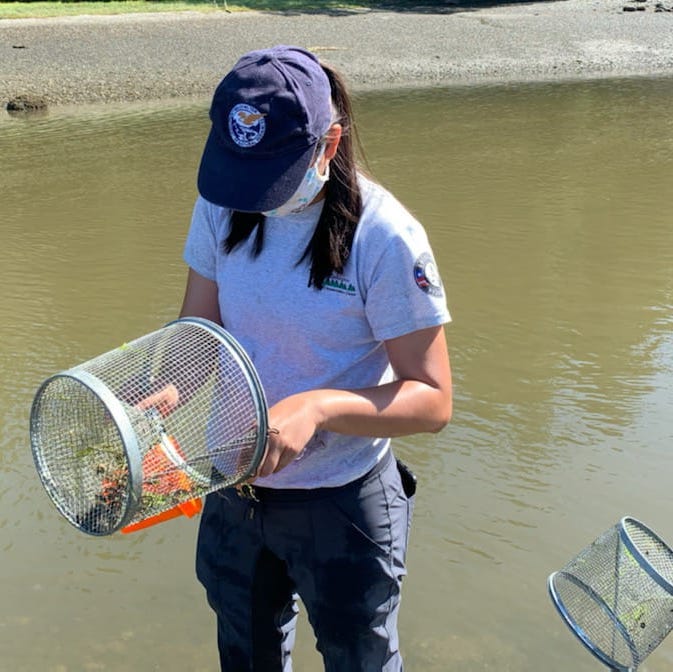
Have you ever been to Cypress Island Aquatic Reserve? If so, you must have a boat (or a friend with one!), as this reserve is only accessible by water and is located on the largest relatively undeveloped of the San Juan Islands. Managed by the Department of Natural Resource (DNR), this reserve is home to one of the most remote Crab Team sites.
DNR Aquatic Reserve Program
The Cypress Island Aquatic Reserve was established in 2007, adding 6,065 acres of protected aquatic lands in Secret Harbor to the thousands of upland forests, wetlands and grasslands that were already protected under NRCA and NAP designations. The reserve includes state-owned tidelands and marine bedlands, which are managed to conserve and minimize negative impacts to the aquatic habitats.
DNR Aquatic Reserve Program manager Roberta Davenport highlights that while every aquatic reserve in the network has a different management plan, “monitoring and managing invasive species is a high priority” for all of them. Davenport points to the mobile nature of European green crab to highlight why collaboration across geography and partner agencies and organizations is critical to managing this invasive species. In 2017, Crab Team teamed up with DNR to launch a new Crab Team monitoring site in the Cypress Island Aquatic Reserve at the south end of the island in Secret Harbor.
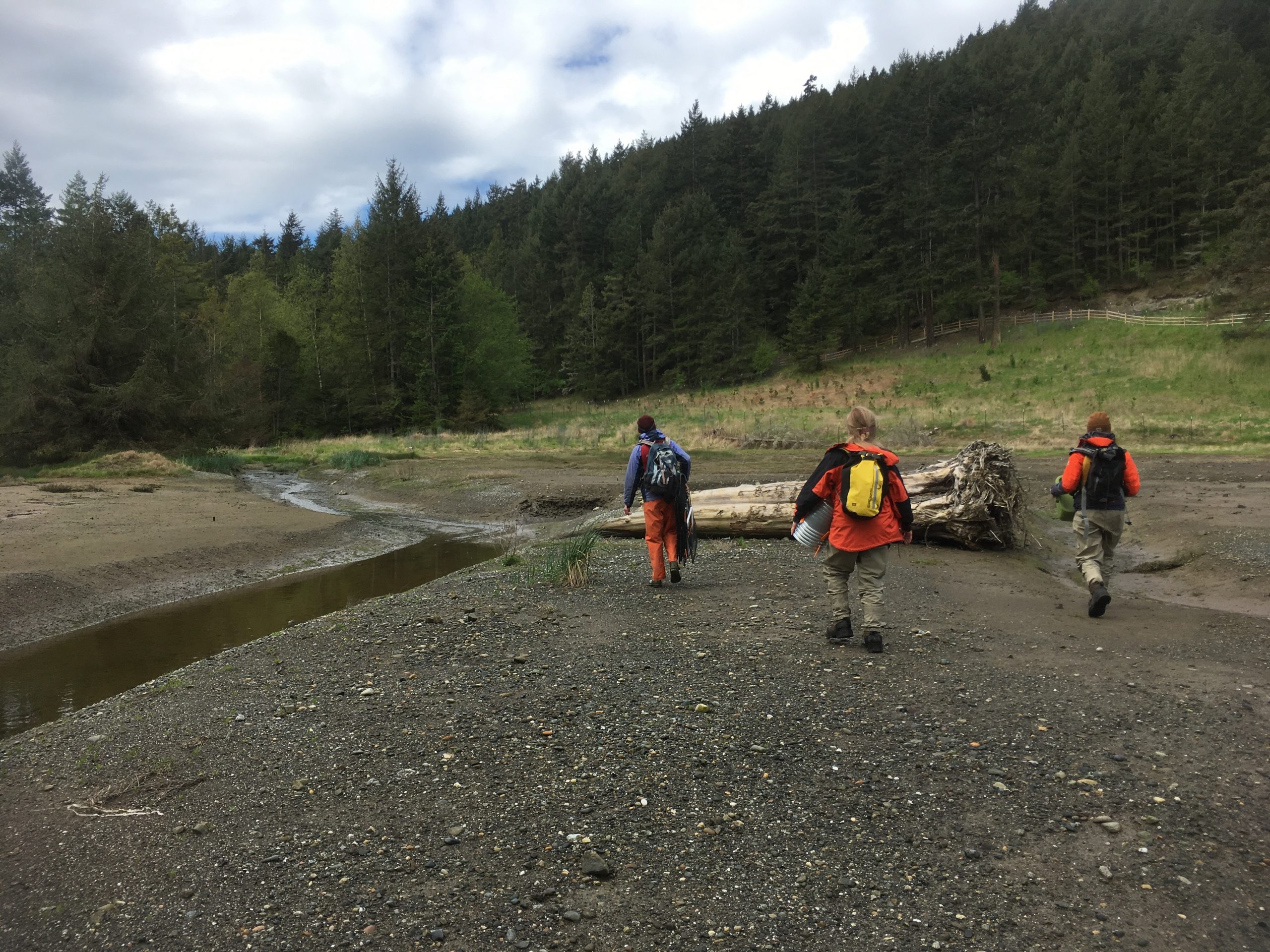
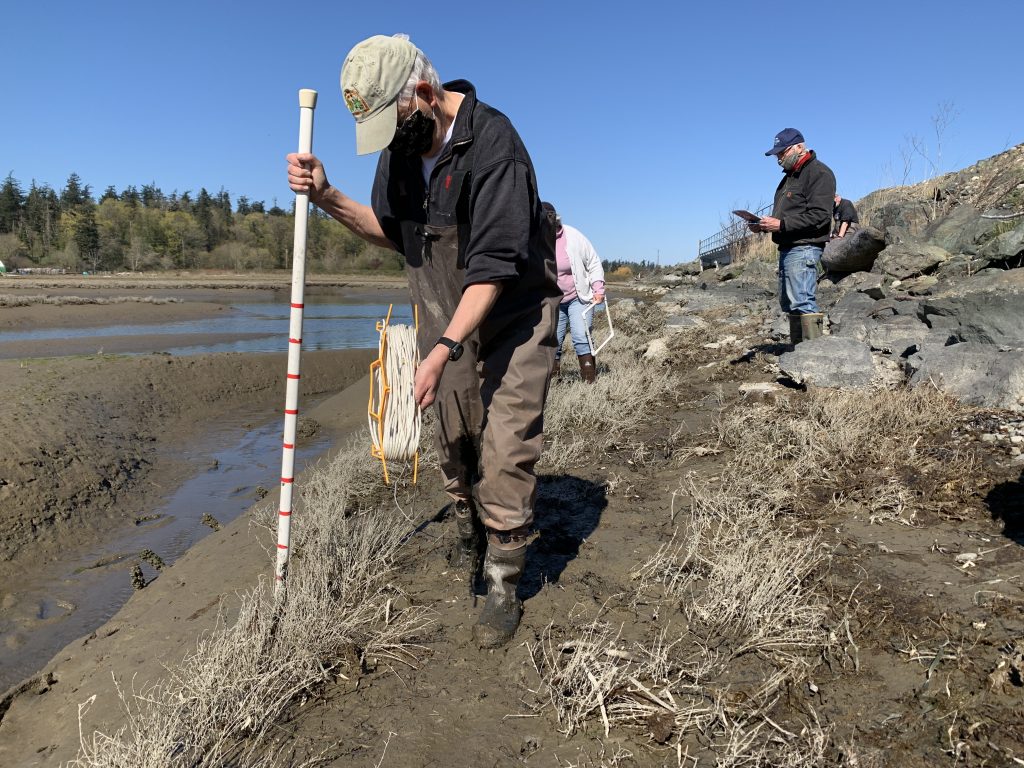
Looking for European green crabs on Cypress Island. Photo courtesy of Erica Bleke
Puget SoundCorps
Since 2017, Crab Team monitors at the Cypress Island Crab Team site have been a mix of DNR staff and Puget SoundCorps (PSC) members. The Puget SoundCorps is a statewide program administered by the Department of Ecology’s Washington Conservation Corps that provides hands-on opportunities for people who are new or returning to the workforce. Multiple partners and agencies participate by providing job opportunities and skills to prepare participants for future employment. The Aquatic Reserves Puget SoundCorps, in particular, appeals to folks who are interested in natural and marine science. Members of this specialized team engage in a host of scientific field work opportunities, collecting critical monitoring data that DNR uses to inform reserve management decisions.
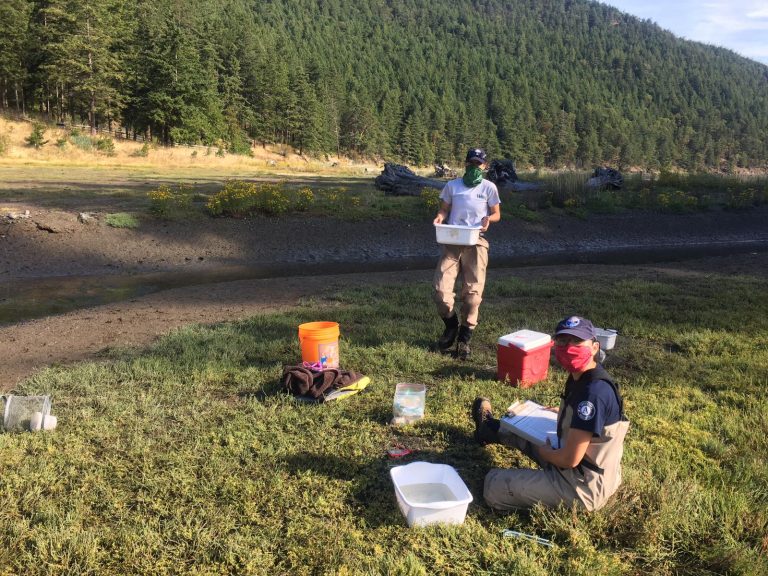
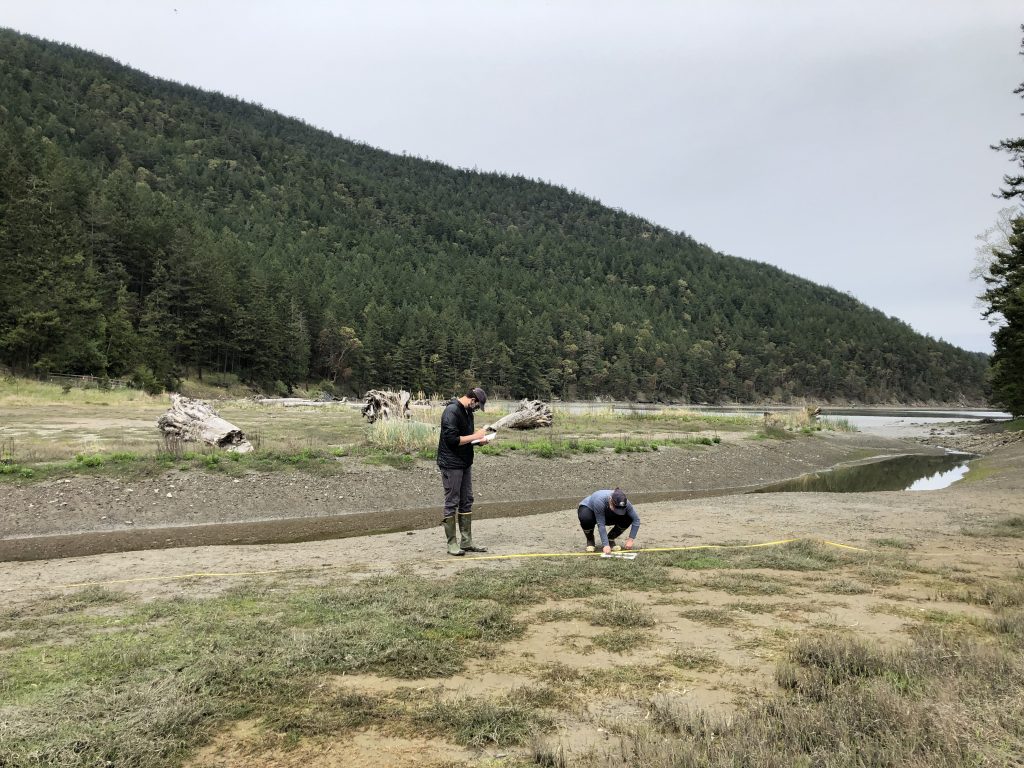
Abby Jackson and Malise Yun setting up for Crab Team monitoring. Photo courtesy of Erin Stehr
When they’re not out monitoring with Crab Team, the Aquatic Reserves PSC members are busy with their many other monitoring efforts including forage fish spawning surveys (contributing the Washington Department of Fish and Wildlife statewide forage fish spawn database), seagrass surveys (contributing to SeagrassNet, a global database) and marine debris pick-up efforts. PSC Team Lead Erin Stehr manages these monitoring efforts and works hard to provide her team with career development opportunities. For example, all team members are asked to step into a project leadership role during their 11-month positions where they are responsible for data entry, management and communication with monitoring partners. This year, Hanna Bridgham is leading the Crab Team monitoring efforts for the Aquatic Reserves crew. This project offers an incredible opportunity for leads like Hanna because she has the opportunity to join management meetings and interact with management partners to round out her understanding of the larger European green crab management efforts in the state.
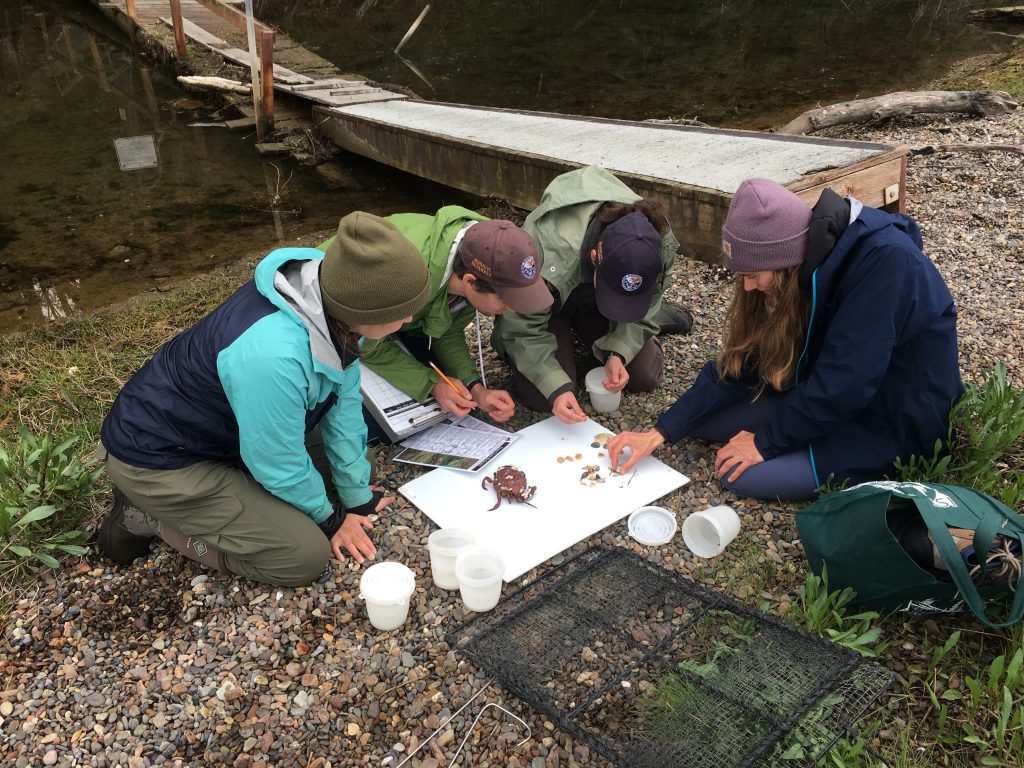
Ben Papadopoulos was a member of the Aquatic Reserves Puget SoundCorps team in 2020 and returned as the assistant supervisor this year. When asked to reflect on his PSC experience, Papadoplous said that he values the opportunity to wear many hats in the program, which he hopes will help prepare him for a future career in public health, bioinformatics and/or food security. PSC members like Papadopolous also expand our early detection capacity in the region by putting more trained boots in the mud. Along with DNR staff, PSC members conduct Crab Team monitoring at two sites in the 55-site Crab Team network, on Cypress Island (Cypress Island Aquatic Reserve) and Anderson Island (Nisqually Reach Aquatic Reserve). In 2020, PSC crew members stepped in to help WDFW and Northwest Straits Commission staff with trapping efforts in Drayton Harbor when they needed more hands on deck. Also, in 2018, an eagle-eyed crew of PSC members spotted a European green crab molt in Fidalgo Bay while conducting other monitoring efforts, unrelated to Crab Team. Their call initiated an assessment trapping by WDFW, which thankfully turned up no live green crab in the area. PSC members take their training with them even after their term ends. Many have gone on to work in natural science positions around the state keeping a wary eye out for green crab while doing so. Leveraging the skills of managers who work across large geographies in this way is a huge benefit of the Crab Team early detection network, and builds management capacity in the state in a cost effective way.
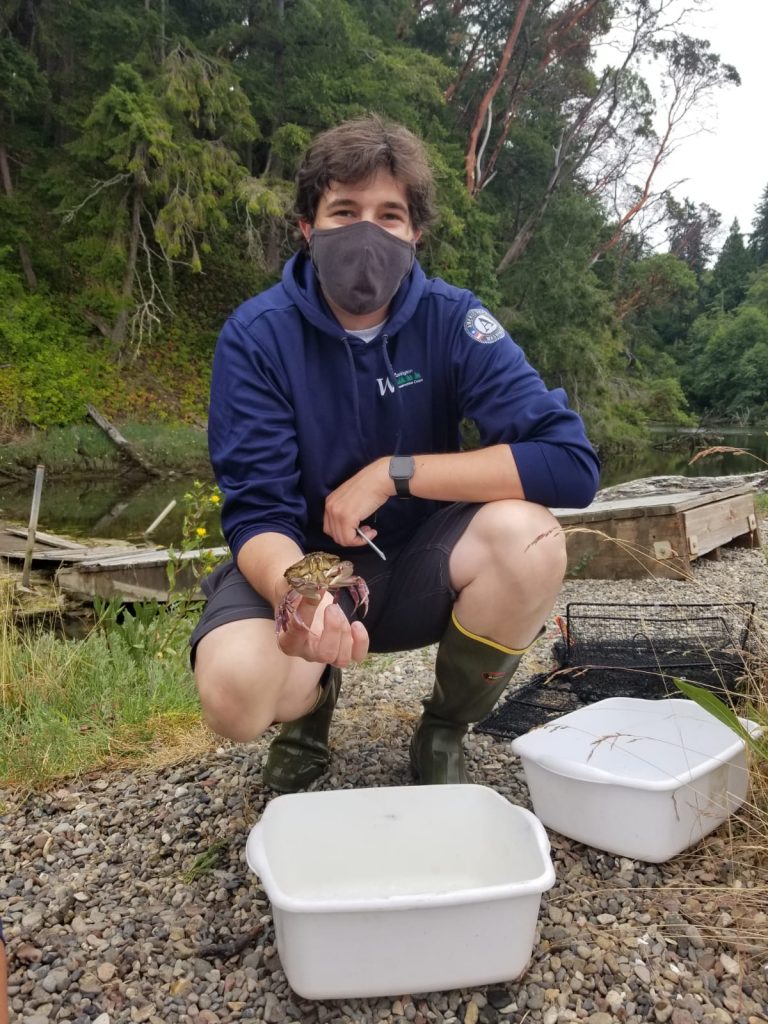
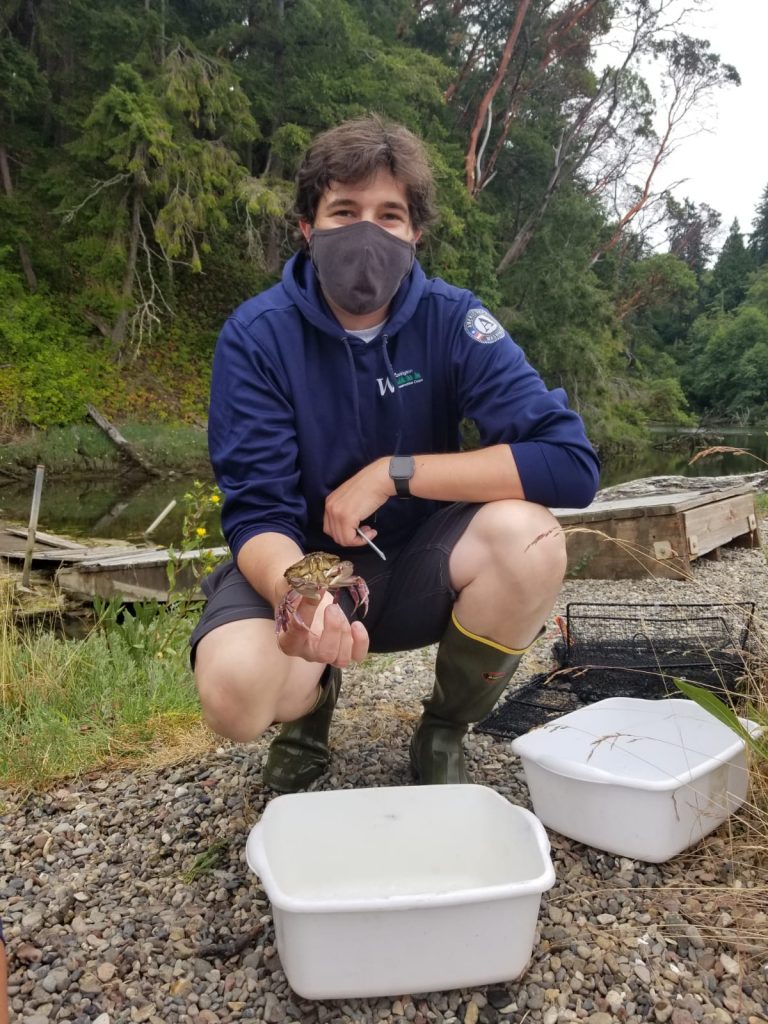
PSC member Ben Papadoplous handles crab caught in Crab Team trap survey. Photo courtesy of Lilya Jaeren
Cypress Island restoration
The location of the Cypress Island site in Secret Harbor, in particular, has changed substantially over the years. Members of the Samish Indian Nation have many pre-contact, historic and modern uses on the island, including fishing, practicing spirituality and ceremonies, harvesting plants and living seasonally and year-round. In 1855, new homesteaders began transforming the south end of the island by diking the tidal flow, filling a salt marsh and draining wetlands. The fishing industry established a foothold in Secret Harbor in the 1900s, operating a salmon hatchery from 1900-1920 and later established fish farms in the harbor. In 1949, Secret Harbor became home to the Secret Harbor School, a residential school for boys that operated on the island until 2008. When DNR acquired these lands in 2009, a massive, years-long restoration project began. More than 30 structures were taken down, restrictive dikes and berms were removed and additional channels were added to enhance connectivity between freshwater and saltwater environments. Over time, these channels have shifted and branched and salt marsh vegetation has slowly started to return.
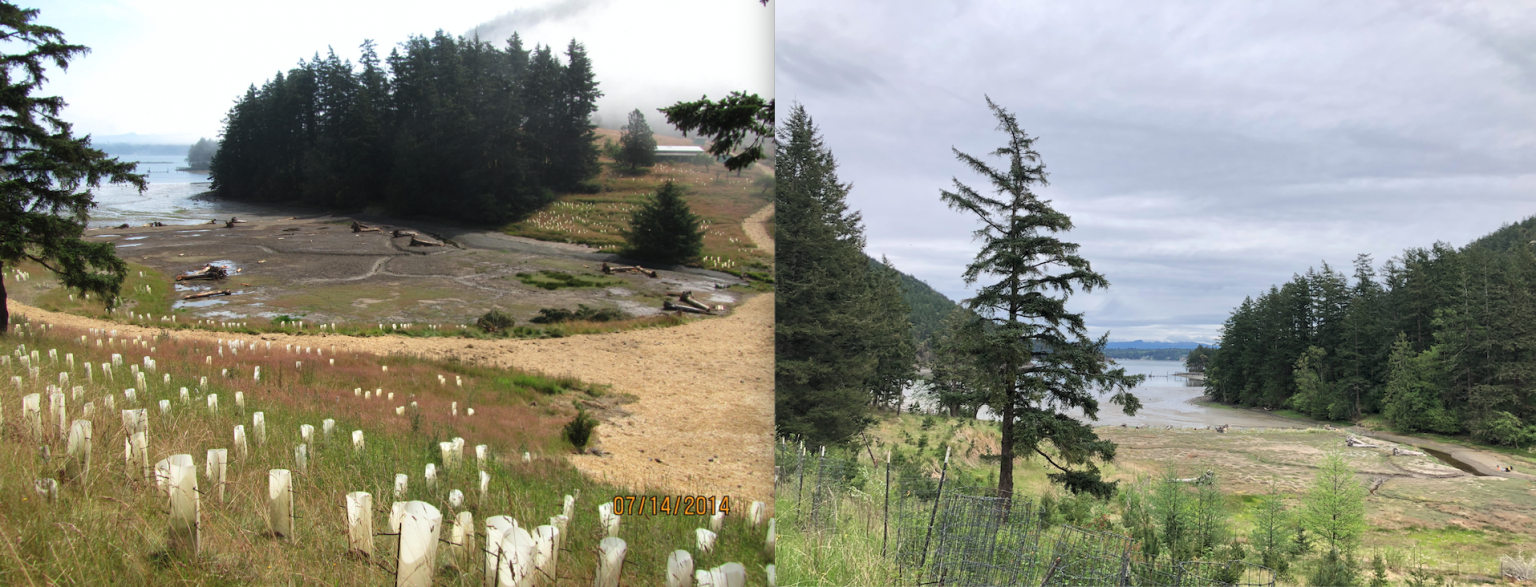
View of Secret Harbor in 2014 (left) and in 2021 (right). Photos courtesy of Erin Stehr (L) and Emily Grason (R)
As natural forces continue to work on these restored lands, DNR staff have watched the vegetation return in real time. In fact, the location of the Crab Team shoreline survey has shifted a full nine meters toward the water since the site was established in 2017. Data from Crab Team surveys provide important insights into how the flora, fauna and topography of this shoreline are changing as the estuary rebounds. Several additional Crab Team sites located in restoration areas like this offer unique opportunities to observe changes like this, including Discovery Bay (Port Townsend), Carpenter Creek (Kingston), and Post Point (Bellingham). Three more Crab Team sites (Duckabush, Titlow, and Harper) are also slated for restoration projects in the future.
These observations provide a broader picture of ecosystem dynamics at these locations, contributing to a long-term dataset that can be used by groups beyond Crab Team. For example, because most restoration monitoring efforts focus only on habitat use by salmonids, Crab Team monitoring dramatically expands the scope of information gathered, both in the duration of monitoring efforts and the diversity of organisms observed. This wide breadth of data provides managers with a more inclusive view of how restoration processes unfold in these re-engineered systems. Ultimately, Crab Team data play an important role in deepening our understanding of pocket estuaries and salt marshes in our region. We are grateful for our Crab Team partners and volunteers for working together to build this resource across the Salish Sea!
–Amy B. Linhart
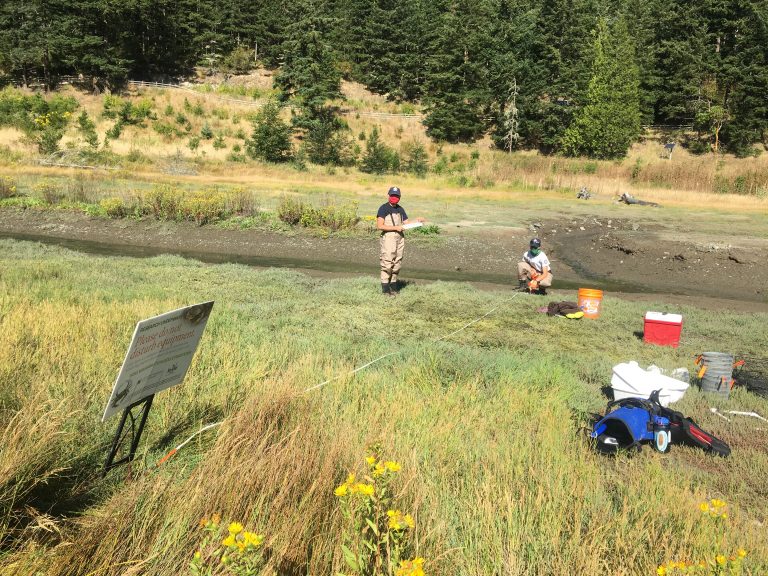
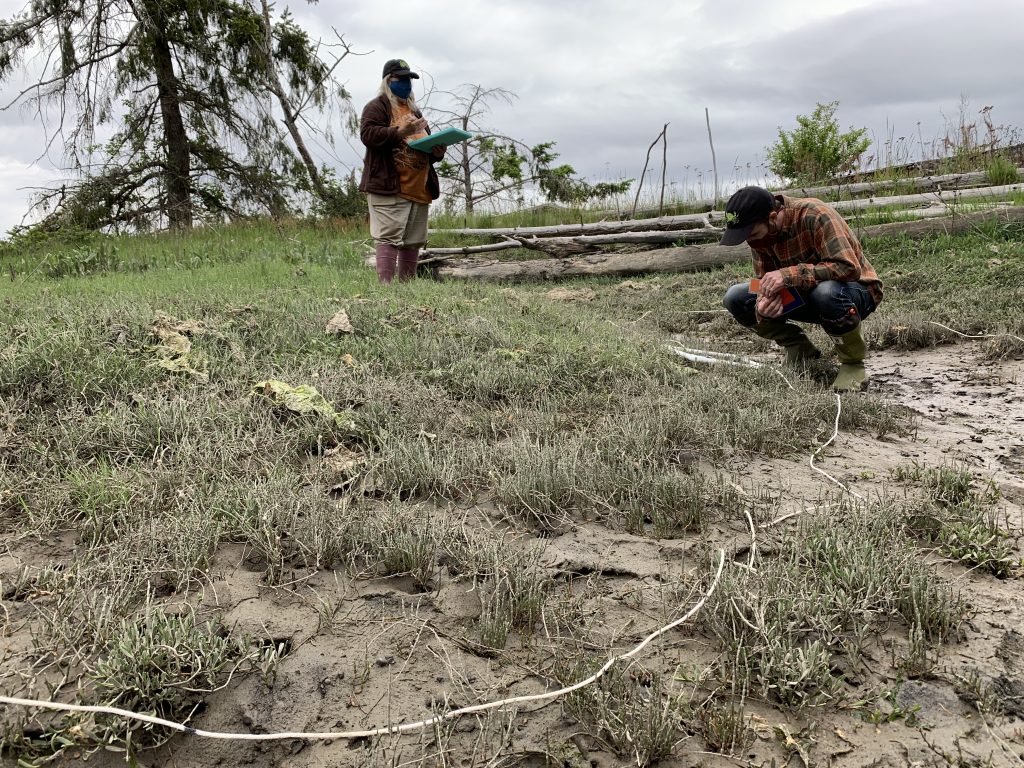
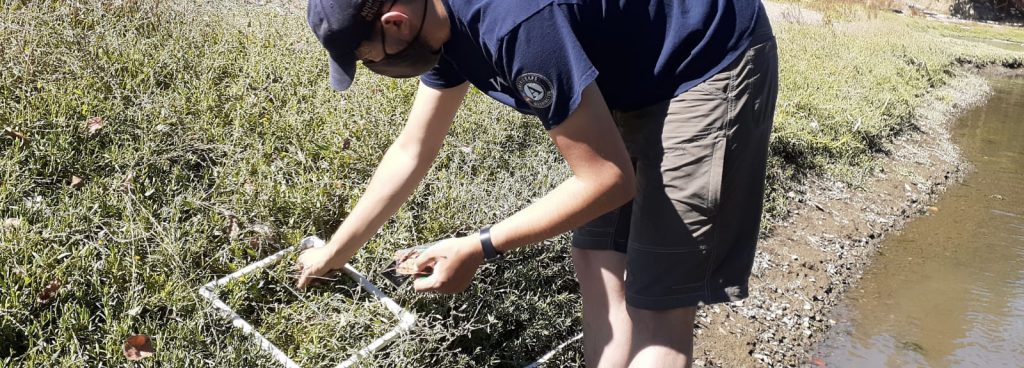
PSC members Abby Jackson and Malise Yun busy documenting different shoreline features during Crab Team monitoring. Photo courtesy of Erin Stehr
Photo Gallery
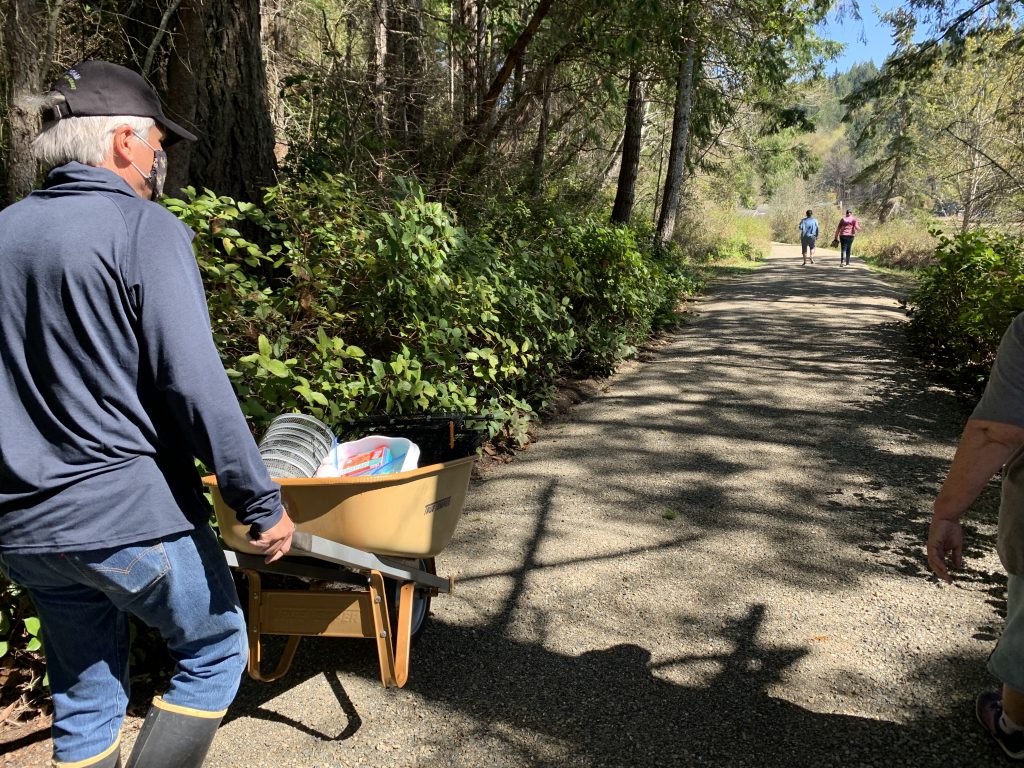
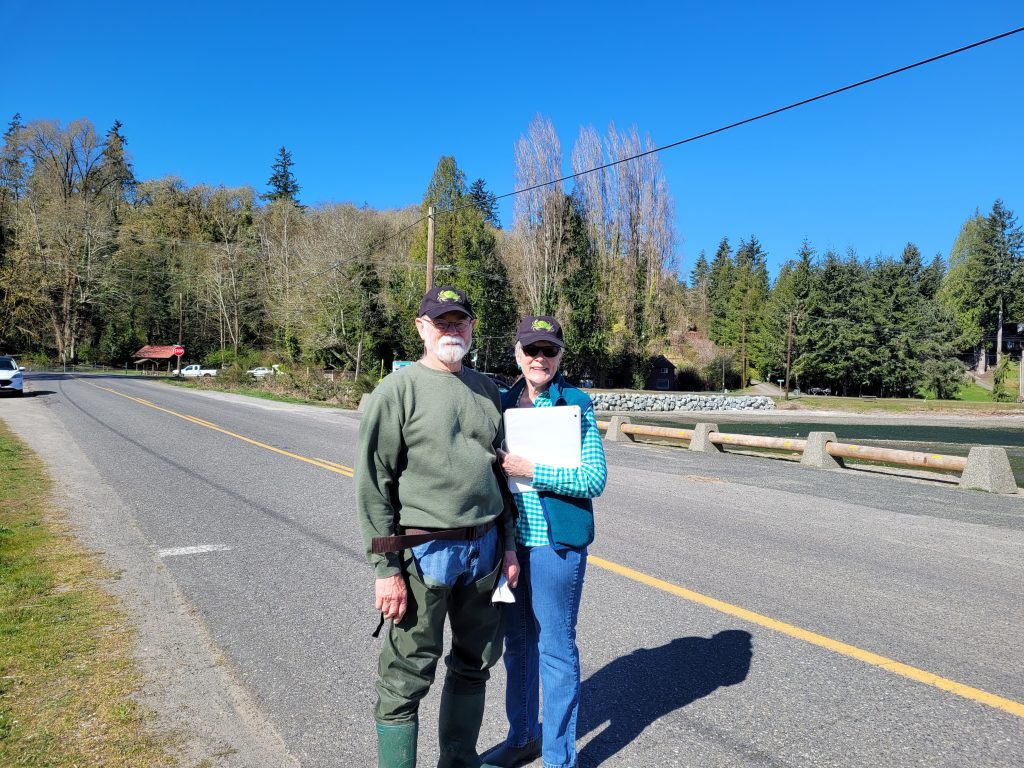
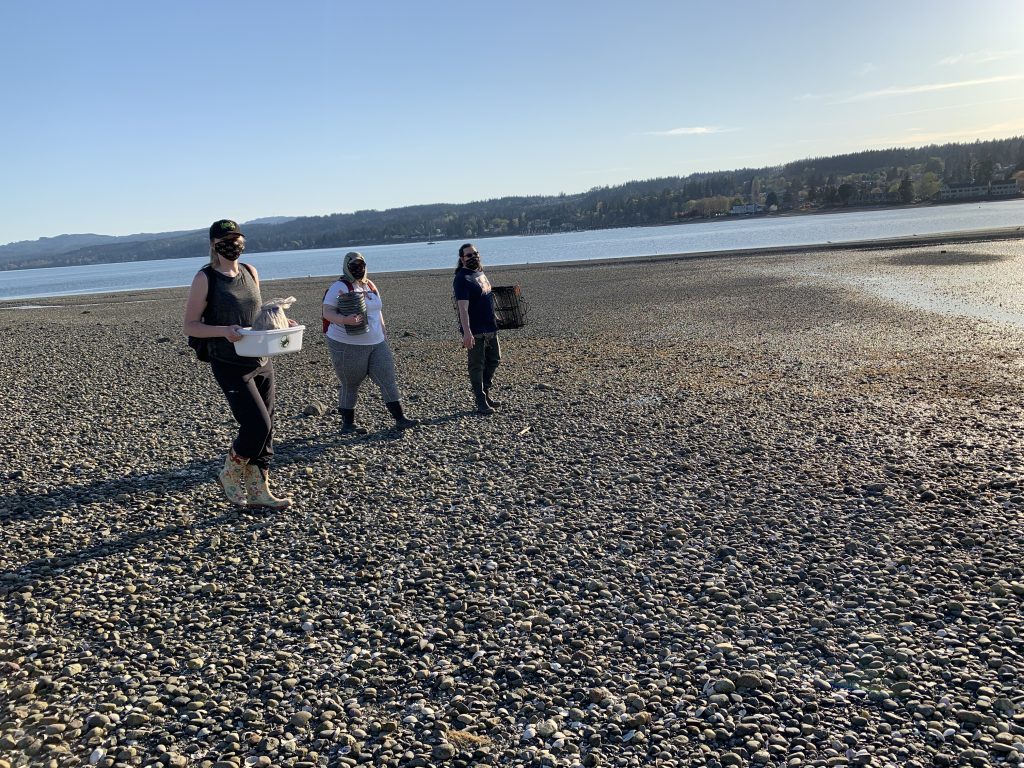
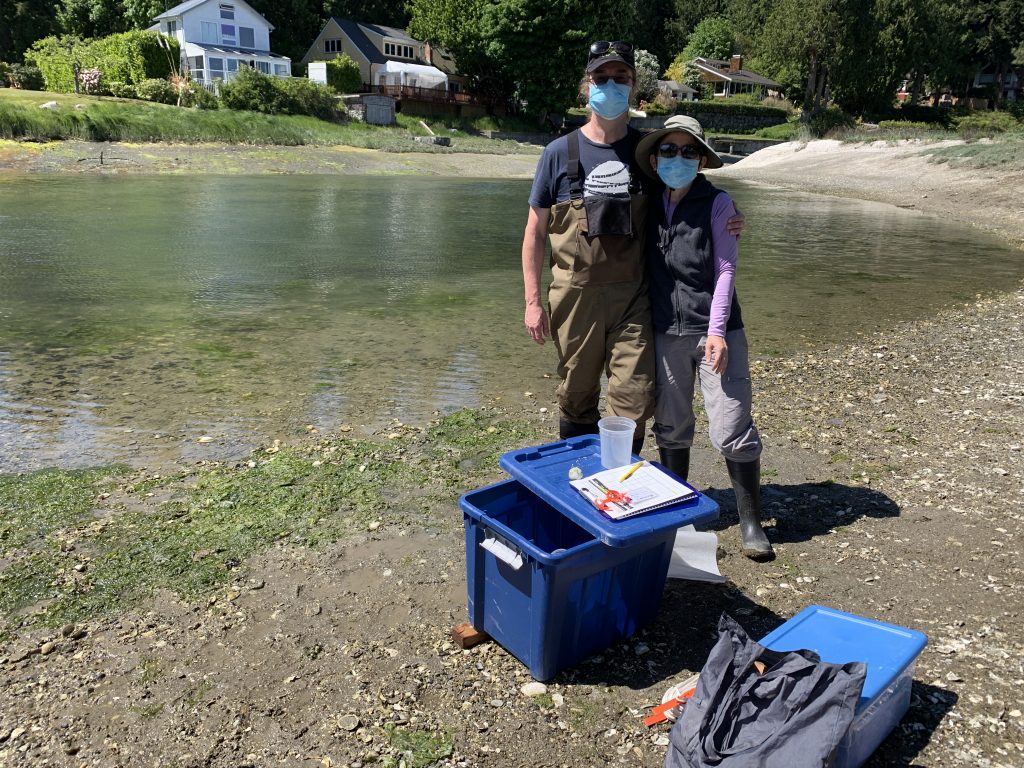
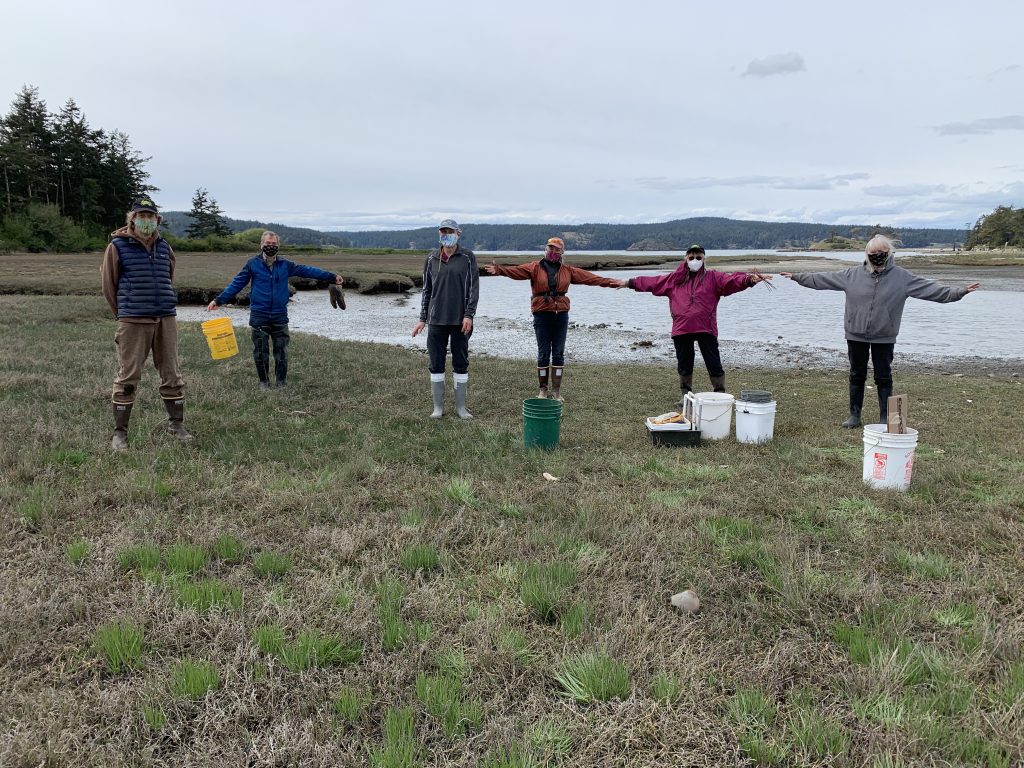
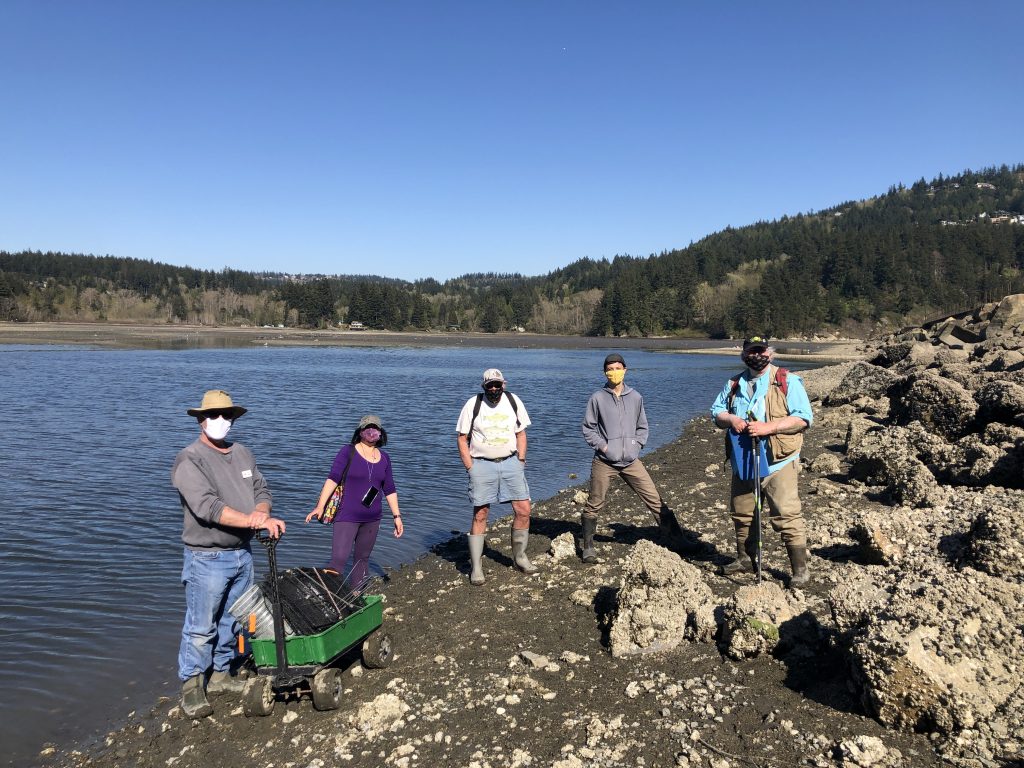
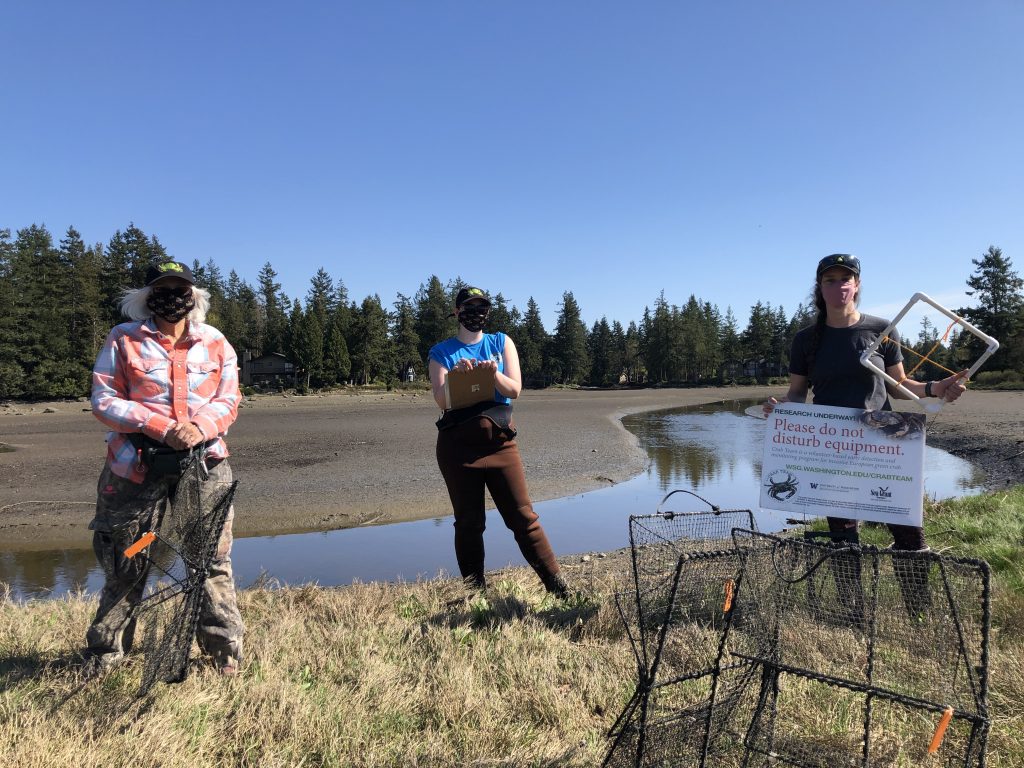
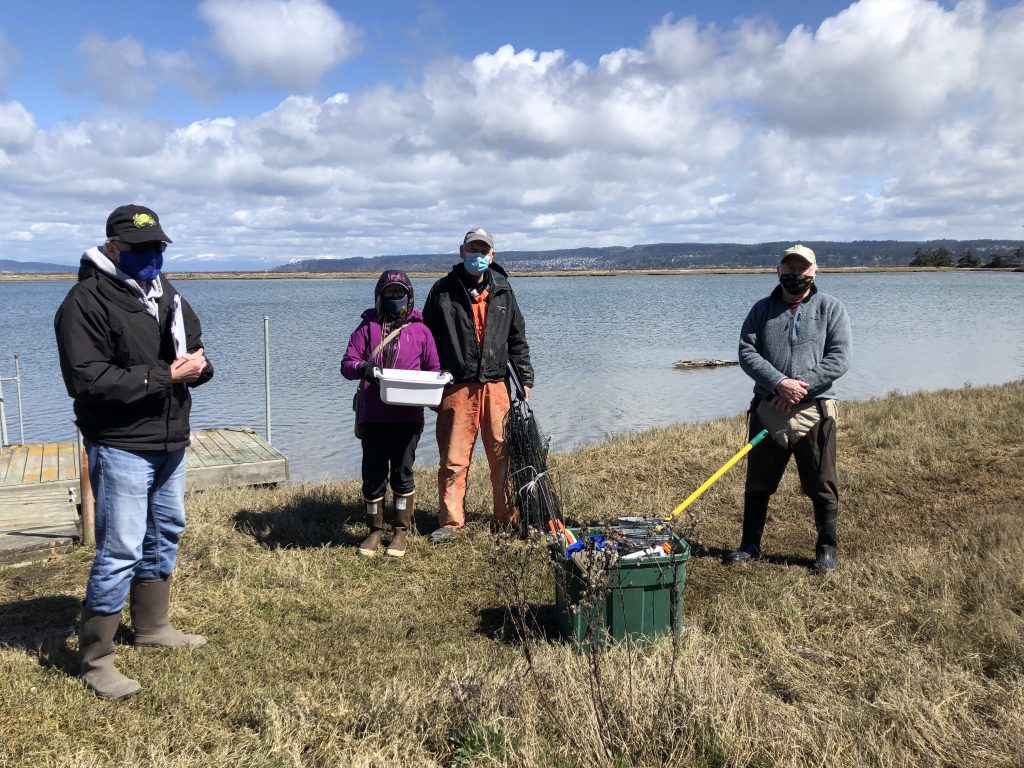
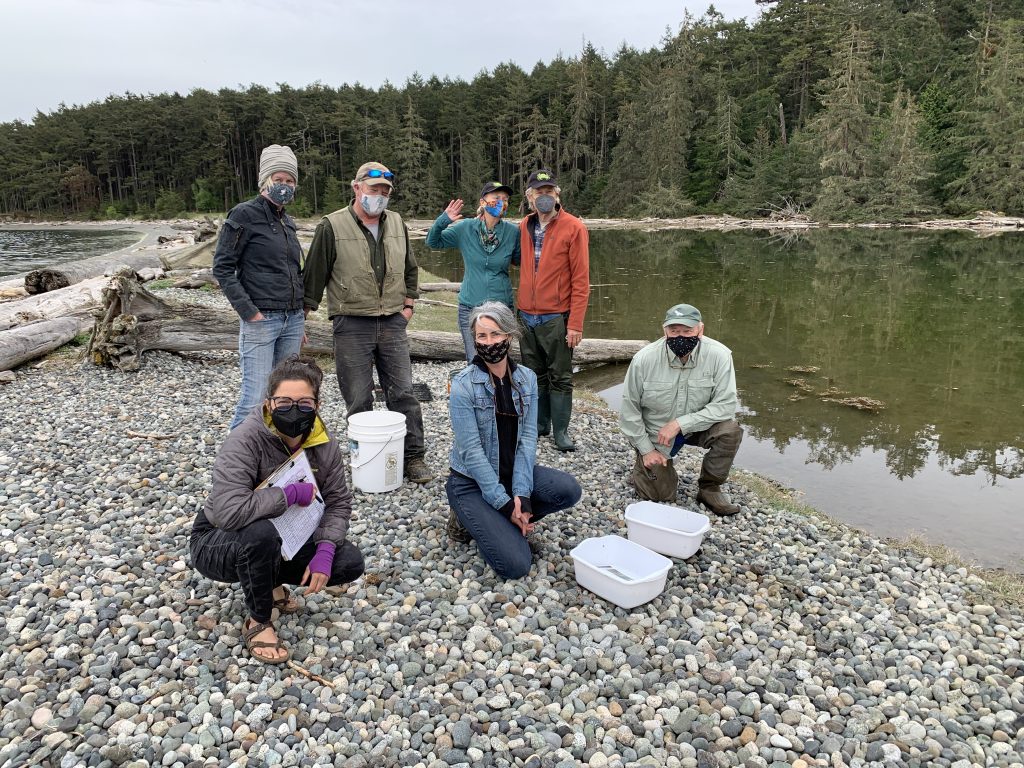
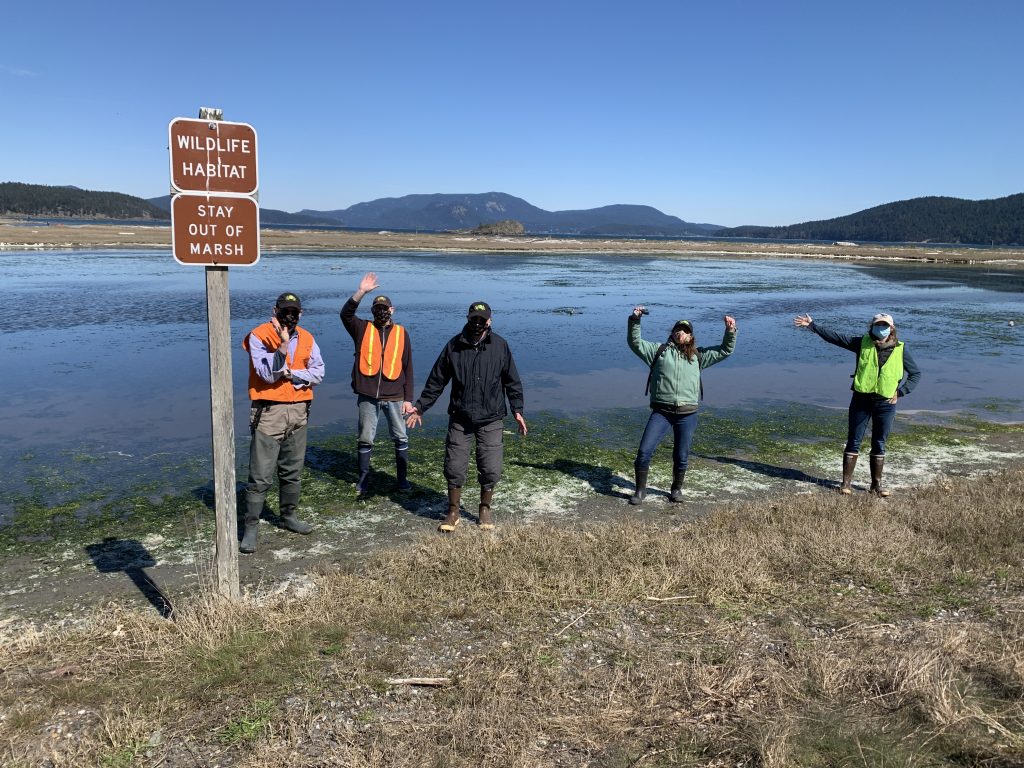
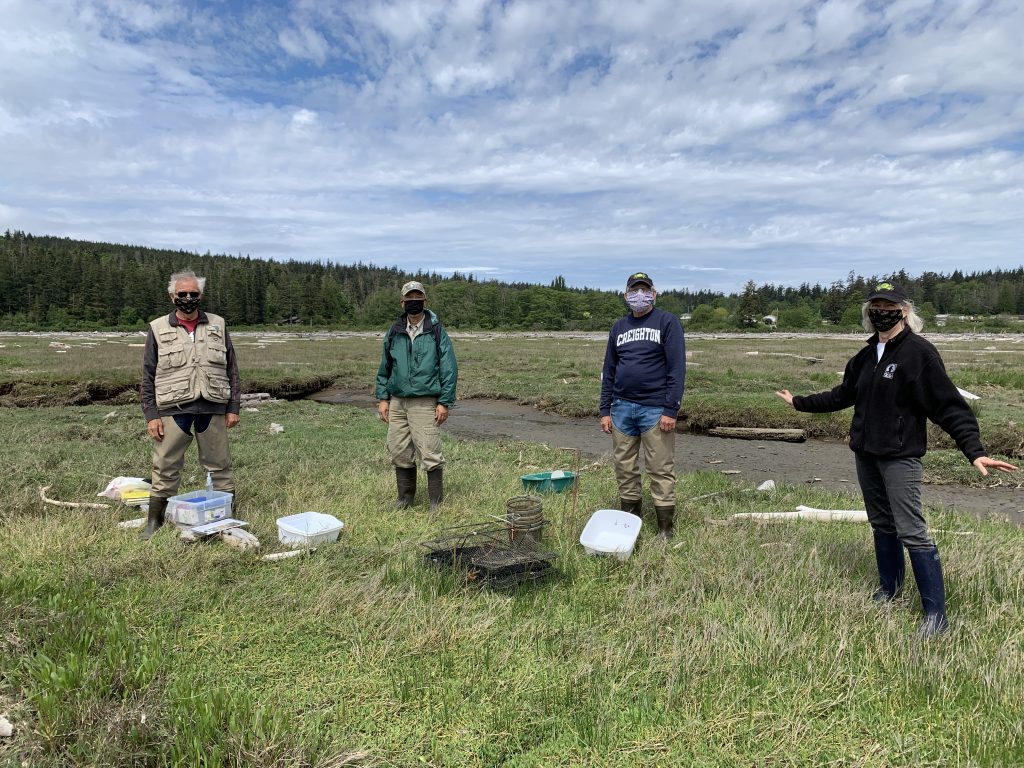
We love to get the virtual experience of monitoring with all of the Crab Team volunteers. Do you have a photo to share? Send it to crabteam@uw.edu. (Click on arrows to scroll, and photos to enlarge for more detail.)