
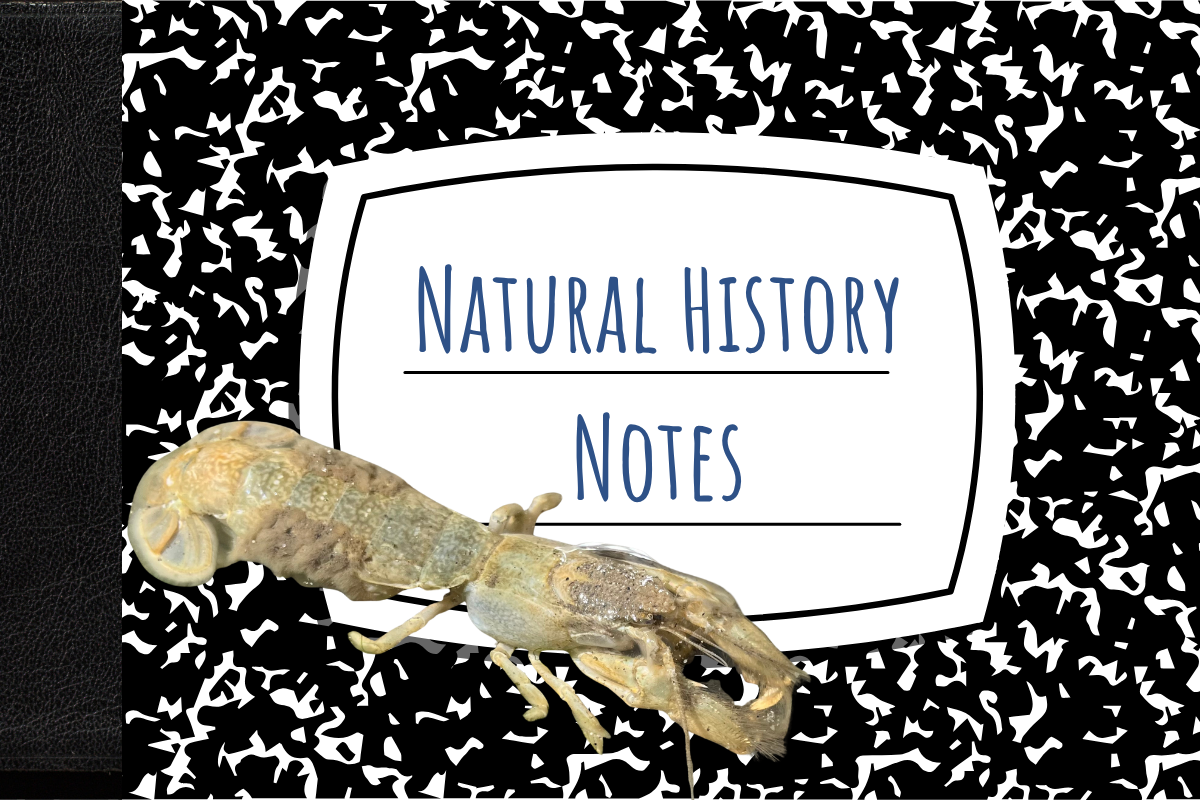
Natural History Notes: BURR Molts
Phantom of the clawpera … or … Why just a claw?
All crustaceans have to molt, yet not all parts of exoskeletons are created equal. Hermit crab molts aren’t much more than a collection of legs and claws attached to a small carapace. The rest of a hermit crab body doesn’t have to be heavily calcified because their chosen snail shell protects those bits. For burrowing shrimp (BURR for Crab Team purposes, primarily bay ghost shrimp and blue mud shrimp), the sediment that surrounds their burrows protects them, and they are free to live a low-calcium life. To work their burrows though, their claws and legs do need to be hardened. A fresh BURR molt might have a full body, but the thinner bits don’t last long, and their big right claw might be all that weathers the elements. While Crab Team protocols require a carapace for a molt to count, you can certainly make a note if you find these strange claws. The fossil record is also full of them!
More info: Burrowing shrimp are cool, creepy, critical, controversial critters. Read more in our previous newsletter article.