
Creature Feature: Staghorn Sculpin
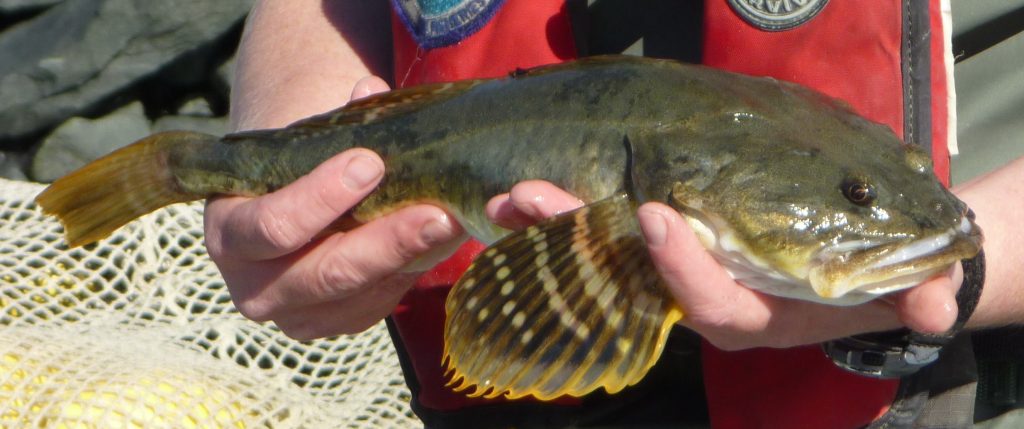
One of our favorite fishes is the staghorn sculpin, (Leptocottus armatus – LEAR, to our volunteers). That turns out to be a good thing, because, after shore crabs, staghorn sculpins are the most abundant organism in our traps, so we see quite a few.
The other common name for staghorn sculpin is bullhead, and both of these names turn out to be helpful in identifying this fish. First, the characteristic that would most endear this species to Stannis Beratheon in Game of Thrones – the antler-like spines that adorn the upper edge of this fish’s gill cover (operculum). When agitated, the fish will flare the opercula out on either side of their head, which, combined with forked spines, makes it a much less-tempting snack for predators (unless of course, you start at the tail end). These forked spines are distinct among the sculpins we have here in pocket estuaries, and are a dead giveaway that the fish stuck in the trap (or stuck to your glove, so watch out!) is a LEAR.
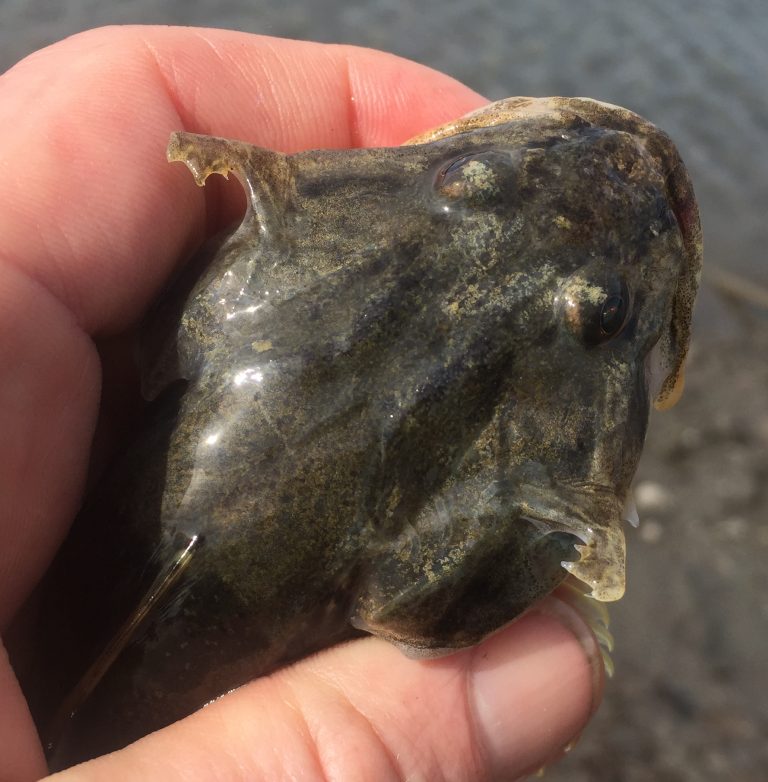
Wide head, and rounded snout of staghorn sculpin seen from above. The flared spines on the operculum pose a challenge to potential predators. Photo: PS McDonald
The fish gets the name “bullhead” because of its big ol’ noggin. A wide head means a wide mouth too, which enables LEAR to eat larger prey than similarly-sized sculpins of other species. LEAR is a predatory fish that will eat most anything from A-Z (amphipods to zooplankton), but worms, shrimp, and crabs are among their favorite snacks (check out this video).
Because of their abundance and enormous appetite, these fish are extremely important to the structure and function of our local marine food web. In fact, these effects even extend to economically valuable fisheries and aquaculture. For instance, previous research has shown LEAR to be the most important consumers of baby Dungeness crab in some estuaries. In a field experiment, researchers tied young Dungeness crabs to a stake with fishing line, and used a hook on the line to capture fish that tried to eat the tethered crabs. The only culprit they caught? You guessed it: LEAR. You can read the full research paper here.
Another favorite food item for LEAR is native burrowing ghost shrimp, which are a major pest for the shellfish industry (read more about burrowing ghost shrimp here). Scientists have observed that sculpin keep these shrimp from being able to live beyond a certain depth in the water. Because burrowing shrimp mix up the sand and mud as they dig their burrows, they change the habitat for other species living there. By preventing burrowing shrimp from living at certain depths, staghorn sculpin indirectly determine what other organisms live in those areas too, without even touching them! More details on the research here.
In spite of the fact that they eat nuisance burrowing shrimp, Staghorn sculpin are not much favored by shellfish growers. As it turns out, LEAR also like to snack on the necks of small clams. They have a habit of nipping the necks, or siphons, of the clams, which forces the clams to climb up closer to the surface of the gravel or sand they are buried in. Being closer to the surface of the sediment makes clams more vulnerable to other predators like crabs, and this is bad news for clams that have (or had) short siphons to begin with. All in all, these little fish can have big impacts!
Like most sculpins, LEAR spends most of its time sitting or swimming on or near the bottom. Its drab, mottled coloration is the perfect camouflage for muddy tideflats and cobble beaches. In addition to swimming from place to place, this fish uses large lobe-shaped pectoral fins to scoot short distances. These semi-transparent fins don’t look very beefy, but can provide impressive thrust when lunging for prey or making a quick get-away.
Pocket estuaries are critical nursery habitats for LEAR. Larvae settle into these habitats, and juvenile fish grow quickly in the warm, productive waters. Adult fish (5-6 inches) tend to move into deeper, cooler waters but some continue to migrate into estuaries at high tide to feed, particularly at night. While most LEAR caught in our traps are likely only 1-2 years old, these fish might live up to a decade and grow to more than a foot in length. Trust us, you wouldn’t want to go anywhere near the spines on a granddaddy LEAR!
So, the next time you bring up a LEAR in a trap (or on a fishing line, for that matter), take a moment to appreciate all of the characteristics that make it so well-suited to life in our local waters. These same features could make it a formidable predator of green crab too, and one of Mother Nature’s best defenses against that invasive species.
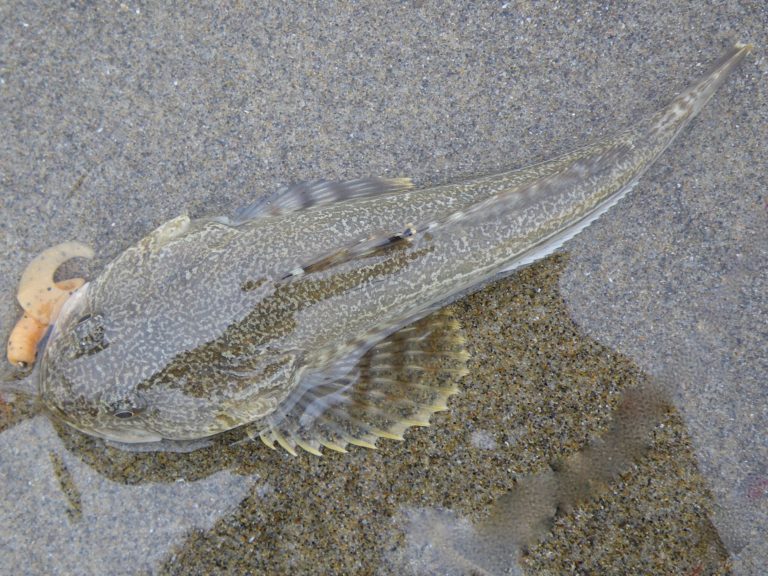
Staghorn sculpins are well-camouflaged against a sandy or muddy background. The black bars on their round, lobe-shaped pectoral fins help identify them.