
Site Spotlight: Iverson Spit
Site: Iverson Spit (516)
Region: Camano Island
Launched: August 2015
Sampling at site 516 is a walk in the park, but only literally.
On the shore of northeast Camano Island, volunteers at Iverson Spit County Park walk the Hobbit Trail each month of the sampling season, carting their traps and gear out to the marsh site in a red wagon, noting mushrooms and birds along the way. But once they reach the saltmarsh, the team gets down to the literal nitty gritty. Iverson Spit is one of the more demanding sites in the Crab Team monitoring network. The channels that offer excellent potential green crab habitat are deeply incised, and climbing/sliding down into them to set the traps is not easily done. In truth, the difficulty is not so much getting down into the channels, but getting back up out of them.
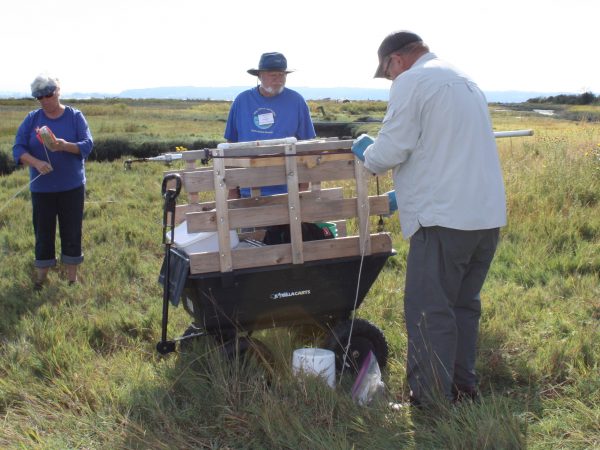
Crabbin Wagon, featuring all-terrain tires, independent dual suspension, and pop-up ergonomic sorting table. Customized by Dick Freauff. Photo: K. Ambrus
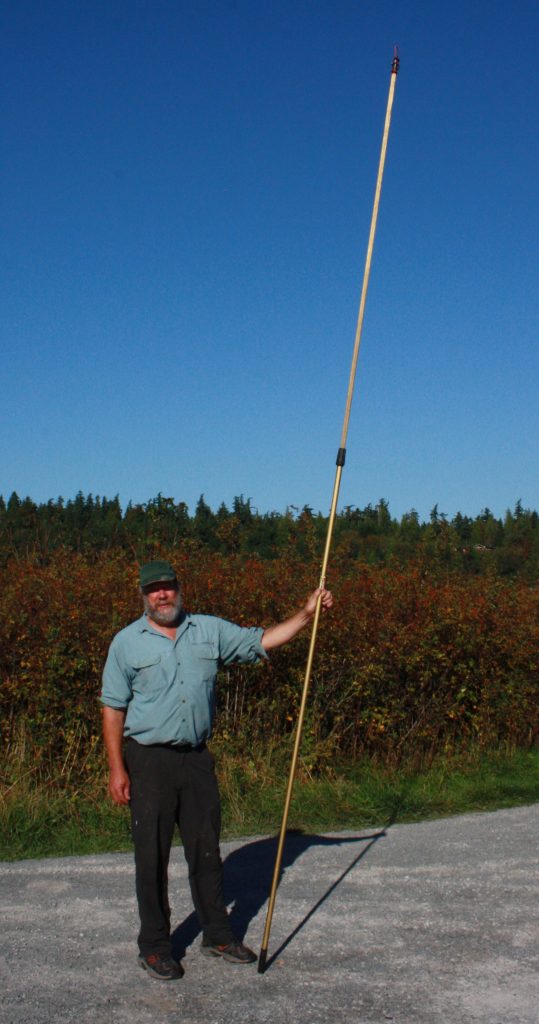
The volunteers who have worked at Iverson have used no small amount of ingenuity to address this challenge during the three seasons the site has been trapped. Committed to the importance of this site, they rigged up a system whereby traps were set and retrieved with a gaffe, weighted, and tethered to shore so that they stayed put overnight. The team even worked out a way to bring up water with a bucket on a rope to keep the fish happy during sorting. While this creative routine worked, it was still fairly laborious, and the group turned to Crab Team for a solution.
“What we need is a ‘mudpuppy’,” said Crab Team program coordinator Emily Grason, “someone on the team who is comfortable climbing down into the channels, and who can be the dedicated trap setter and retriever.”
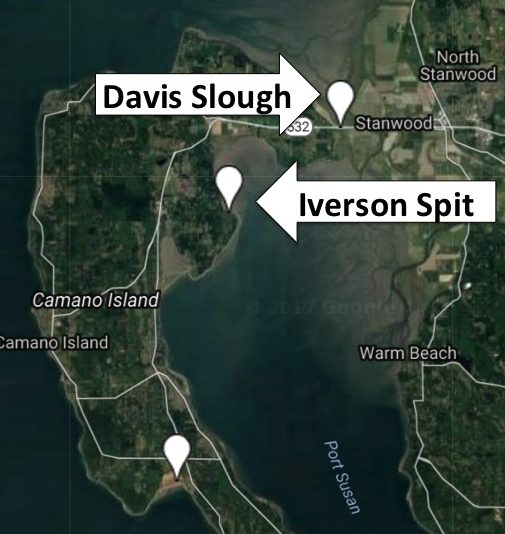
Iverson Spit found their mudpuppy partners in the Stillaguamish Tribe. Members of the Tribe’s natural resources staff joined the volunteers this year, and send at least one field technician in chest waders into the channel each month to set and retrieve traps. Robbie Lamb, Fisheries Technician with the Stillaguamish, often leads the charge into the mud at Iverson, hoisting the traps up to the bank so the catch can be counted and measured. The Stillaguamish staff also monitor a separate site nearby, at Davis Slough, as part of the Crab Team early detection network.
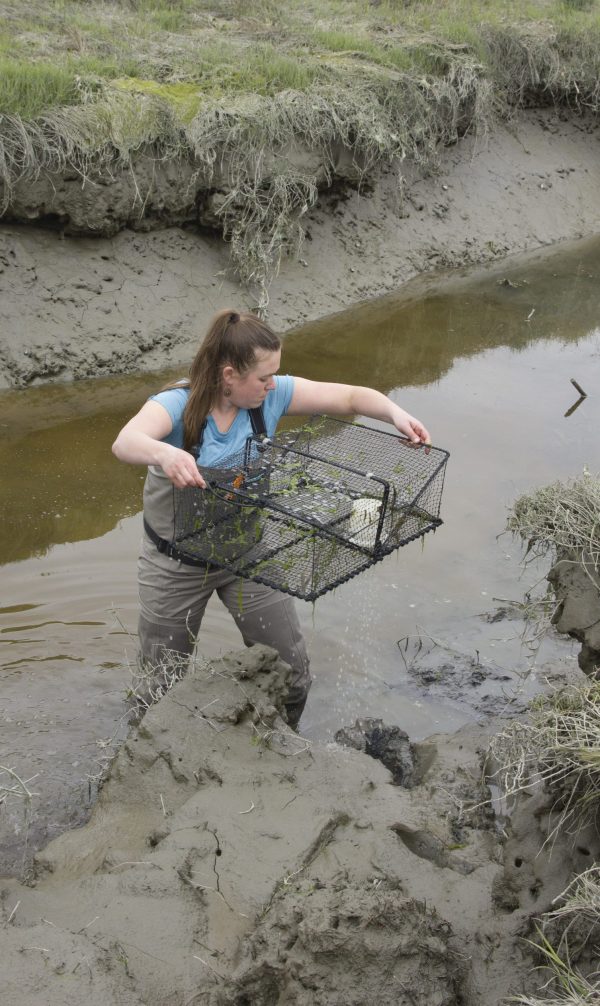
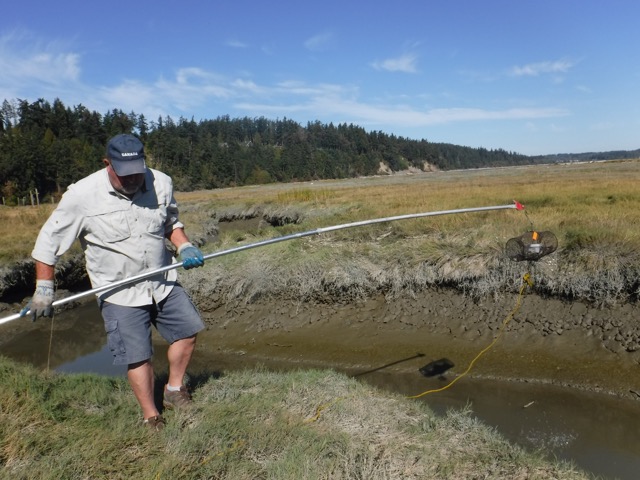
Maggie Taylor, natural resources staff at the Stillaguamish Tribe, was mudpuppy during Julys sampling. Here she ably retrieves a Fukui trap from the channel at Iverson. Photo: K. Neymeyer, Stillaguamish
The current team of volunteers at Iverson has members from multiple stakeholder groups: stewardship organizations, management, and volunteers. The group not only finds this collaboration enriching, but the partnerships on the Iverson team are also a microcosm of Crab Team’s citizen science ethos. By connecting scientists and resource managers with engaged volunteers, Crab Team monitoring can cover more ground, and survey more intensively, ultimately creating a more effective early detection effort. Volunteers who participate get direct access to scientists and managers doing the work to protect the shorelines that volunteers care about, and they get to participate side-by-side in relevant conservation work. As one of the Iverson team members put it, “I like to do this activity, because we are engaged in something meaningful – trying to catch the critters before they do too much damage here. It’s like we are on the front lines battling a fire in some way – although for us a lot easier.”
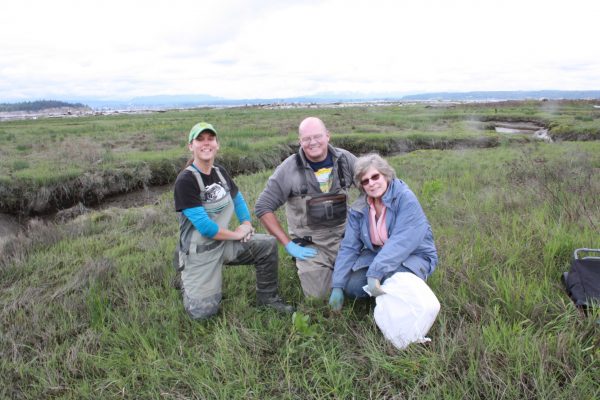
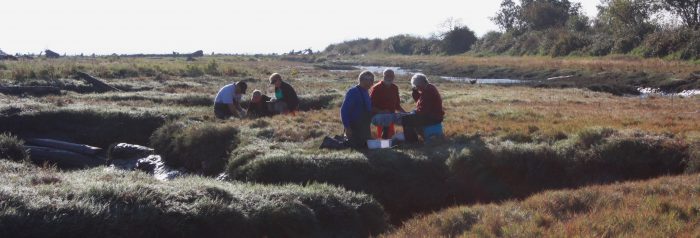
Stillaguamish natural resource staff Anya and Robbie join volunteer Shirley at Iverson in 2017. Photo: K. Ambrus
Our first partners on Camano were the Sound Water Stewards. In 2015, Crab Team’s pilot year, this stewardship group (Island County Beachwaters at that time) was one of the first to jump in the mud with us and undertake local monitoring. Many Sound Water Stewards participate in various citizen science projects along Camano and Whidbey Island shorelines as partner projects for the organization. During the first year, we only had the capacity to launch one site on all of Camano, and the interest from the Sound Water Stewards exceeded the space we had. One of the first sampling trips, the group captain was overseeing eight volunteers! While many hands can make for light work, it can be a challenge to make sure everything happens smoothly when there is so much going on at once. Since then, Crab Team has added another site on Camano, at Elger Bay, and trained many others who are eager to support the effort to patrol the beach for European green crab molts.
Even with all we’ve learned about European green crab in the Salish Sea over the past three years, the outcomes are never certain. One thing that is clear, however, is that protecting shorelines will require a long-term commitment and a lot of dedication. The Salish Sea is fortunate to have dedicated crews like the team at Iverson Spit, who have met the challenges of surveying through partnerships, creativity, and sheer grit – both figurative and literal.
–Emily Grason