
Site Spotlight:
Dungeness Spit
Region: Sequim
Launched: 2017 with Crab Team, but trapping since 2000
Staff & Volunteers: US Fish & Wildlife Service
Sites: 383 (Graveyard Spit Lagoon); 384 (Graveyard Spit Channel); 385 (Base Lagoon)
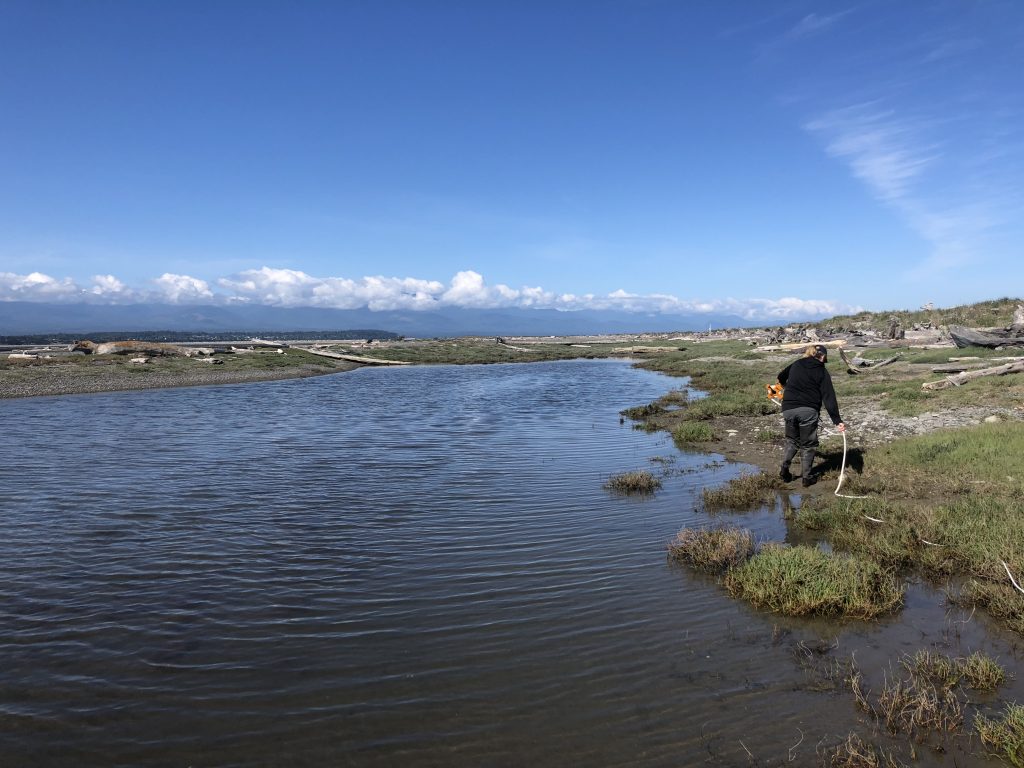
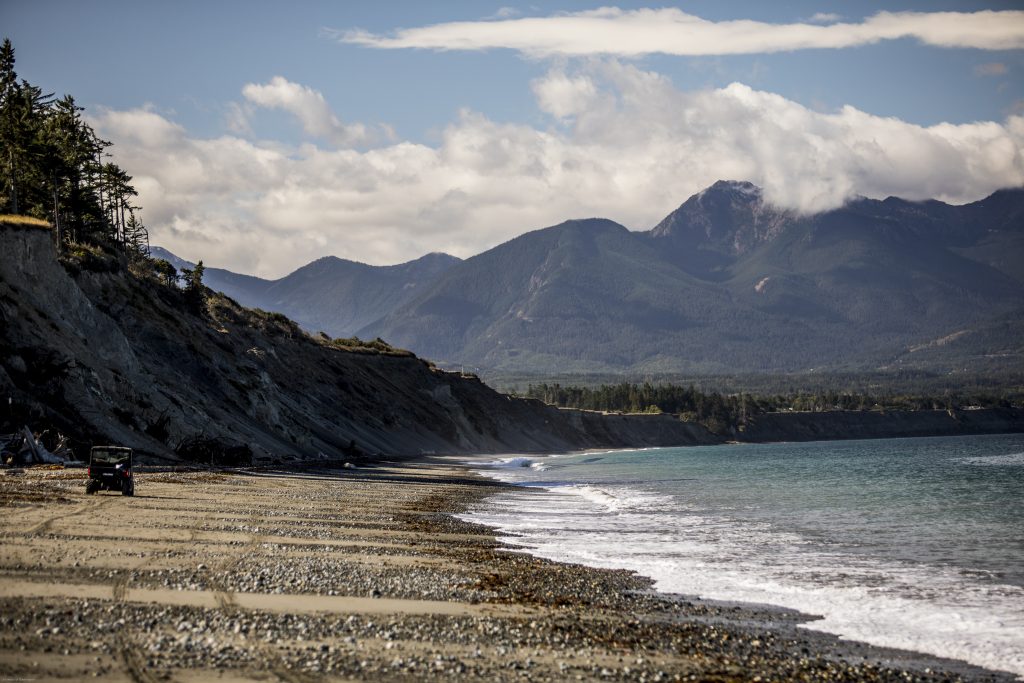
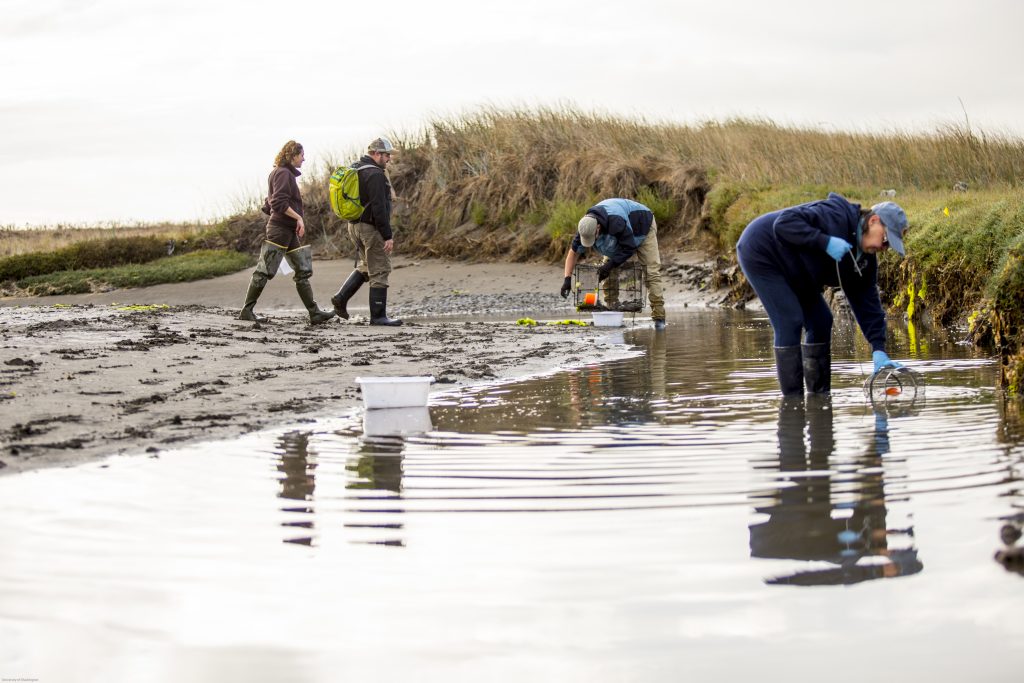
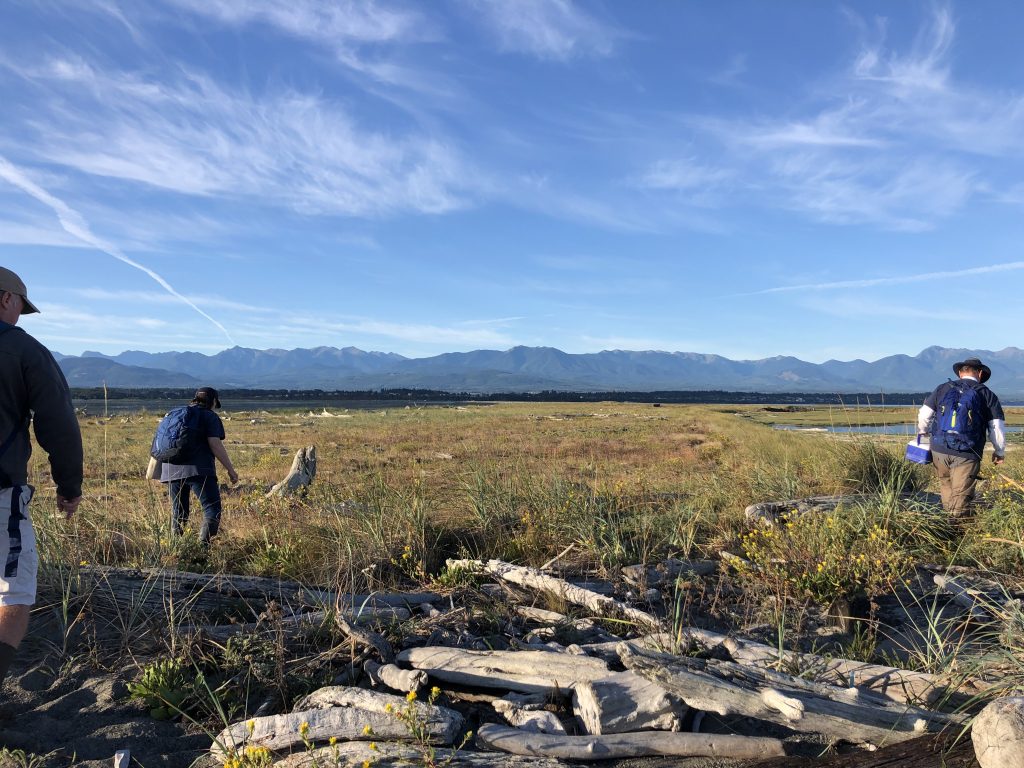
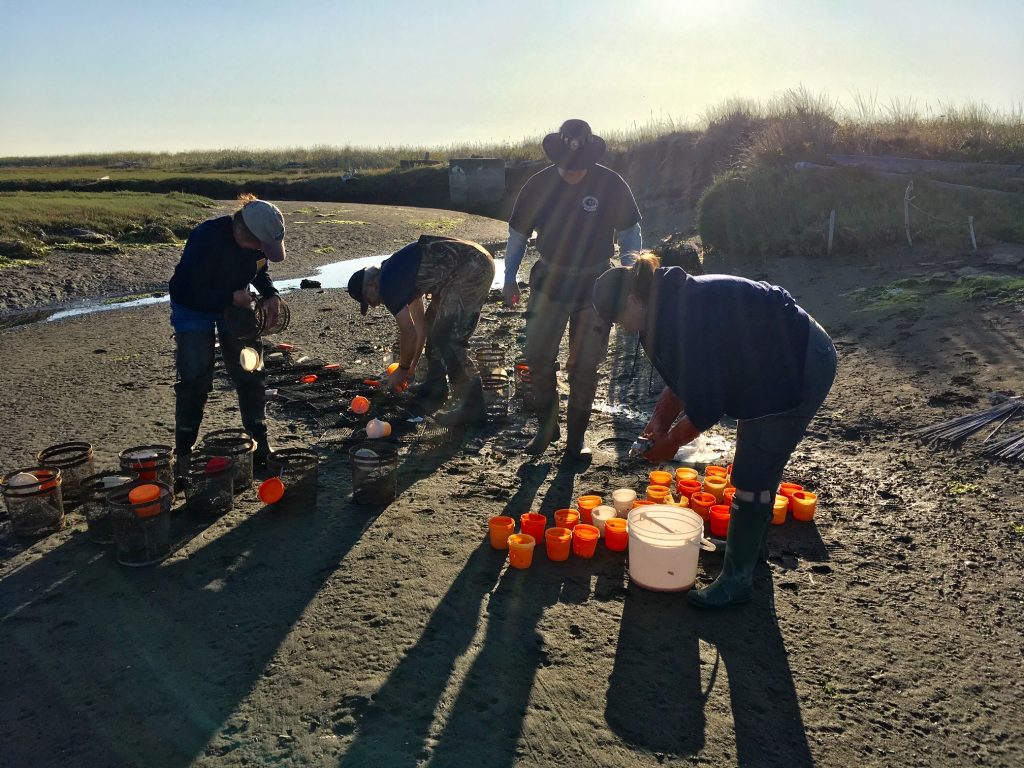
Dungeness Spit is well known as one of the most beautiful stretches of shoreline along the Strait of Juan de Fuca. Scenically capped by the New Dungeness Lighthouse, the spit wraps around Dungeness Bay, creating a protected haven along the relatively exposed beaches of the Strait and providing shelter and foraging ground for millions of shorebirds and migratory waterfowl each year.
In recent years, Dungeness Spit has also garnered attention due to the discovery of invasive European green crab. But since first being detected at the site in 2017, the community of people who treasure the beauty of the spit has banded together to put up a fierce resistance to the invasion. As Julianna Merluccio, a technician with U.S. Fish and Wildlife Service who oversees the trapping and removal effort at Dungeness National Wildlife Refuge, puts it:
“Although the refuge, the Makah, and the Salish Sea in general are unlucky in having European green crab, the crabs have luckily landed in areas with close-by land managers, and for us here, a huge group of very dedicated and committed citizens to back us up. For the effort on a whole, I think we can say it has been a saving grace.”
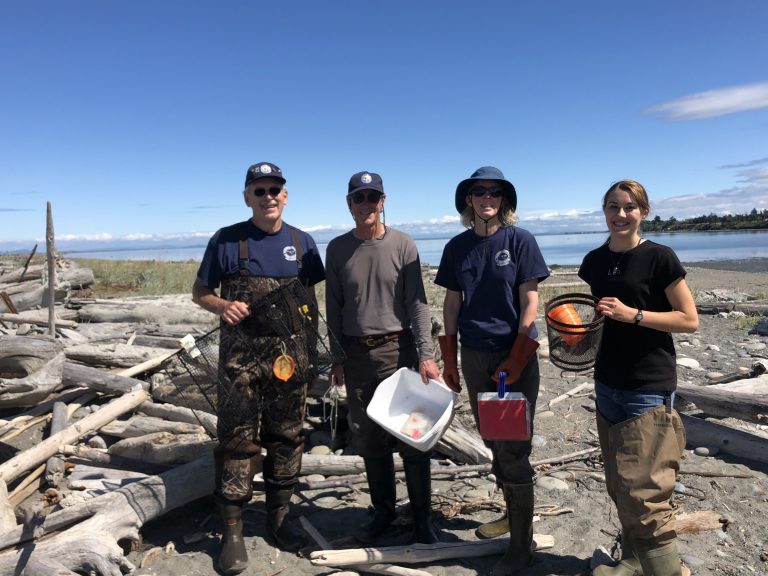
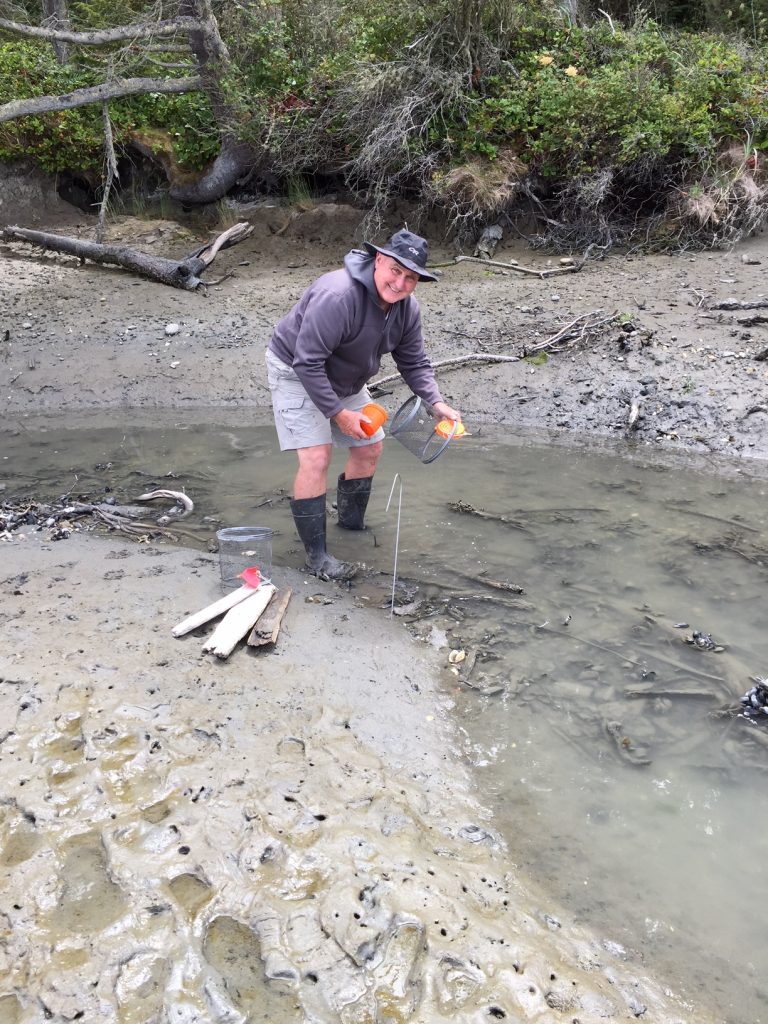
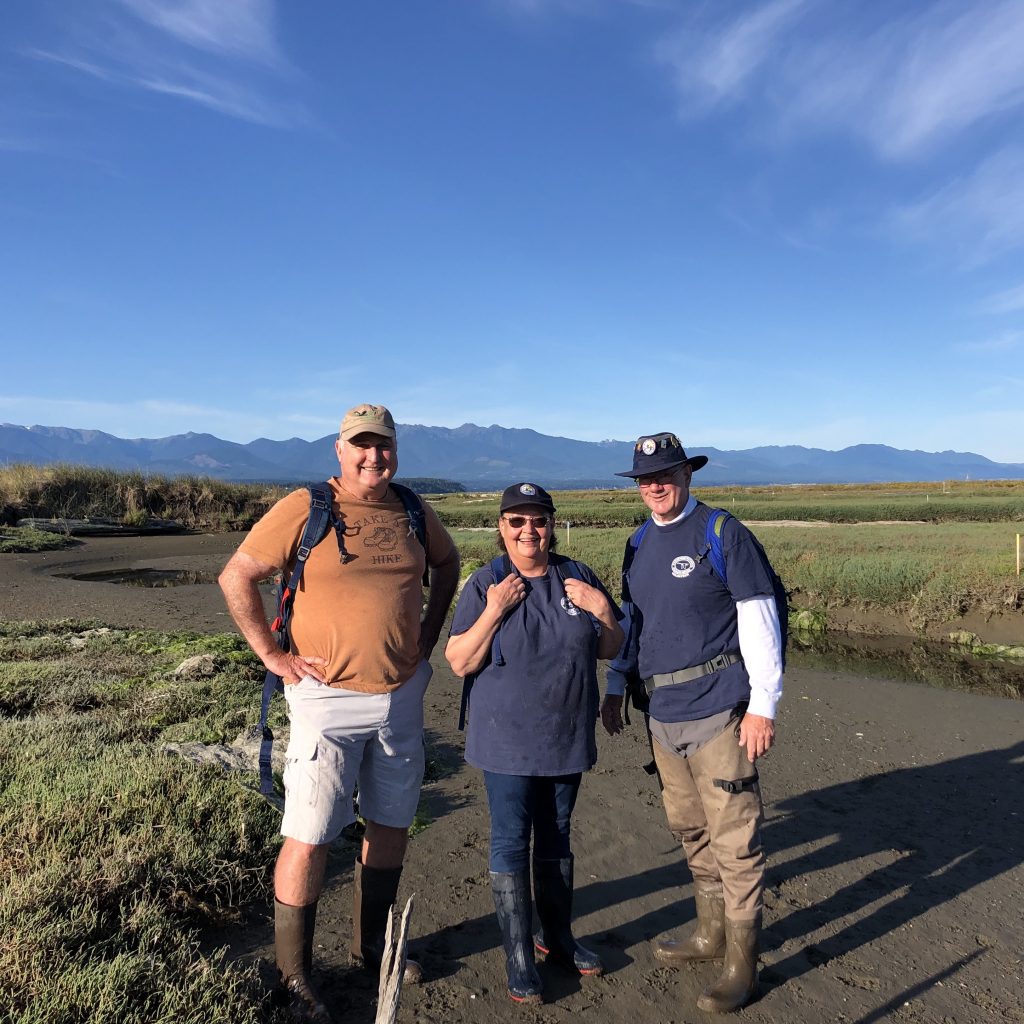
Volunteers Steve Cordz, Alan Smith, Laura Davis, and Lea Sollmann (L to R) at the spit. Photo courtesy of USFWS.
The “Other” Crabs at Dungeness Spit
Situated on ancestral lands of the S’Klallam people, the Spit was designated a National Wildlife Refuge (NWR) in 1915, to be protected and preserved in support of wildlife. Part of that mission is prevention and management of invasive species that threaten the ecology of productive habitats like Dungeness Bay. The refuge began keeping an eye out for European green crab during the initial range expansion along the coast of Washington in the late 1990’s, actively setting traps to monitor for the first sign of an invasion into the Strait of Juan De Fuca. Dungeness NWR was one of only two or three programs in Washington that continued to monitor following the closure of a previous early detection effort in 2010, but never turned up any evidence of green crab.
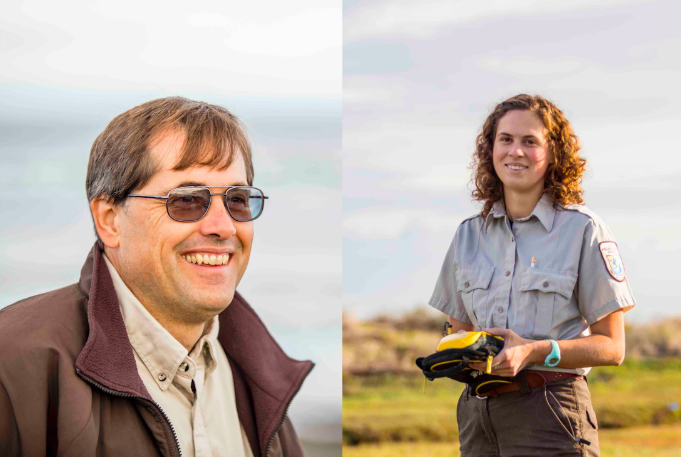
Lorenz Sollmann (L) and Julie Merluccio (R) – the U.S. Fish & Wildlife Service fearless leaders at Dungeness Spit. Photos courtesy of UW College of the Environment.
When Crab Team was reinitiating early detection monitoring in 2015, we reached out to Lorenz Sollmann, Deputy Project Lead at the refuge, who had been working with NWR volunteers to trap for green crab. Sollmann collaborated with Crab Team staff to move monitoring sites on the refuge to better habitat for green crab, and align protocols to leverage the growing early detection network. In April 2017, Emily Grason, Crab Team program manager, traveled out to the spit to set traps at two new sites: one a shallow lagoon on the east side of Graveyard Spit (a pendulous peninsula on the northern end of Dungeness Spit), and the other a marsh channel just to the west. The next day, when Sollmann checked the traps, four green crab were found in the marsh channel — sounding the first alarm of a possible infestation (read more: https://wsg.washington.edu/egc-dungeness-press-release/).
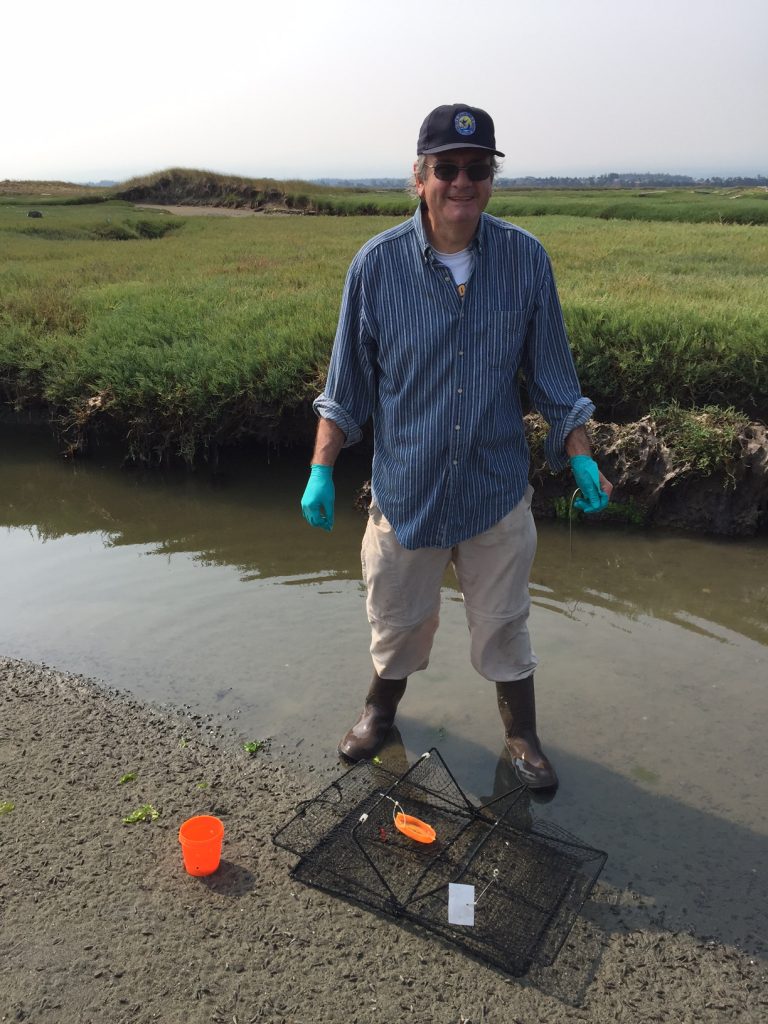
USFWS subsequently launched an aggressive removal-trapping campaign, setting about 50 traps for three or four nights most weeks from April through October each year. Because traps don’t capture every crab in the habitat each time they are set, a sustained effort is required to reduce the population and contain the invasion. USFWS primarily sets traps to target green crab hotspots, sections of habitat where they are most numerous, but also continues to explore other parts of the shoreline where they could also be hiding out. So far, green crab have primarily been captured in the channel at Graveyard Spit, and a few have also been found in a small lagoon at the base of Dungeness Spit (one crab was captured at a Crab Team site at Dungeness Landing, outside the refuge, but within Dungeness Bay. To date, 222 European green crabs total have been captured within the NWR. This sounds like a lot of crabs, but it has taken more than 8,800 trap sets to capture that many.
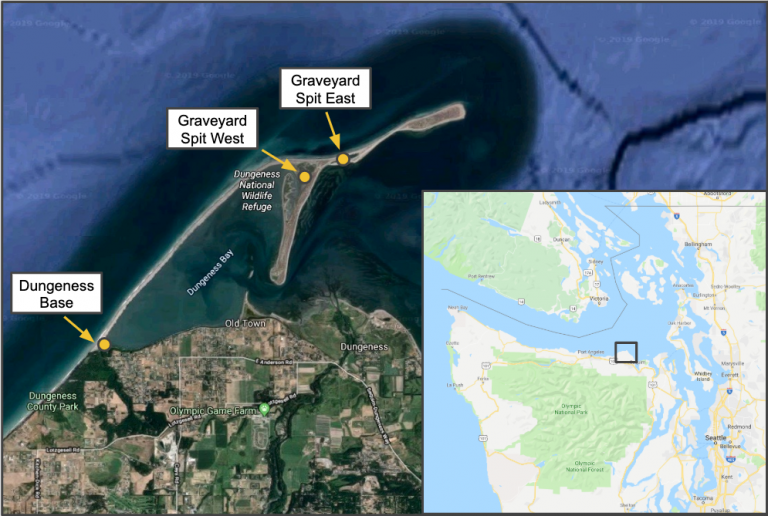
Map of the three sites monitored by the USFWS team, Dungeness Base, Graveyard Spit West, and Graveyard Spit East. Click to enlarge.
Heroes of the Spit
It’s not just thousands of trap sets that can make management at Dungeness Spit NWR sound daunting. Graveyard Spit, the focus of trapping activity, is a three mile trek from refuge offices, and it’s only logistically practical to ferry people and gear back and forth by UTV (utility task vehicle) on sufficiently low tides. This is where the heroes of the spit come in. A group of about 30 USFWS volunteers have been specially trained to participate in green crab removal trapping efforts, and a core bunch of about a dozen participate in most of the trapping activities. Together, these dedicated defenders of Dungeness have spent more than 230 days out on the spit since 2017. This season alone, they contributed more than 1,000 volunteer hours to finding and removing green crab, which is about seven times the number of hours that USFWS staff have been able to commit to the effort, given all the other work that also needs to continue at Dungeness Refuge and the five others managed by the same office. So, it’s no stretch to say that without the participation and support of the dedicated USFWS volunteers, the spit, and the Salish Sea, would stand less of a chance against green crab.
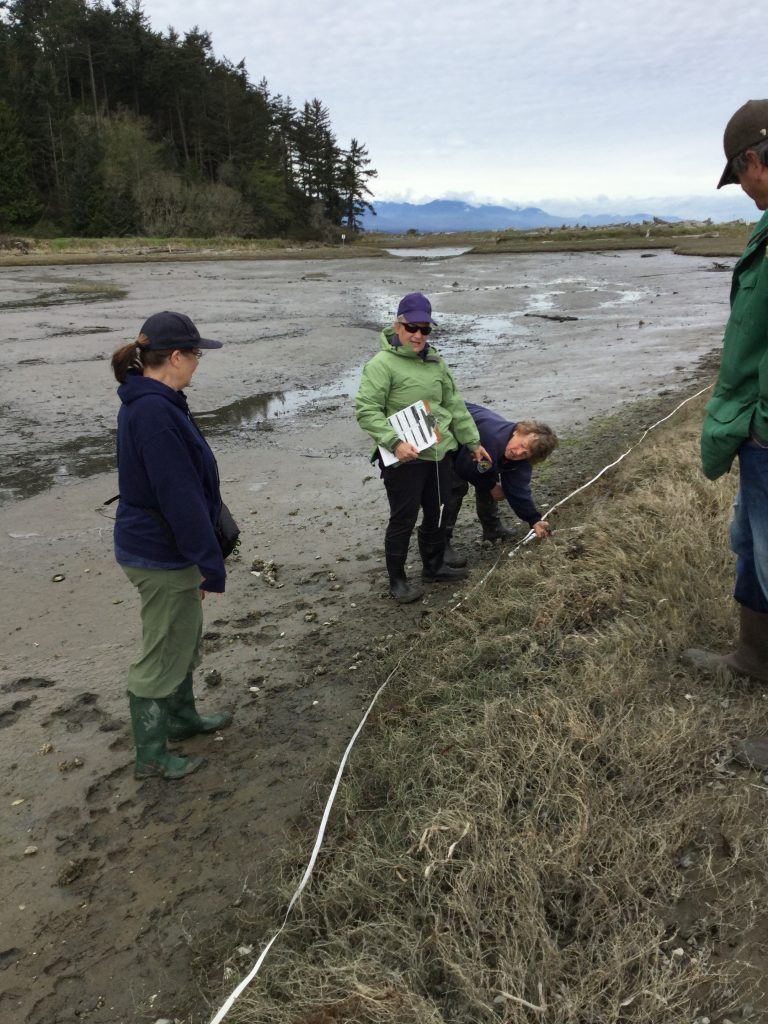
Volunteers Carol Jacobs, Kathy Anderson, Janet Bruening, and Mike Barton conducting a shoreline survey. Photo courtesy of USFWS.
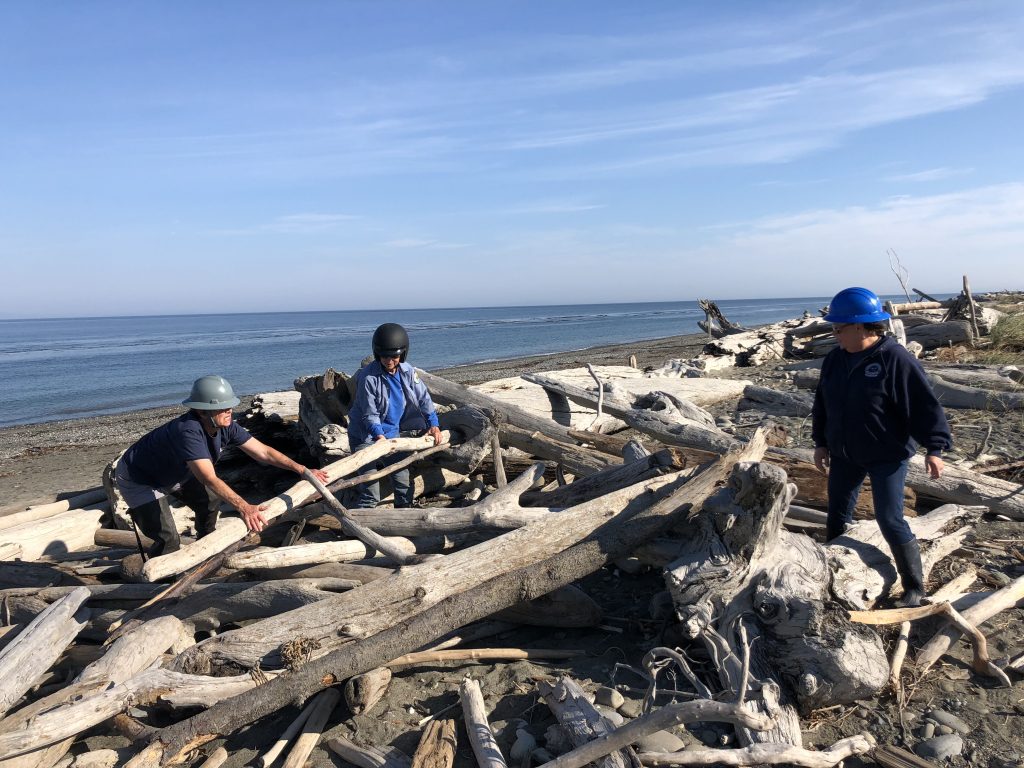
Being part of the refuge system has been an asset to the effort to control green crab, but not without additional complications. On one hand, management staff and resources can be dedicated to the protection of Dungeness Spit, and that can streamline the logistics of doing control work. But at the refuge, careful considerations must be taken to ensure that the activities of the trappers don’t cause damage to the habitats and wildlife they are trying to protect. This often means that the job of the volunteers is harder than it otherwise might be. For instance, creating paths through the beach logs would make it easier to hike back and forth to the sites. But trappers at Dungeness Spit have to forego that convenience in order to avoid disturbing wildlife and natural processes that make the place so special.
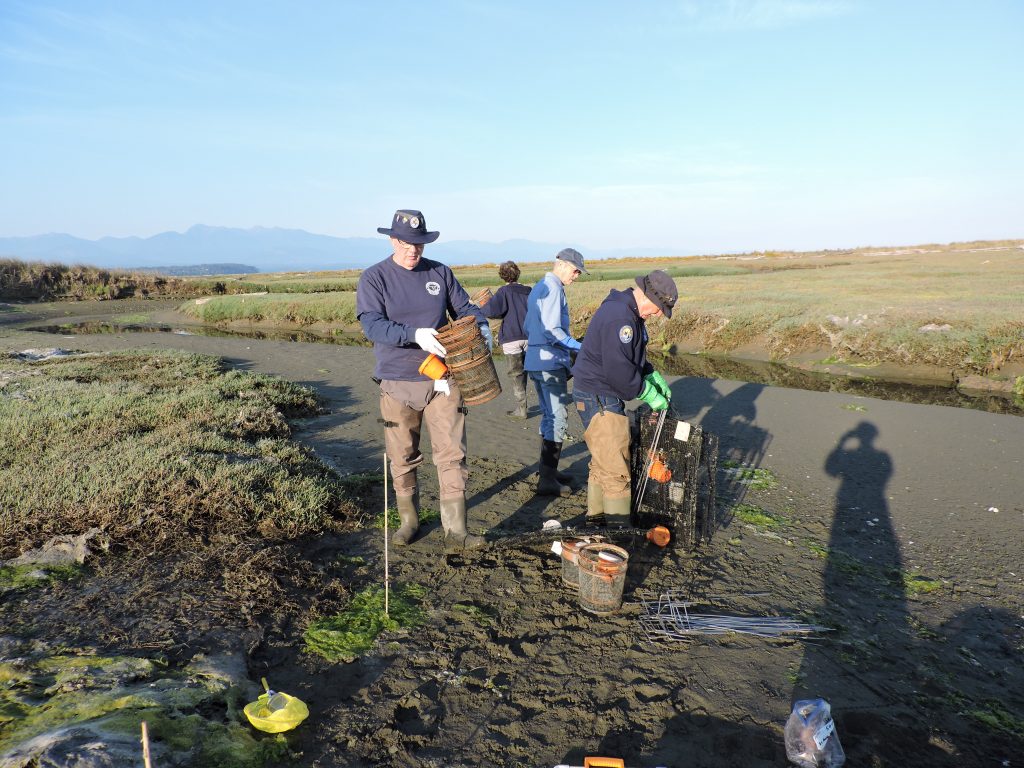
It’s difficult to underscore the commitment of the volunteers, some of whom have been a part of the project since before green crab were detected at the site. Work to control green crab is strenuous, dirty and often repetitive, yet the volunteers recognize the importance of tackling green crab as a team in an effort to protect the place they love. Rick Mazotta has cut 98% of the hundreds of pounds of bait required for trapping, Karl Pohld single-handedly keeps all the traps in good working condition, a half dozen UTV drivers take extra training to carry everyone safely to the sites, and, of course, the whole crew wakes up early, regardless of weather, to slog doggedly through the mud, carrying traps and bait, and enduring the pinches of crabs. Getting chauffeured down the spit in the UTV might seem luxurious, but trapping for green crabs is not a walk on the beach at Dungeness and the volunteers are a tough bunch!
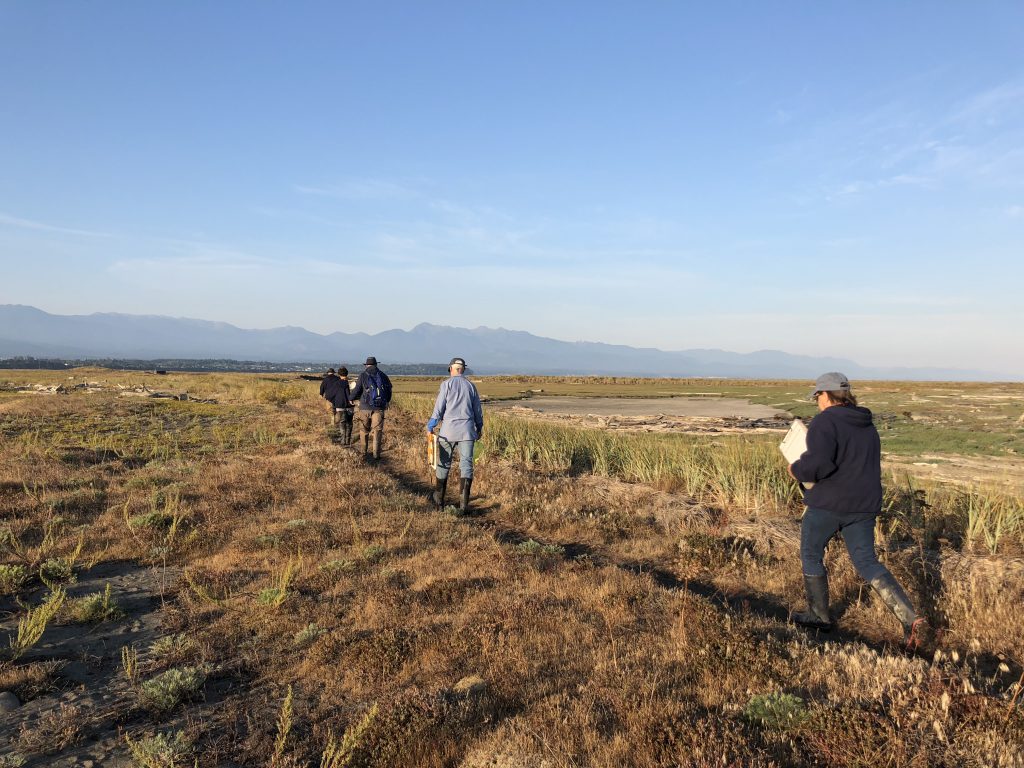
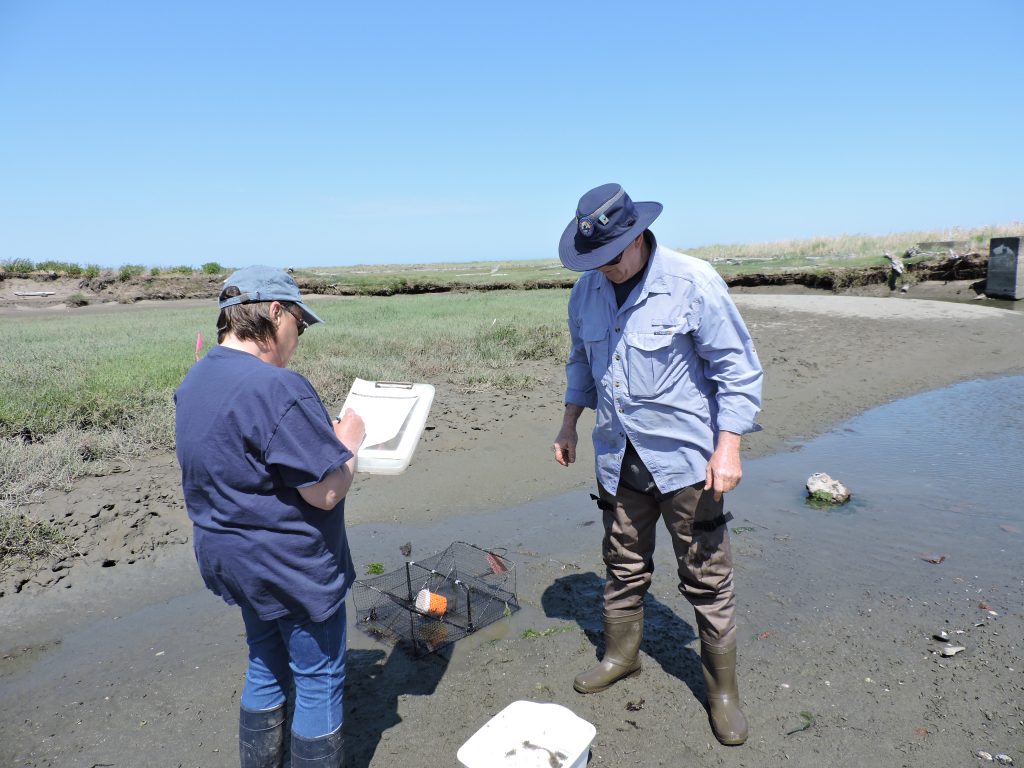
Volunteers Bob Anundson, Janet Bruening, Doug Marcoux, Pat Schoen, and Sue Bonomo. Photo courtesy of USFWS.
The crew is masterful at multitasking. Crab-related work includes both monthly monitoring (á la Crab Team) as well as additional removal trapping, juggling two separate protocols and sets of gear at the same time. And it’s not just crabs! Because access to the spit is limited by tides and resources, volunteers are often concurrently conducting surveys for COASST (another citizen science project), running various errands for the refuge, and addressing any beach debris that needs to be removed. They also serve as ambassadors for the refuge, answering questions and offering assistance to visitors. When asked why they continue to participate, volunteers focus on the positives: curbing the invasion, protecting the refuge, learning more about pocket estuaries and salt marshes, the camaraderie of the other volunteers, and getting to experience “Wild Kingdom moments” — like river otters teasing bald eagles — first hand.
An Opportunity to Learn
The number of green crab captured at Dungeness Spit is greater than any other spot along the inland shorelines of Washington. This offers a unique opportunity to learn a great deal about the green crab invasion and how to manage it, information that could be invaluable as the Salish Sea braces to defend against the emerging threat of green crab. At most of the other detection locations only a handful of crabs have ever been captured, making it difficult to learn much about the invasion as a whole. Therefore, it’s important to glean as much as possible from sites like Makah Bay and Dungeness Spit, where intensive management is ongoing, and more crabs are being captured.
For instance, tissue samples collected from crabs captured in 2017 and analyzed by Crab Team collaborator Carolyn Tepolt, at Woods Hole Oceanographic Institution, enabled her to discern that green crabs at Dungeness Spit were not being washed in as larvae from Sooke Basin, just across the Strait. Rather, the larvae that reached Dungeness Spit came from one of the populations on the outer coast, though those populations are so genetically similar to each other, it’s not possible to tell which. (more info). Friends of Dungeness National Wildlife Refuge also provided seed funding for that research. In addition, from the size of the green crabs captured at Dungeness Spit, we can tell that there is not much influx of young crabs, which could be either washed in (anew) from a coastal population, or the result of local reproduction. This is good news. The hope is that ongoing trapping will help trap down the surviving crabs that have washed into the bay in the past, and significantly reduce the chance of spread, and future recolonization will be less likely. The removal trapping efforts at Dungeness Spit have been ongoing for three years, enabling us to identify seasonal trends in how many crabs are captured. Each of the three years, the rate at which green crabs enter traps has peaked in late April and early May, which could signal that that is a good time of year to efficiently remove crabs from the habitat.
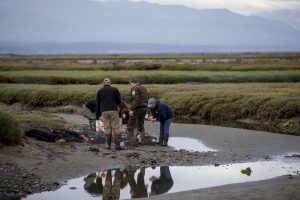
Julie Merluccio, Lorenz Sollman, Sue Bonomo and UW Staff checking traps on the spit. Photo courtesy of UW College of the Environment.
Not least of all, it’s extremely valuable that the staff and volunteers continue to participate in Crab Team monitoring in addition to all of the removal trapping work that they do. The trapping, molt hunt and shoreline survey protocols implemented monthly across all 56 Crab Team network sites were designed not only for early detection of European green crab, but also to track their impacts and associations. USFWS staff and volunteers now maintain three Crab Team monitoring sites, and green crab have been detected at two of them. Tracking sites with and without green crab over time is the highest standard of study design to learn about invasions. Making comparisons even just across the sites near Dungeness Bay will help us understand what factors drive green crab success, and what changes to the habitat green crab could be causing, even as volunteers are working to remove as many as possible. Several of the USFWS volunteers that contribute their time at Dungeness Spit also volunteer with Crab Team monitoring sites off-refuge.
A Relatively Cool Hotspot
Even though Dungeness Spit might be considered a green crab “hotspot” along Washington’s inland shorelines, it’s important to note that, overall, numbers are relatively low compared to places where green crab are established on the coasts of California, Oregon and British Columbia. On average, it takes about 100 traps to capture only two or three crabs, while some coastal sites can have tens or hundreds of times more crabs. While such a low capture rate would be very disappointing if you were trying to catch Dungeness crabs for your dinner, the numbers are actually a relief in terms of management. And, perhaps more importantly, they haven’t increased over the three years USFWS has been working to remove them. In other parts of the world where green crab have become invasive, their populations have increased rapidly to an unmanageable number. Avoiding that at Dungeness Spit, at least thus far, is itself a victory.
Green crab management at Dungeness Spit represents a robust collaboration between WSG Crab Team and the refuge, tracking two simultaneous and complementary efforts critical to effectively defending the Salish Sea against green crab. Consistently-implemented early detection monitoring in the form of Crab Team protocols provides information about the extent and progress of the invasion, but the trapping protocol is not enough to reduce a population. The additional intensive removal by USFWS staff and volunteers is necessary to intervene and actually try to stop establishment and spread of the crabs. At the core of both efforts are the generosity and dedication of volunteers, which might just be our greatest assets in the challenge of preventing a green crab invasion.
-Emily Grason
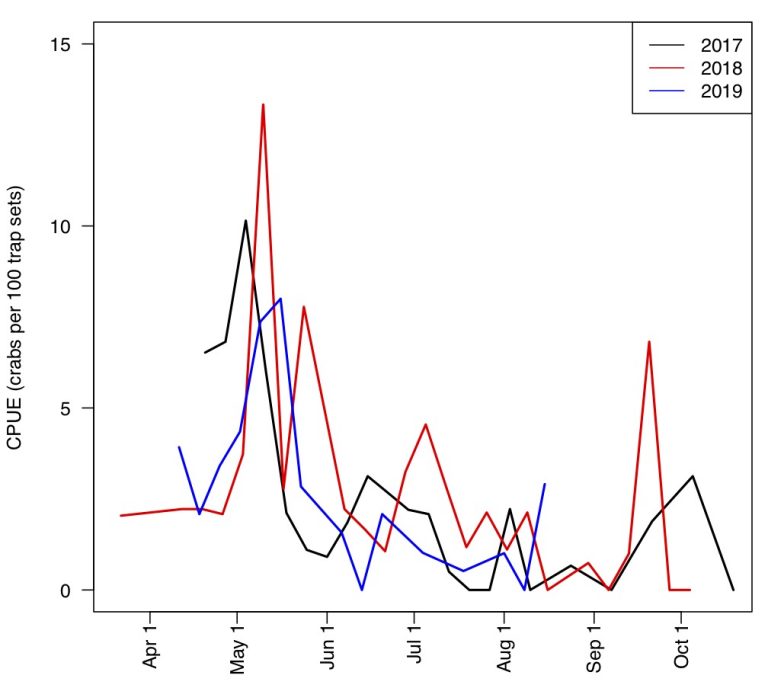
Green crab catch per unit effort at Dungeness Spit in 2017, 2018, and 2019. Click to enlarge.