Site Spotlight:
Harper Estuary
Site: Harper Estuary (97)
Region: Kitsap County
Launched: 2017
Site Captain: Jim Heytvelt, ‘17 & Eric Schnepp, ‘18, ‘19
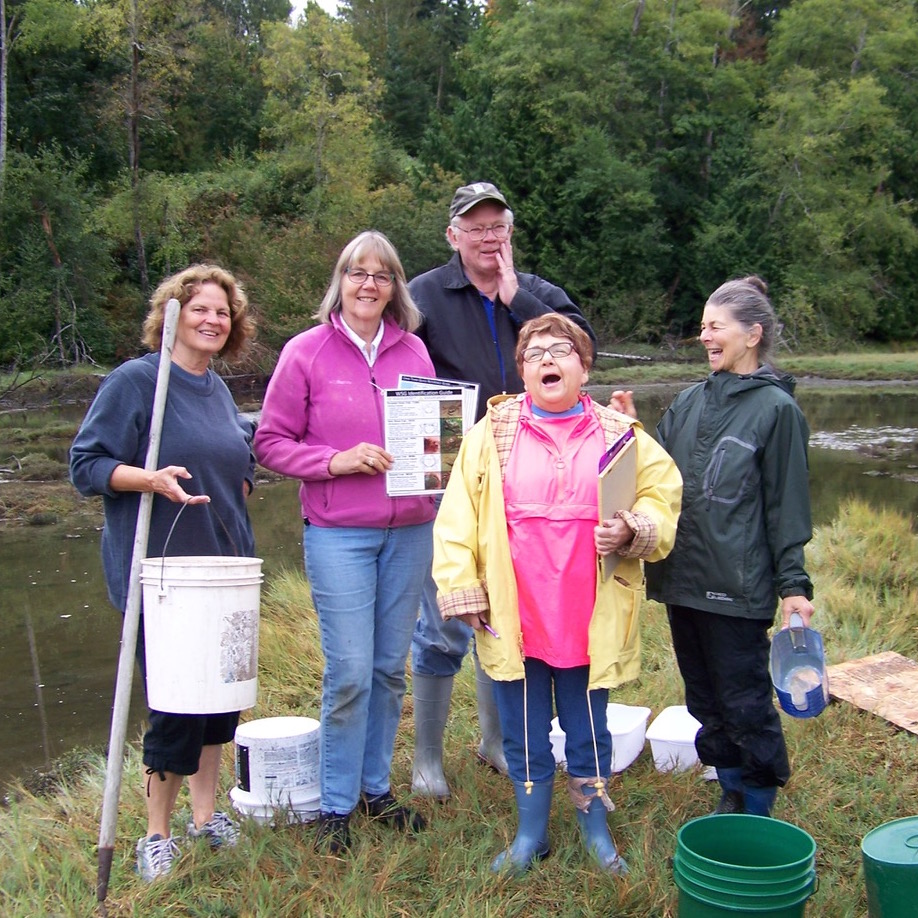
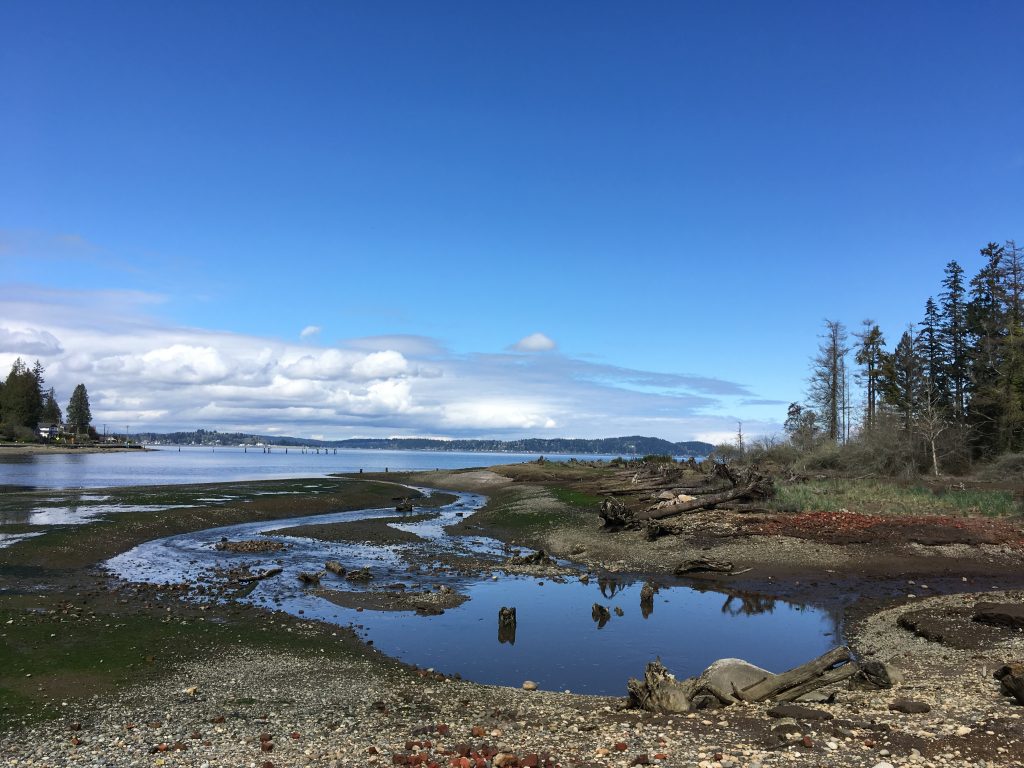
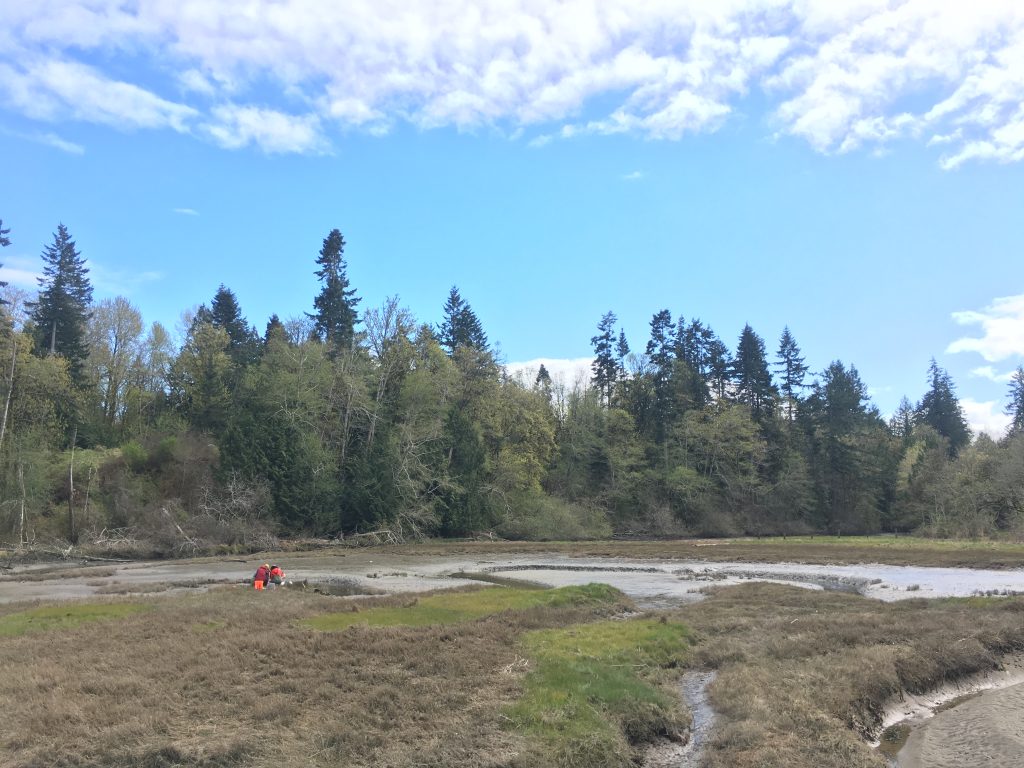
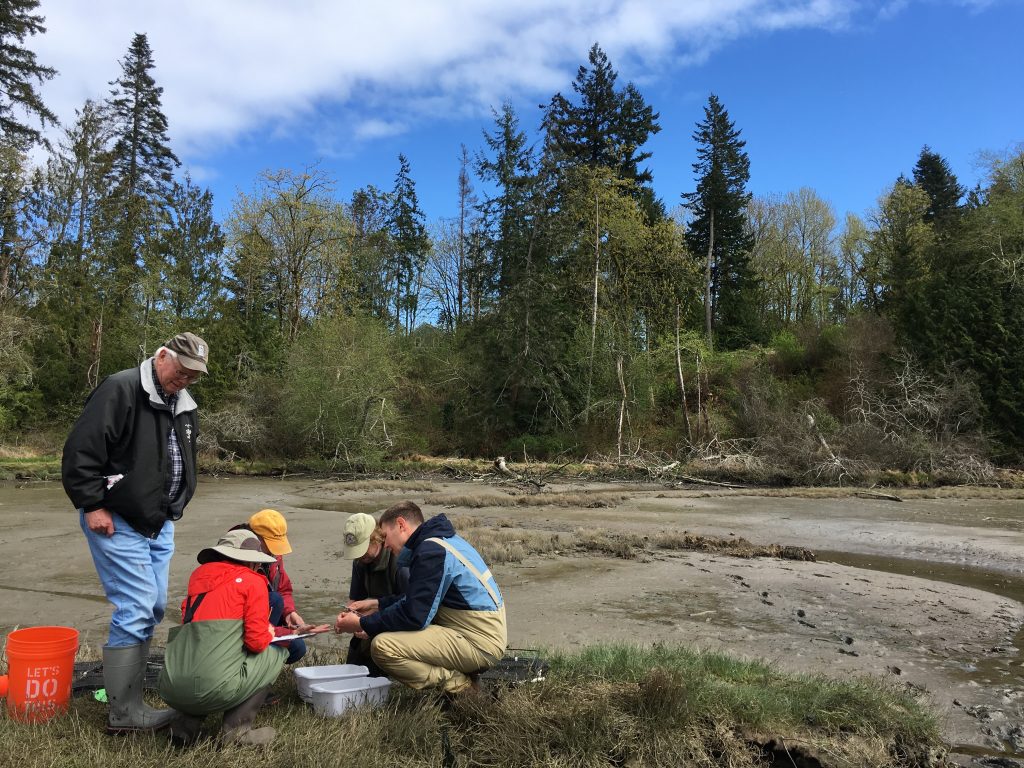
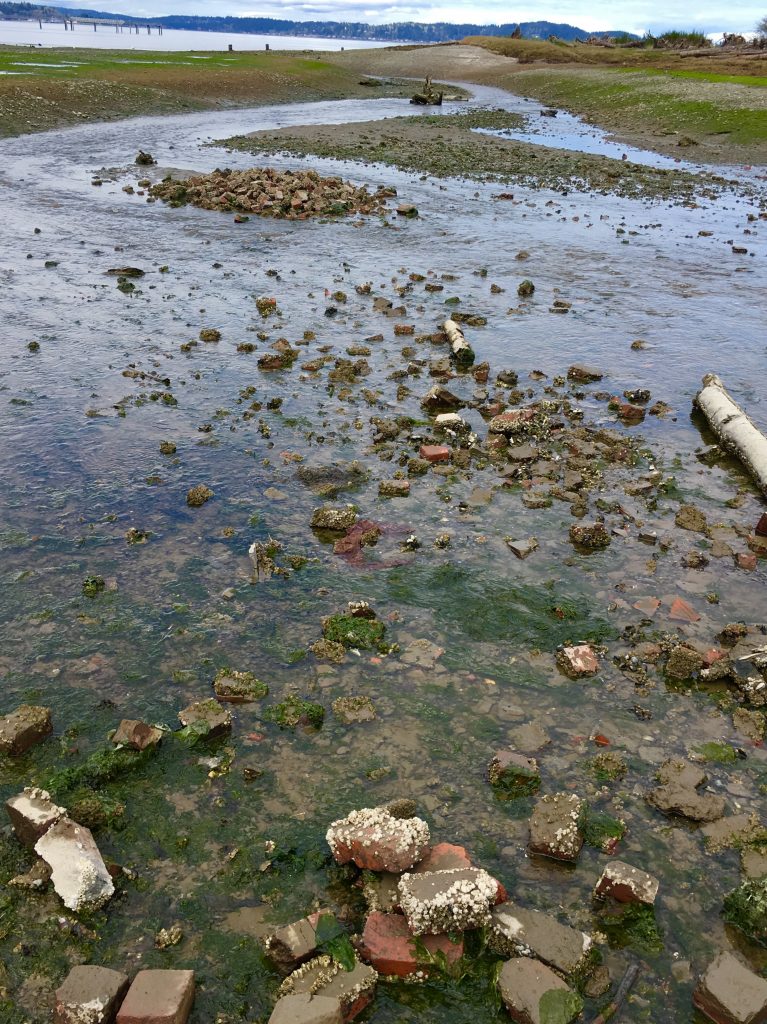
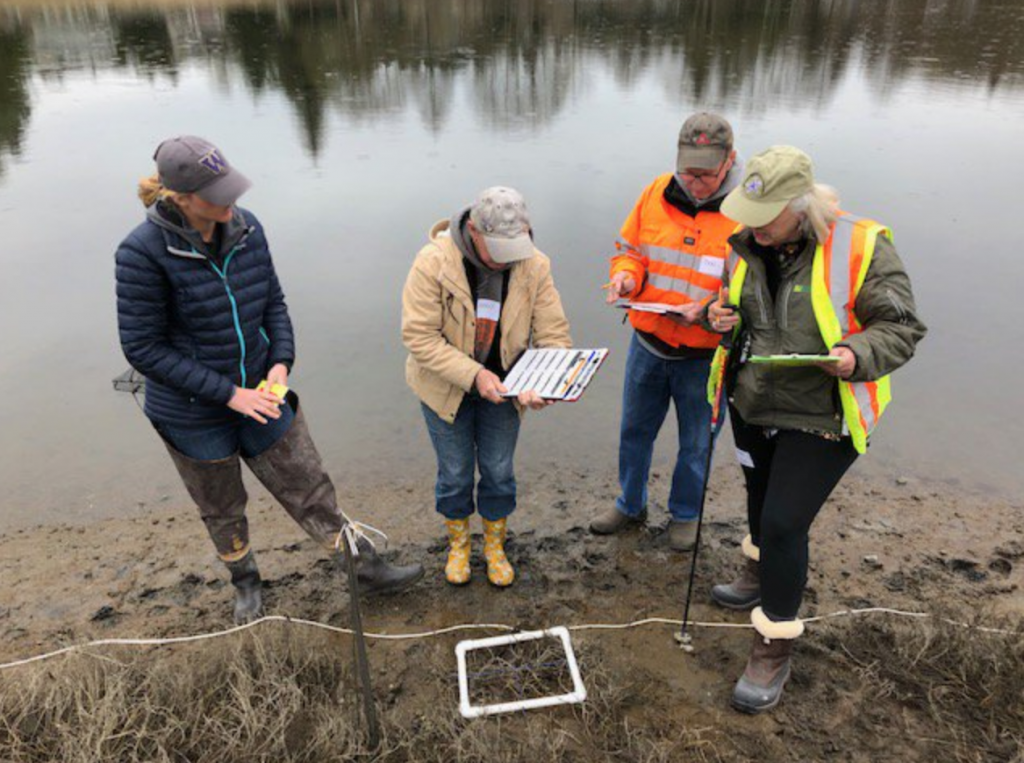
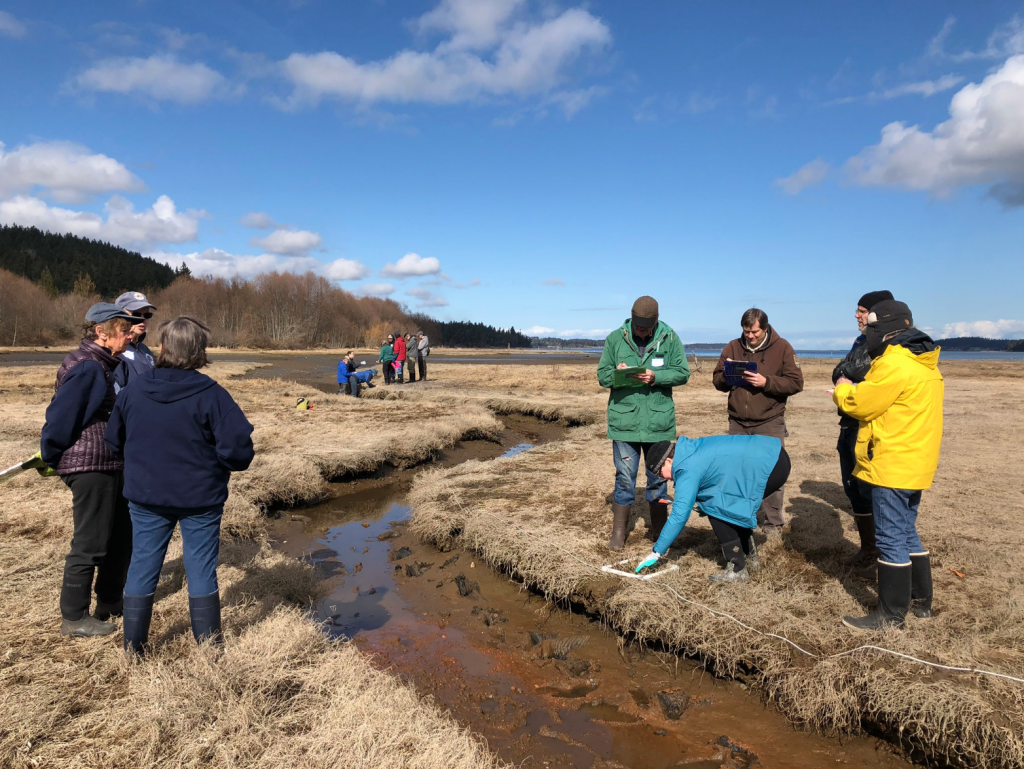
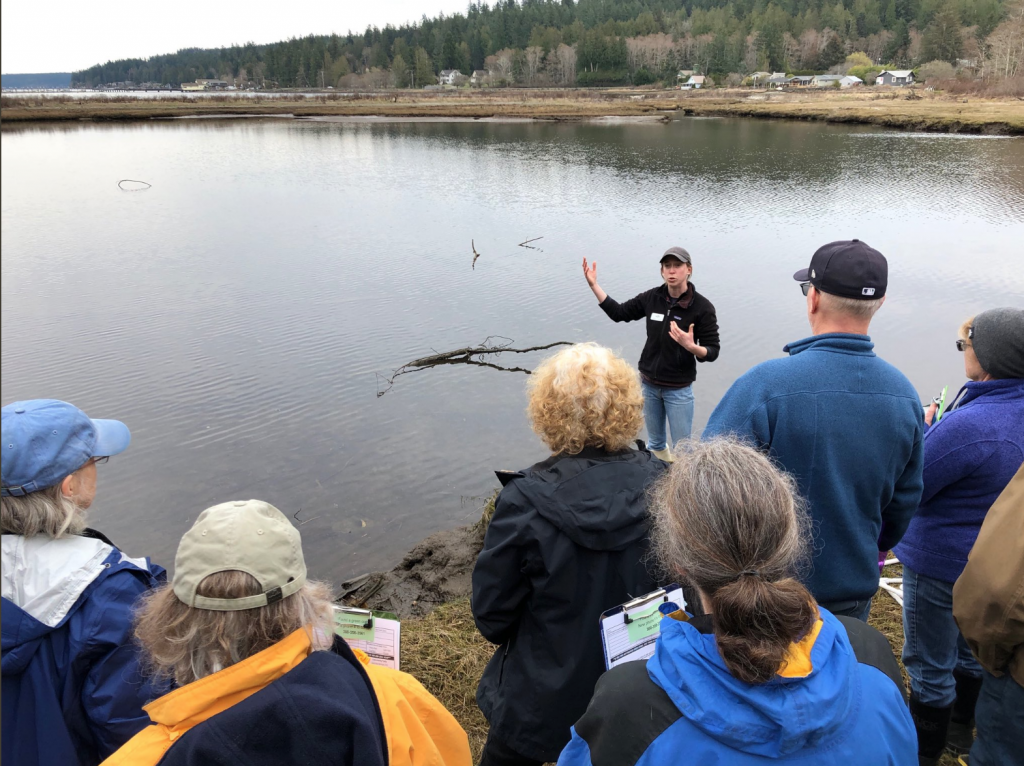
The Harper Estuary is a hospitable home for hairy shore crabs and a slicky, sticky, stucky place for footwear. The Harper HEOR hunters and their beloved estuary have a special history, a committed community and hope for future restoration.
Harper Past
Suquamish villages were once located to the northeast of the Harper Estuary on Blake Island to the west of Harper, at the area now called Colby. With calm waters, good habitat and a small stream in close proximity to the villages, the Harper Estuary was bound to have played a role in hunting and fishing and foraging. Even today, winter ducks abound, and you can find silver cinquefoil, once cultivated by Salish Tribes to promote growth of the edible roots, among the saltmarsh vegetation. The estuary likely served as great nursery habitat for juvenile salmon, and the stream continues to support coastal cutthroat (Oncorhynchus clarkii).
Once the area was occupied and developed by European settlers, however, roads and buildings began to alter the shape and function of the estuary. Most significant of the occupants of Harper’s shores was a regionally important brick-making factory. In the late 1800’s, the Harper Clay Products Company started making bricks, taking advantage of the clay-rich hillside nearby and of relatively easy water access to Central Puget Sound. The factory was built on the western shore of the estuary with barge loading infrastructure built into the estuary. You can see some great old photos and maps in a Yukon Harbor Historical Society blog post and from the pdf of a Cultural Resources Assessment presentation. You can still find some of the factory’s good bricks in buildings in Seattle’s historic Pioneer Square and in the Governor’s Mansion in Olympia. Gazillions of bad bricks, however, were dumped into the estuary, and additional bricks plunked into the water during barge loading. The brick provides some cobble-like habitat for sea life that live on hard surfaces, but it didn’t do any favors for the tideflat organisms that would have been there naturally and likely started to affect sediment movement in the estuary.
Harper Estuary’s modified fate was clinched when Olympiad Drive was built in 1939. This left only a small culvert between the upper estuary and Puget Sound, limiting the movement of water, fish, invertebrates and flotsam and jetsam to and from the upper estuary. In combination with an even older road along a sand berm, Olympiad also isolated the northeast portion of the estuary, which later developed into a freshwater marsh. The Puget Sound side of Olympiad Drive was even filled (using no small share of brick bits) and used as a local boat launch during high tide.
The quality clay of the area and restricted flow likely play into the estuary’s epic mud. Stepping off the vegetated areas come with significant risk of boot loss, face planting, and requires continuous concentration (walk on toes, keep moving, walk on toes, keep moving, …). In site captain emeritus Jim Heytvelt’s words, “MUD, Boot Sucking Mud! Not your ordinary seashore estuary mud but fine Harper Clay mud. This has to be the slickest mud about.”
In addition to industry, Harper developed into a residential community and was an important transportation hub, with the nearby pier serving ferry traffic to and from Vashon Island and West Seattle until the 1960’s.
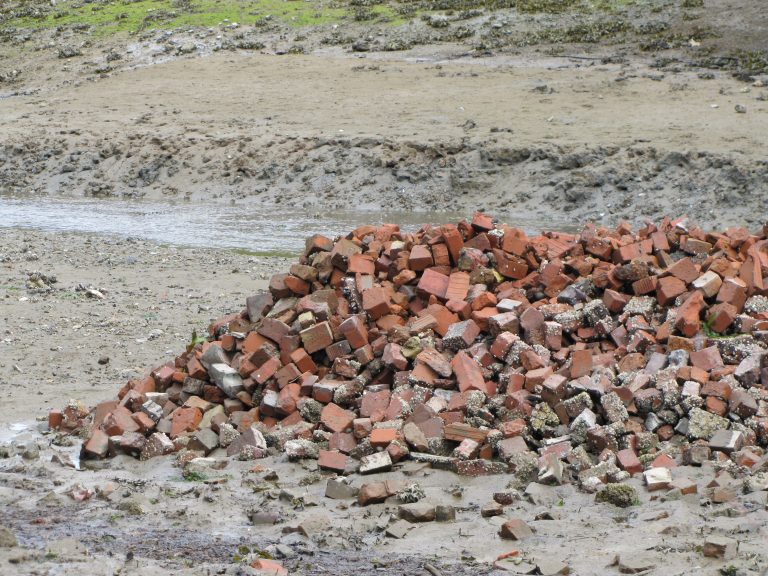
A pile of discarded Harper bricks on the beach. Most of the pile and its ilk were removed during the late 2016 restoration work, but many a brick can still be discovered for those who wish to claim a piece of history (and get garbage off the beach).
Undersized culverts aren’t cool in salmon country. Plunge pools at either end of the culverts become a temperature and predation hazard for salmon stuck at low tide and may limit movement up or downstream. Wood, sediment, wrack and other important materials for habitat and food webs can no longer easily move in and out of the estuary with the tides, and it’s a lot harder for a crabs, fish and other species to follow the flow to a saltmarsh smorgasbord.
In addition to the culvert conundrum, the area of Harper that became a freshwater marsh, while it may have had a whole new set of functions, had lost its ability to support migrating fish and the backshore and saltmarsh plants and animals that once occupied it.
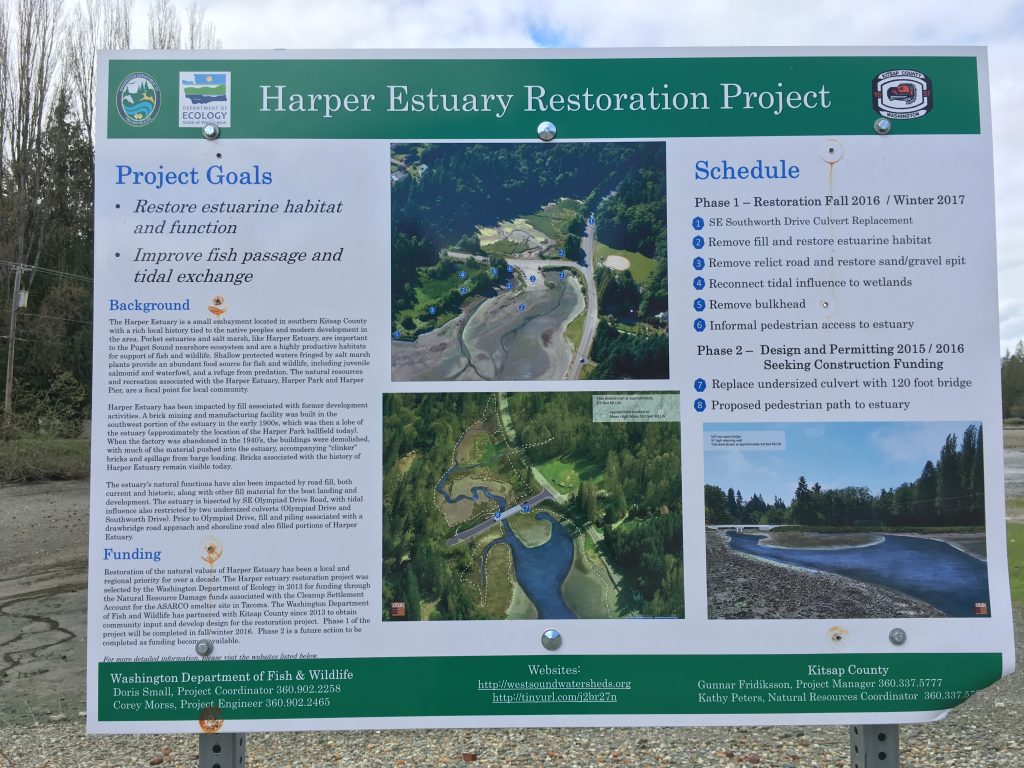
What to do? Kitsap County has been working with the Washington Department of Fish and Wildlife with funding support through the Washington Department of Ecology to remove fill, culverts, bulkheads and road beds and to provide recreational access to the area. The first phase of the project achieved many of the restoration goals, including replacing an undersized culvert at the upstream end of the estuary, establishing a tidal connection to the freshwater marsh and removing a bulkhead and a lot of fill. The most expensive, and likely highest impact, part of the project, replacing the Olympiad Drive culvert with a bridge, has been planned but awaits funding.
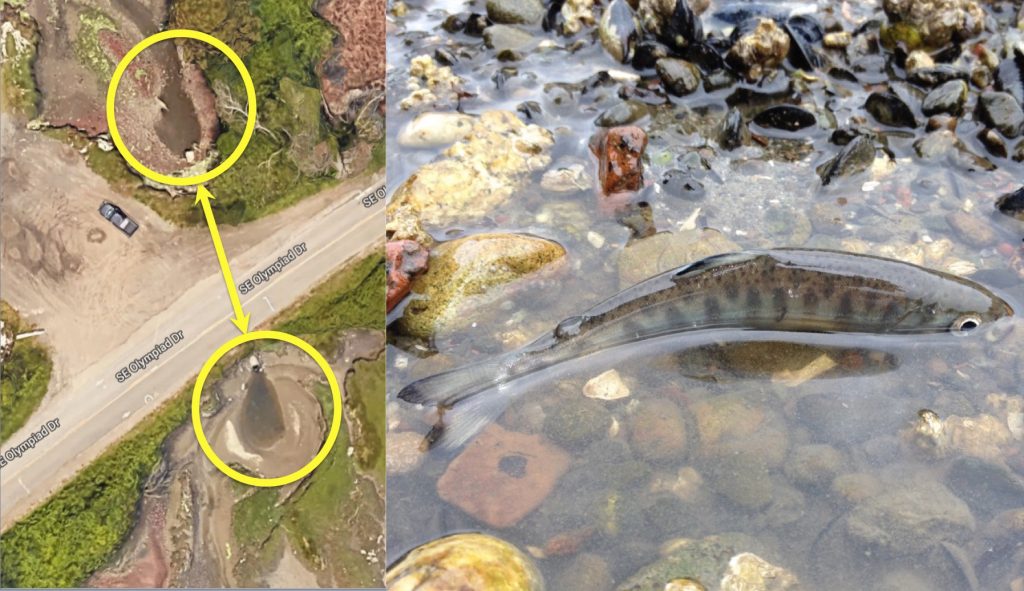
Harper’s plunge pools and a coho salmon smolt that was among many languishing in the downstream pool one day.
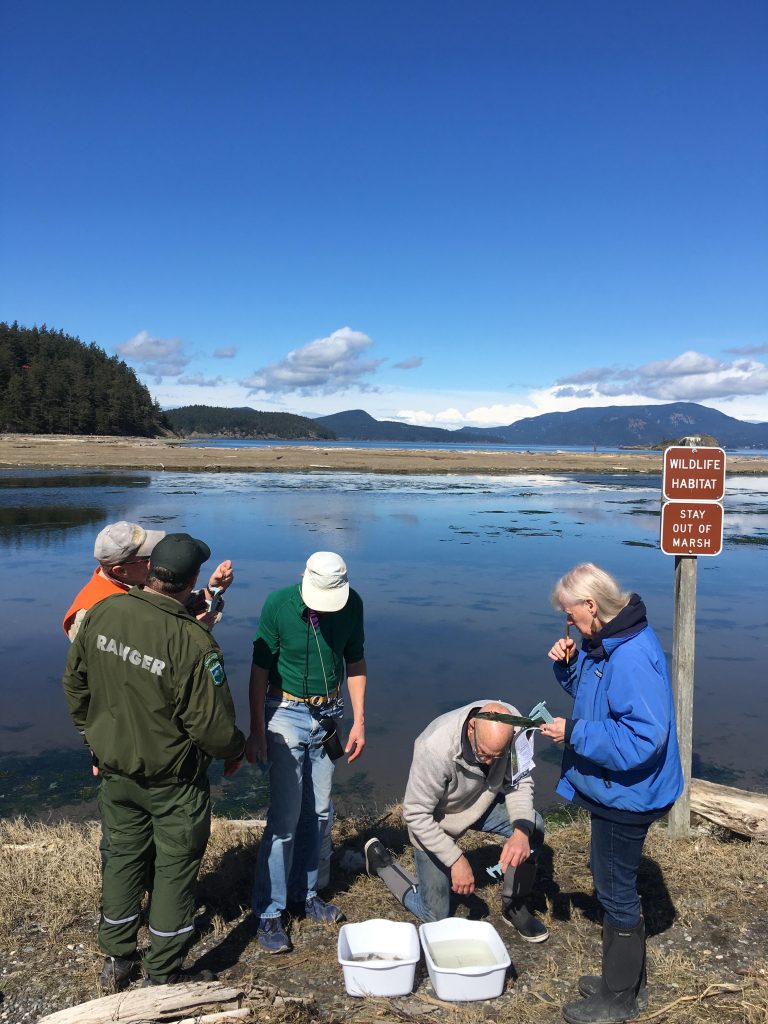
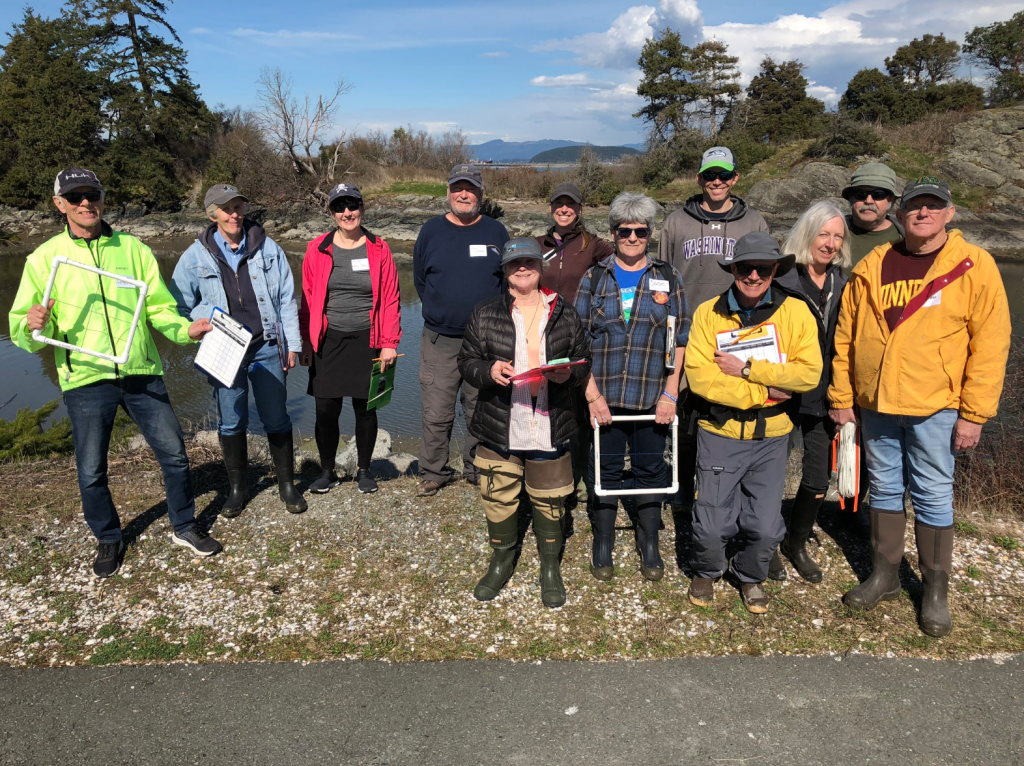
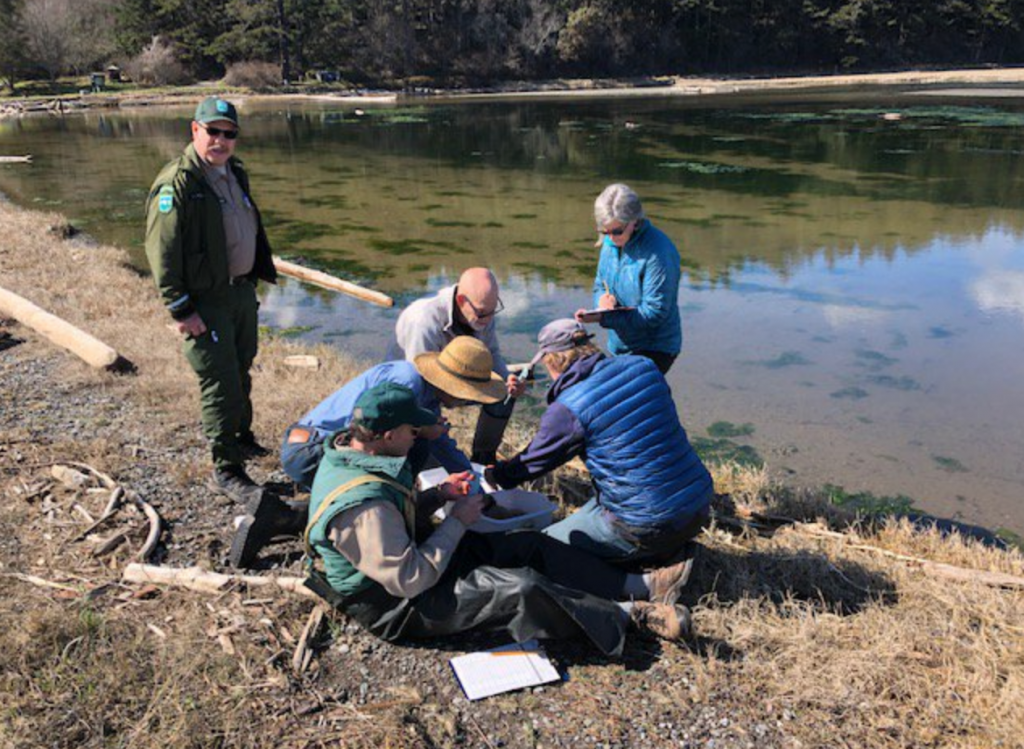
Meanwhile, the Harper and research communities have not been idle. Jenise Bauman and students from Western Washington University started collecting data on the salt marsh soils and vegetation in 2016, while in 2017 community members joined Washington Sea Grant’s Crab Team to establish a monitoring site in the upper estuary.
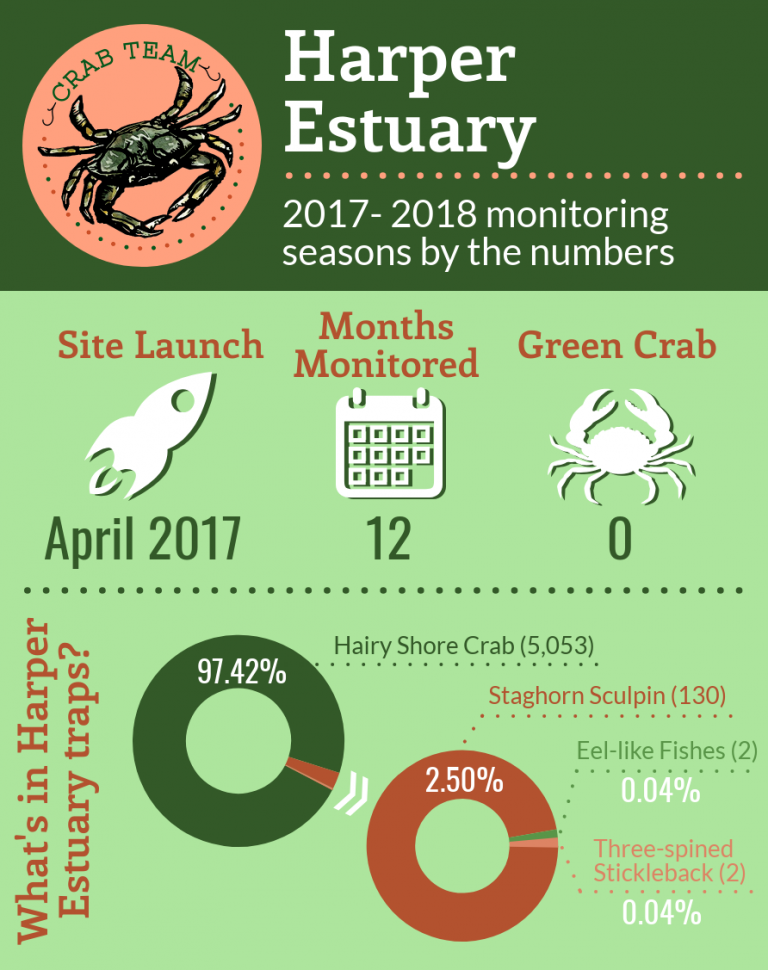
During the first two seasons, the Harper Crab Team has counted 5,000 hairy shore crabs and landed a handful of fish. Jim Heytvelt expressed the sentiments of other team members, “How many ways can you spell HEOR? We would get excited to see a sculpin or stickleback.” While diversity is low, Harper is an excellent example of the importance of Crab Team data beyond just looking for green crab.
Without the efforts of the Harper Crab Team and teams at the other 50+ Crab Team sites, our understanding of the mobile critters in these estuaries would be limited in volume and scope, if data would even exist. There would be little evidence of change (or lack thereof) after restoration and no ability to compare with similar locales and answer questions like: Will there be more species moving in with the tide? If there are changes in the community, will they happen immediately or over time?
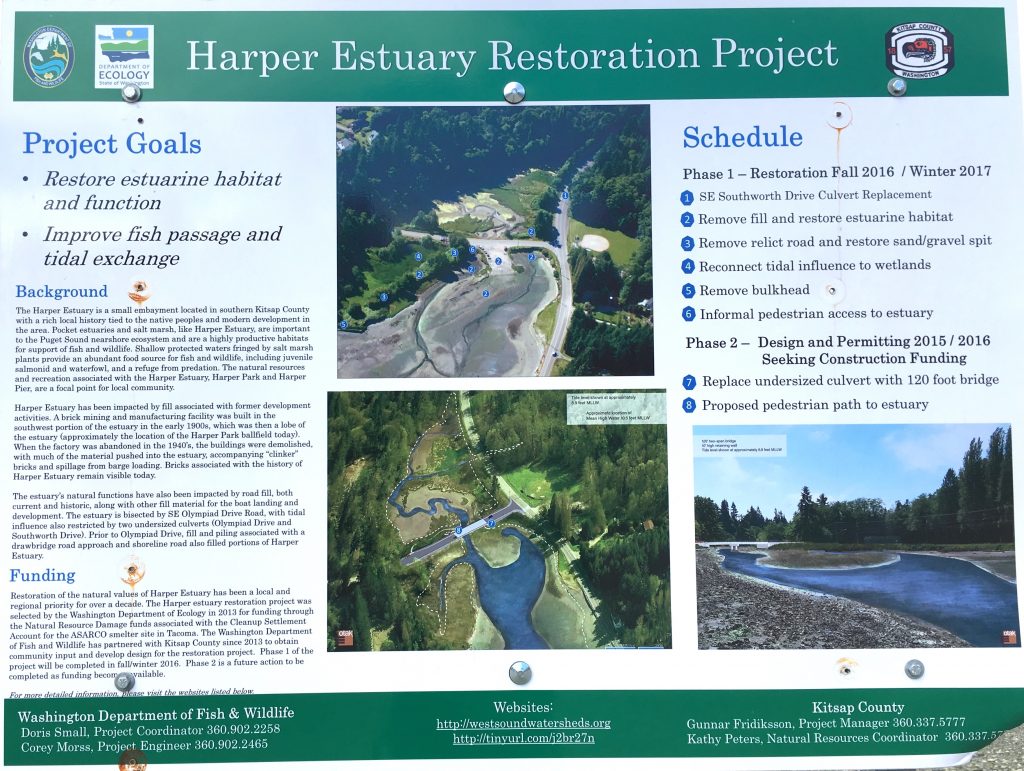
Sign posted along Olympiad drive, describing restoration efforts and ambitions. (click to enlarge)
Sign posted along Olympiad drive, describing restoration efforts and ambitions. (click to enlarge)
Harper Future
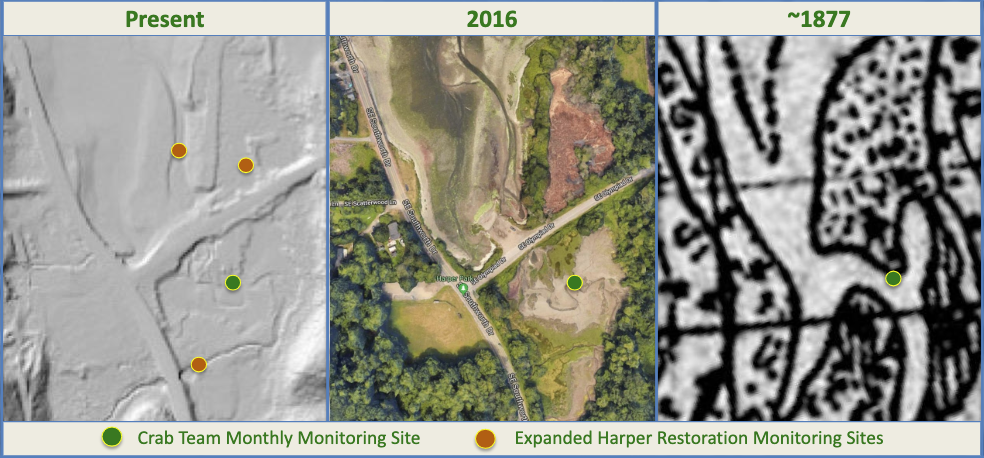
Particularly with the breach of the freshwater marsh, Harper is already experiencing significant changes, even as we await funding decisions to reestablish unimpeded flow into the upper estuary. Thanks to support from Kitsap County, through the Department of Ecology, Jenise Bauman’s work on vegetation and soils will be expanded in 2019, and UW partners will look at shoreline organisms and habitat. Crab Team Program Assistant Kelly Martin will lead members of the Harper Team and others in shorter term, expanded trapping and molt surveys in the newly restored marsh and downstream and upstream of the culvert. In addition to the data regularly collected by the Harper Crab Team, this extra information will give a better picture of how the estuary community changes over time with restoration.
Visit Harper some time as a Crab Team Tourist or just stop by to enjoy the wildlife, dive the pier, reflect on history and our shoreline fingerprint, paddle, explore the beach and enjoy the views of Central Puget Sound. Your even have a good chance of stumbling upon a member or two of this community Crab Team, just out for a neighborhood stroll.
-Jeff Adams
Photo Gallery
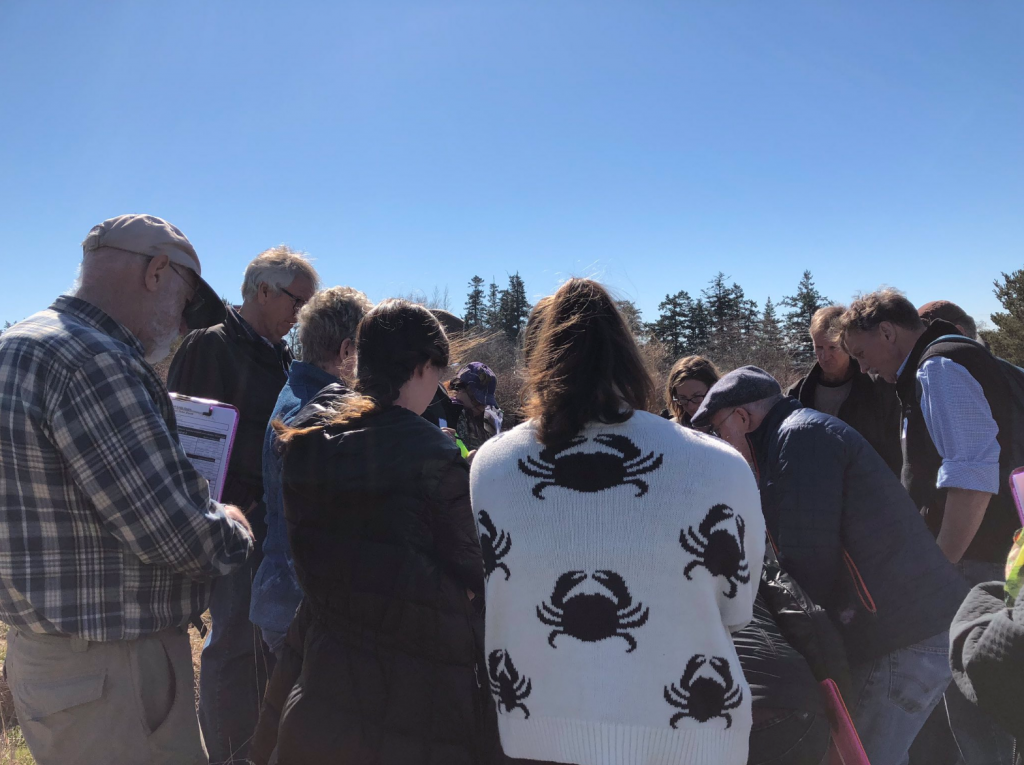
We love to get the virtual experience of monitoring with all of the Crab Team volunteers. Do you have a photo to share? Send it to crabteam@uw.edu. (Click on arrows to scroll, and photos to enlarge for more detail.)