
Creature Feature:
Dungeness Crab
Species Name: Metacarcinus magister
Common Name: Dungeness Crab
Species Code: MEMA
Geographic Range: Pribilof Islands, AK, to Santa Barbara, CA
Size: Up to 230 mm (9 in), but usually less than 190 mm (7.5 in)
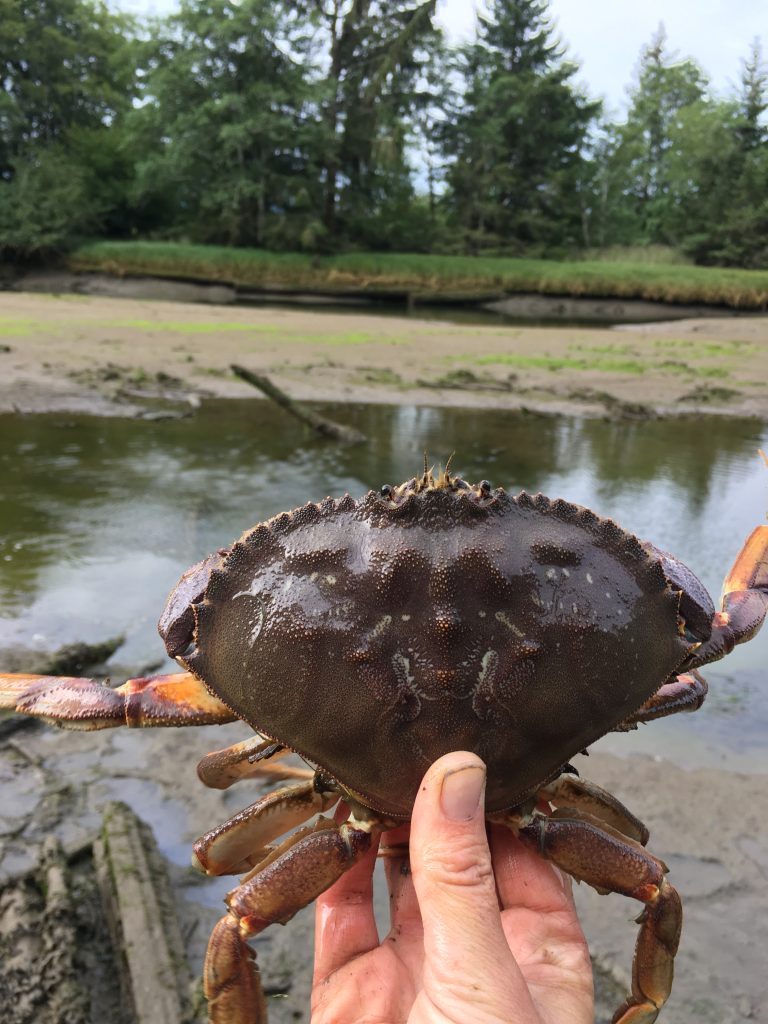
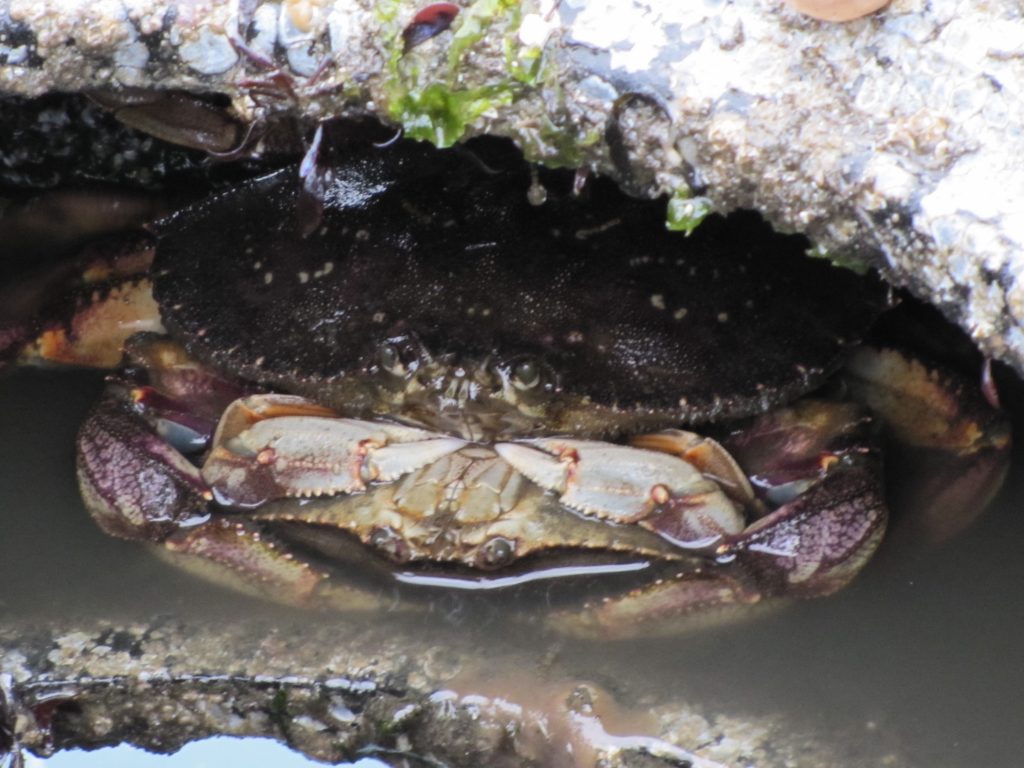
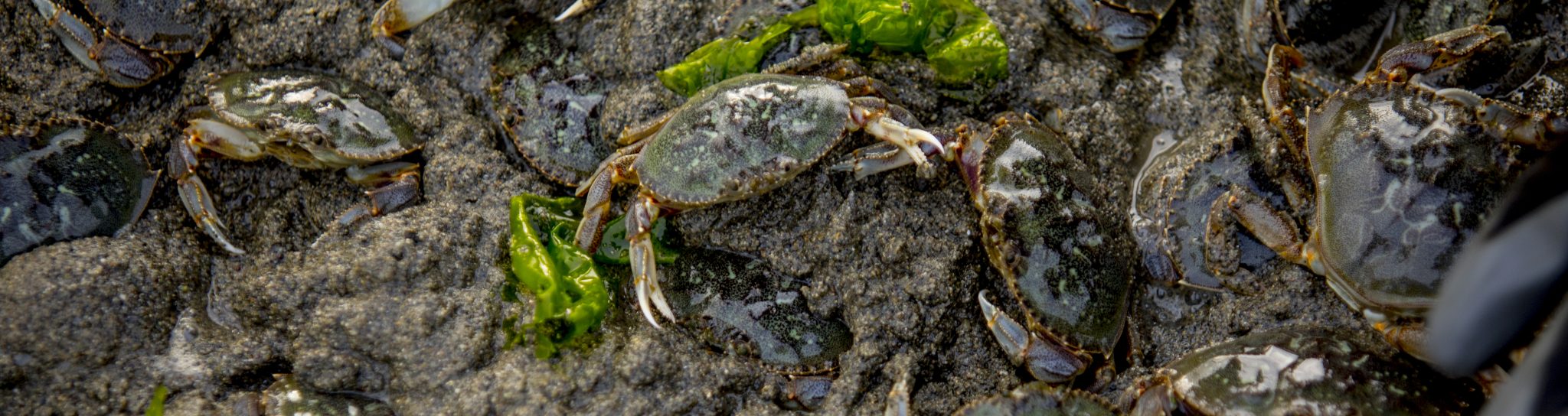
Hear the word “crab” and what do you picture? For must of us, it’s a Dungeness crab – a well-known, abundant predator in the nearshore waters of the Salish Sea and outer coast, as well as the target of important commercial, recreational and subsistence fisheries. It is also as quintessentially Northwest as salmon and orcas. In fact, the crab gets its common name from the Dungeness area (Dungeness River and Dungeness Spit) along the northern Washington Coast of the Strait of Juan de Fuca. It was in this locale where the first commercial fishery began in 1848, making it the oldest shellfishery in the northeastern Pacific. Since that time, the fishery has grown to be among the most valuable in the United States; in 2016 it was ranked sixth out of all U.S. fisheries, with a value of more than 222 million dollars (NOAA 2018).
Of course, the native peoples of the region have recognized the crab’s value for millennia, and oral histories and midden excavations indicate it was an important “beach food” from Alaska to central California. Typically, native harvesters would wade into shallow water and gather crabs by hand. In some places, fishermen would wear cedar bark visors to shield their eyes from the water’s glare and skewer their skittering quarry with short, wooden spears. Rakes may also have been used to efficiently harvest large numbers of crabs; one midden at an ancient village site in Netarts Bay, Oregon, contained the remains of more than 14,000 crabs across a range of sizes (Losey et al. 2004). Traditionally, crabs were steamed in sand-lined pits on the beach long before the iron or aluminum pots of the modern crab boil. Native peoples called the crab different names in different places: hasaamats (Mahousat), galmoos (Port Simpson), and Xíxyik’ (Coast Salish), among others.
A Deep Dive into Dungies
At Crab Team, we call this particular crab MEMA; shorthand for the scientific name of the species – Metacarcinus magister. It’s not even close to the most abundant crab in our sampling efforts, but MEMA is an important seasonal resident of pocket estuaries. The life history of MEMA can be divided into four distinct phases characterized by changes in growth, behavior and habitat. These include the larval phase, juvenile (up to a year old), subadult (the awkward ‘teen’ years; 1 to 3+ year olds), and adult (>3+ year olds). While there is seasonal variation in this life history across the range of the species from Alaska to southern California, the general pattern is consistent (Jensen 1995). Timing is predominantly dictated by changes in light and temperature.
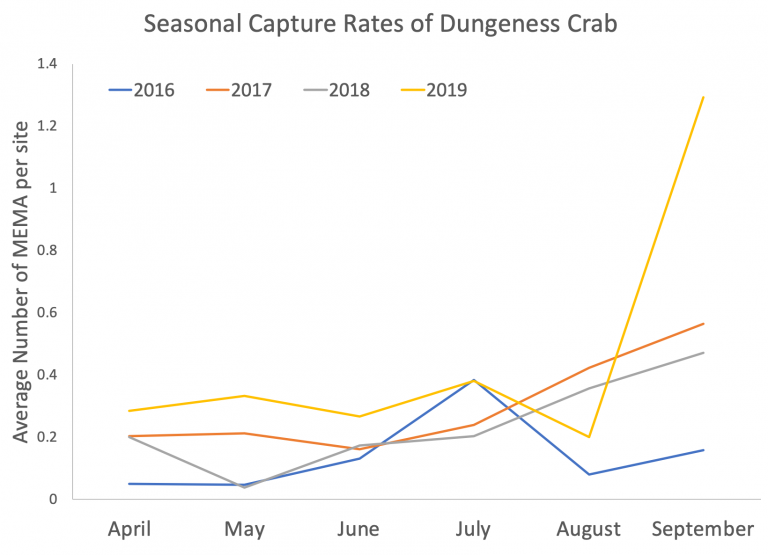
Seasonal capture rates of Dungeness crab at Crab Team sites from 2016-2019.
MEMA, like many other marine creatures, has an ocean-going larval phase that can disperse hundreds, if not thousands, of miles. Newly hatched larvae enter the water column as zoeae, which look more like a mosquito than a crab, and spend months drifting on ocean currents (Buchanan and Milleman 1969). Their survival, and the overall duration of their early development, is dependent on water temperature and available food (Buchanan and Milleman 1969; Reed 1969, Moloney et al. 1994, Lough 1976, Sulkin et al. 1998a). To grow up big and strong, these zoeae need a fatty, or lipid-rich diet, including smaller phyto- (plant) and zoo- (animal) plankton. If conditions are right, the zoeae transition through five stages, each looking slightly more crab-like than the previous one. Throughout this early phase the zoeae are at the mercy of the winds and currents; sometimes they’re carried along the coastlines and other times farther out to sea (Shanks 2009). They are weak swimmers overall; however, by swimming upward or downward in the water column in response to light, they can influence the overall direction of their movement (Shanks 1986, Johnson et al. 1986, Moloney et al. 1994). With a little luck the zoeae will remain close to shore and in the general vicinity of good bottom habitat as they near their next transition.
When the time is right, zoeae metamorphose into a short-lived megalopae stage (Poole 1966), which looks like a cross between a lobster and a tadpole (author’s note: they are adorable). Unlike zoeae, megalopae don’t feed. The sole purpose of this unusual life stage is to find suitable settlement habitat, and they are well-equipped for the task. Literally bristling with sensory organs, megalopae smell, taste and feel their way around for up to two weeks. The chickpea-sized megalopae are also proficient swimmers and frequently swarm at the surface in nearshore areas, where they await environmental cues that lead them to good habitats. Choice experiments done by UW researchers show that megalopae prefer complex shell and eelgrass over sandy or muddy bottoms (Fernandez et al. 1993). This preference is critical because the process of transition to bottom-dwelling life is fraught with peril, and an unlucky juvenile crab caught out in the open would make a quick snack for a larger predator (Armstrong et al. 1995).
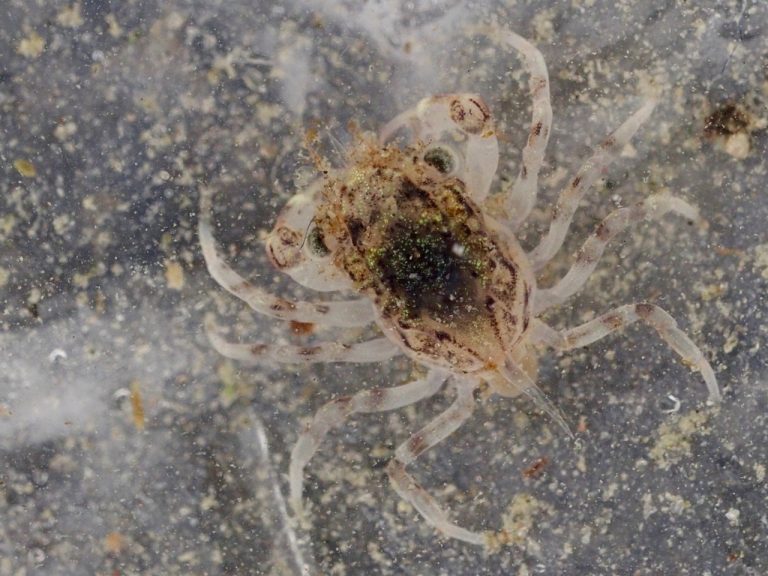
Dungeness crab megalopa. Photo courtesy of Wendy Feltham.
Mobile MEMA
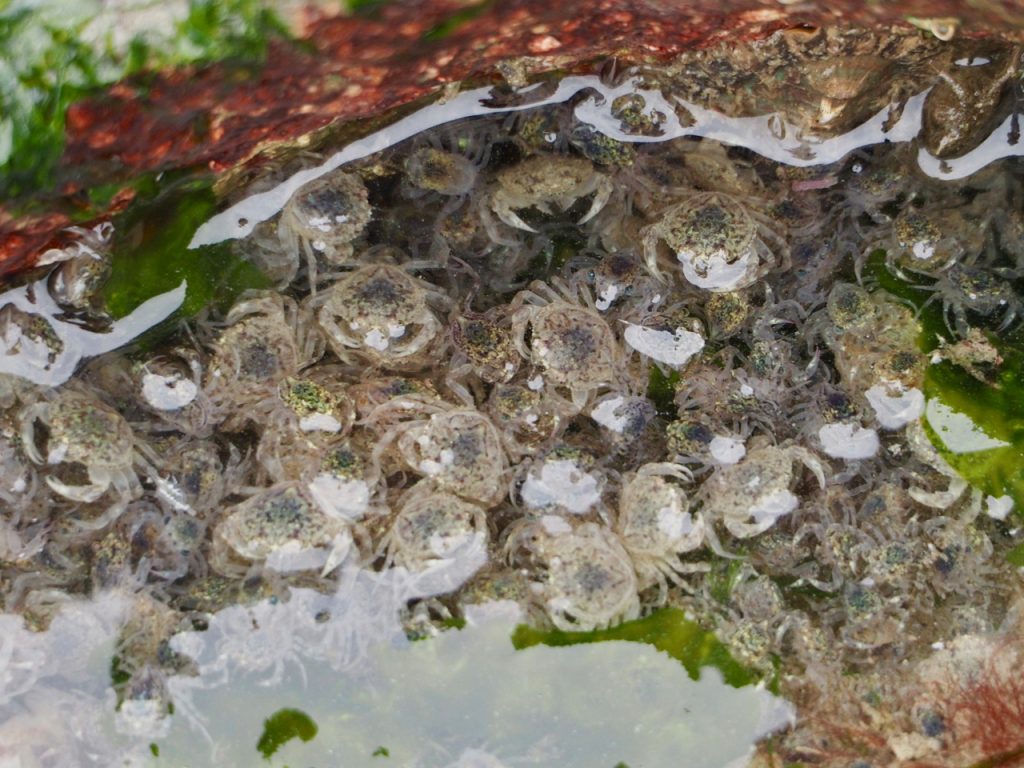
Juvenile MEMA completely depend on shell and eelgrass habitat in many estuaries. A dearth of these critical nursery habitats can severely limit local MEMA populations. Juvenile crab feed entirely within protective habitats and compete for space with each other (Iribarne et al. 1994), hairy shore crabs (Visser et al. 2004), and potentially even small European green crabs. Juvenile crabs inhabit intertidal shell and eelgrass for about 2.5 months during their first summer, grow rapidly through the first 4-5 molts (Dumbauld et al. 1993), then emigrate from these intertidal habitats to subtidal locations because of changes in diet and physical tolerances (e.g. temperature, salinity).
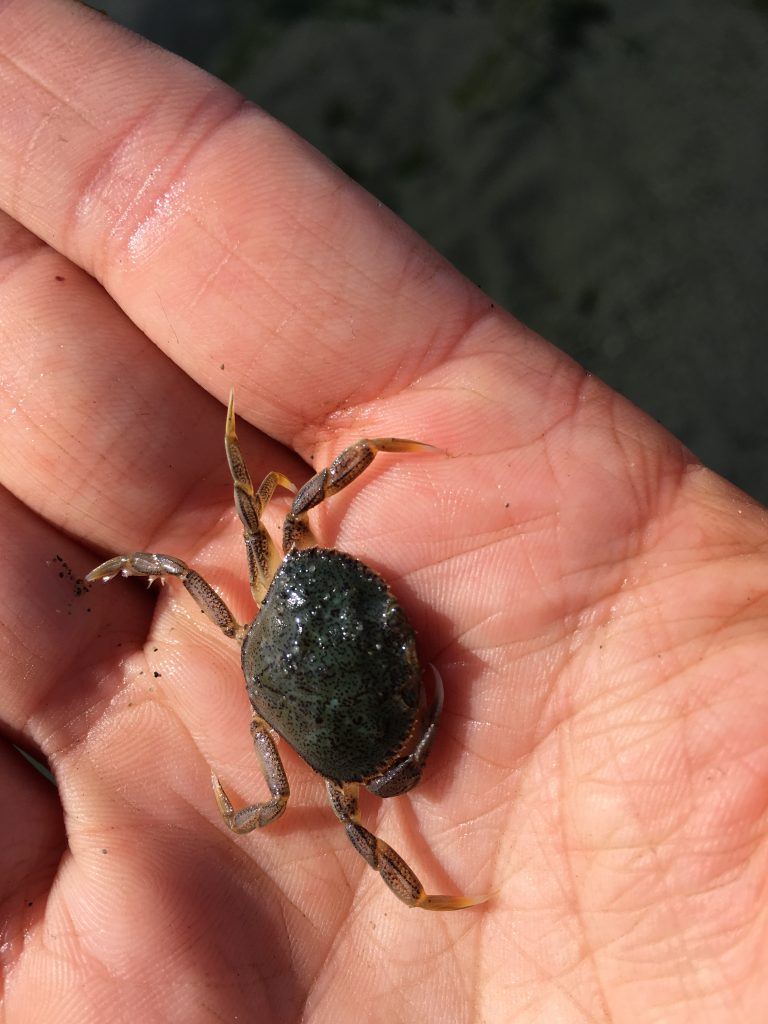
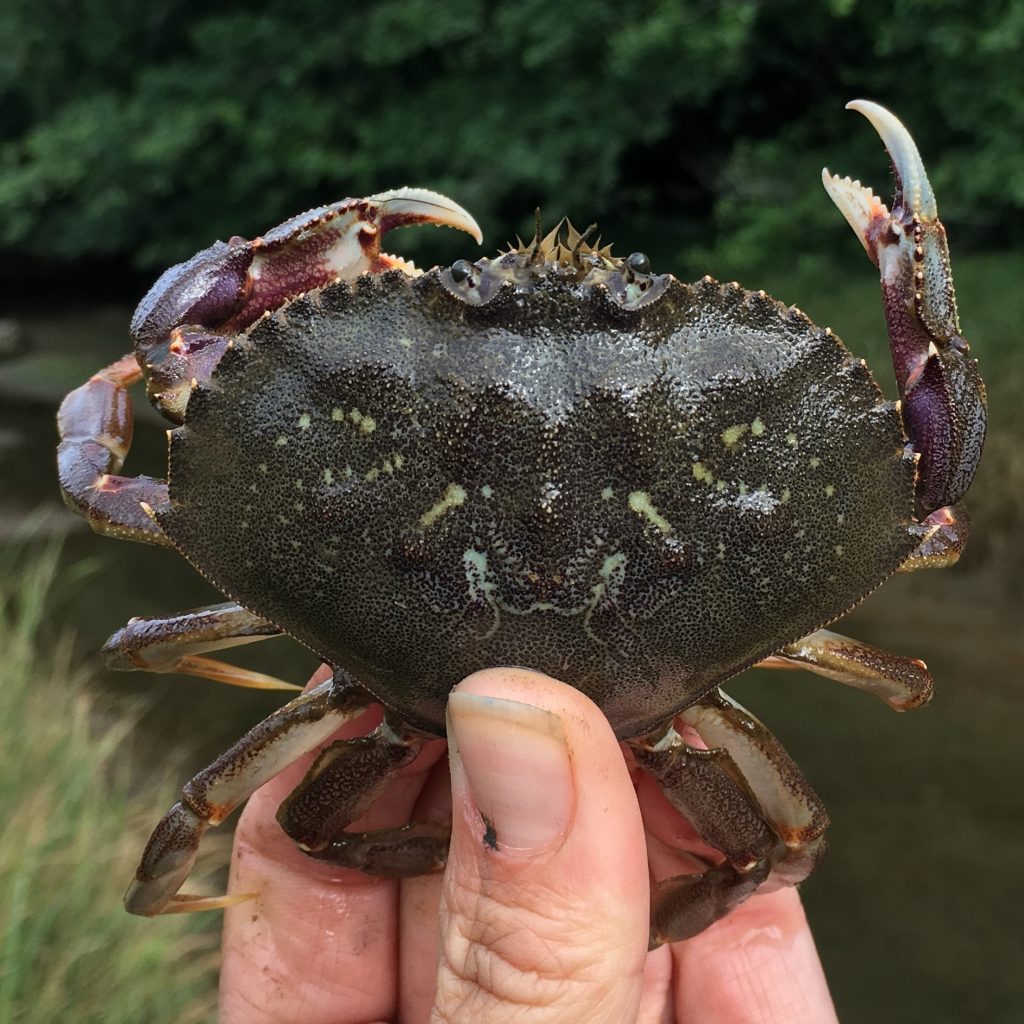
Subadult Dungeness crab. Photo courtesy of Kelly Martin.
Subadult MEMA are sometimes captured during Crab Team monitoring efforts. These 1+ to 3-year olds typically occur in sandy nearshore areas that are usually less than 60 feet but sometimes as much as 120 feet in depth (Tasto 1983, in Wild and Tasto 1983). Subadult crabs tend to be most numerous in estuaries, where individuals take advantage of abundant food and grow quickly in the warm, shallow water. Their appetites can dramatically impact local ecosystems. For instance, in Willapa Bay, Washington’s largest coastal estuary, abundant subadult crabs ravenously consume all available prey and are forced to migrate with the rising tide more than 0.5 mile or more to scour the tideflats for food (Tasto 1983, in Wild and Tasto 1983). Once crabs reach sexual maturity at about 2-3 years of age (Gutermuth and Armstrong 1989), they migrate to deeper waters.
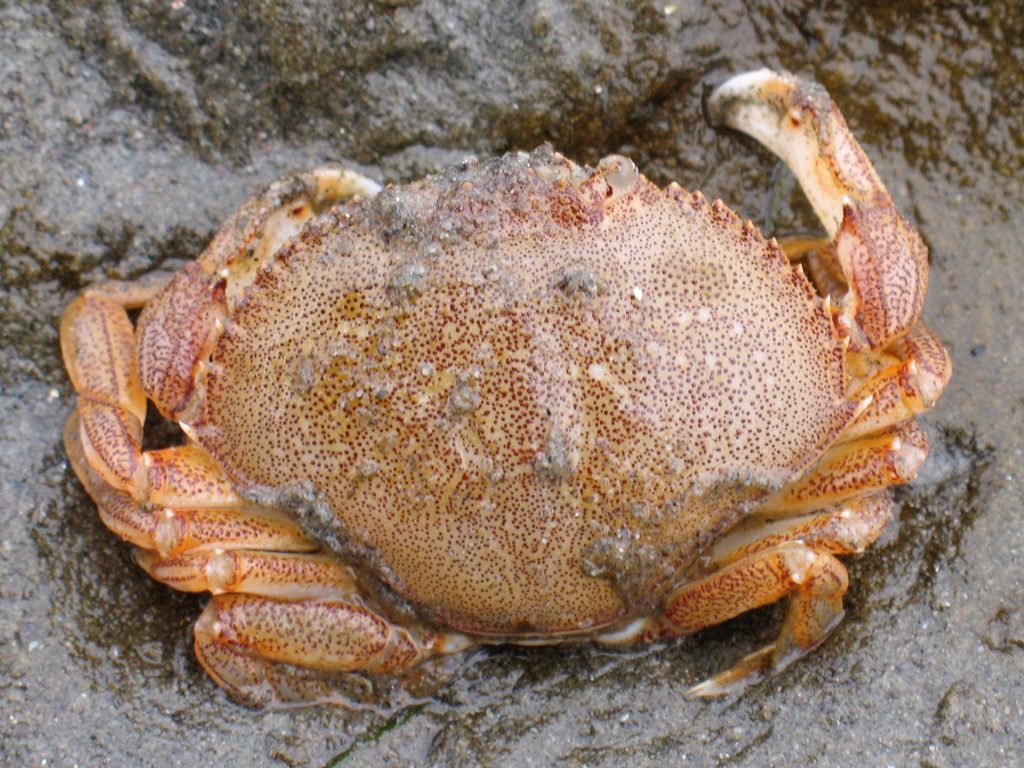
Adult MEMA are not common in intertidal areas and shallow pocket estuaries, and generally prefer deeper subtidal habitats of coastal and inland waters. While capable of walking long distances (Collier 1983, in Wild and Tasto 1983) most adult males are relatively sedentary and only migrate inshore to mate during the spring and summer (Gotshall 1978). Similar patterns have been observed for females; in a study conducted in northern California, researchers (Diamond and Hankin 1985) recovered about 46% of tagged female crab within about 1 nautical mile of their release location after one year. Females also move inshore to shallow sandy areas during the spring, possibly because of molting, mating or to brood their eggs. There is even some evidence that egg-bearing females (Armstrong et al. 1987) exhibit site fidelity and may return year after year to the same brooding locations and form large partially buried groups in sand habitats (Armstrong et al. 1987).
Pocket Estuary Team players
Along with being important predators (Gotshall 1977), MEMA are valuable prey (Reilly 1983, in Wild and Tasto 1983) to more than just humans! Zoeae are eaten by a variety of animals, including planktivorous fishes (Stevens et al. 1982). The larger, more conspicuous megalopae are a particular favorite of Chinook salmon (Hunt et al. 1999). Bottom-dwelling juveniles are common in the diets of fishes, including Pacific hake, sablefish, Dover sole (Buckley et al. 1999), staghorn sculpin (another Crab Team favorite) (Armstrong et al. 1995), and copper rockfish (Prince and Gotshall 1976). Birds, such as white-winged scoters (Grosz and Yocom 1972), and mammals, including river otters and raccoons, opportunistically consume small crab at low tide (Larson 1984). By the end of their first or second year, MEMA are too large for most predators to subdue. Nevertheless, they are still consumed by large fish, such as white sturgeon and cabezon, wolf eel, lingcod and various rockfish (Gray 1964) and even white shark. MEMA have also been recorded in the diets of marine mammals such as sea otters (Laidre and Jameson 2006).
Despite this gauntlet of hungry mouths, MEMA continue to thrive in pocket estuaries and elsewhere. The biggest threats to the species remain human-caused: loss of estuarine habitat in places like San Francisco Bay and the degradation of shell and eelgrass nursery habitats, as well as changes in water temperature and chemistry associated with rising temperatures and ocean acidification (Armstrong et al. 2010 in Kruse et al. 2009). The health and vitality of MEMA populations largely depends on how we address these larger challenges.
– P. Sean McDonald
**While we try to link you directly to the research we reference, some of the studies cited in this article are not open access. If you have any questions about any of the works cited here, please feel free to reach out to crabteam@uw.edu.
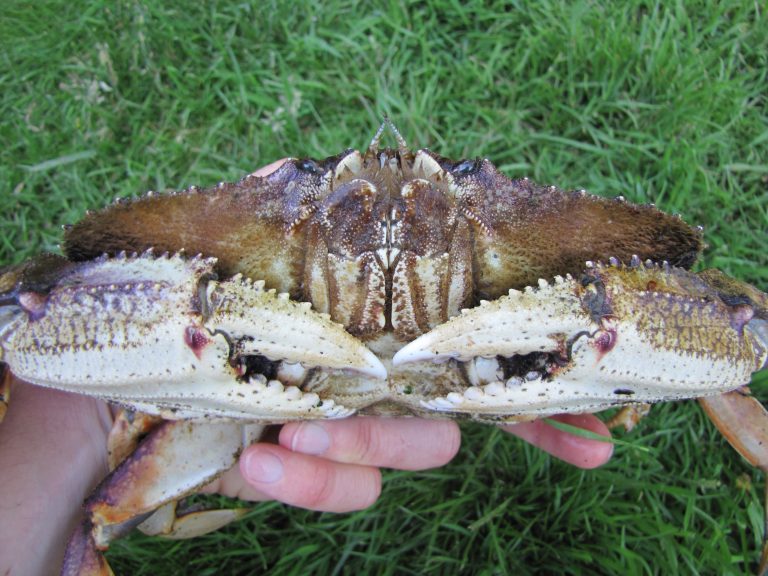
Adult Dungeness crab. Photo courtesy of Jeff Adams.