Site Spotlight:
Drayton Harbor
Number: 367
Region: Blaine
Launched: 2017
Site Captain: Rondi Nordal
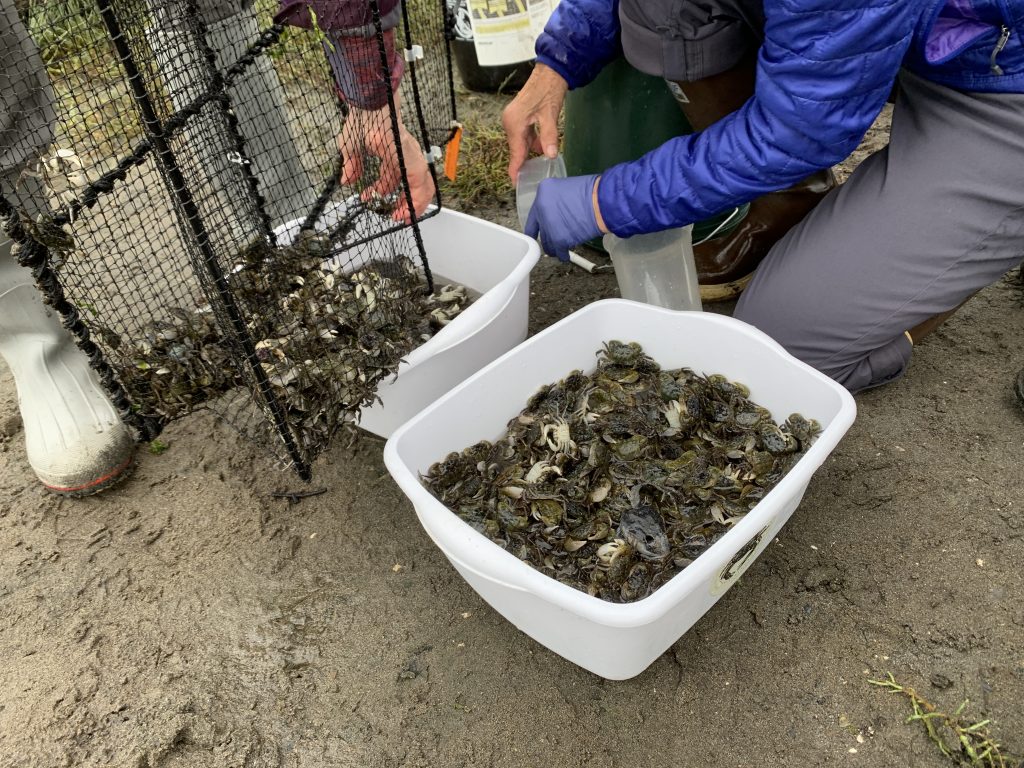
On August 22, 2019, Margaret Santamaria and Margarette Grant were scanning a beach in Drayton Harbor during a COASST marine debris survey and noticed an unusual shell on the shoreline. Because they are also Crab Team volunteers, they immediately knew which crab this molt came from—the invasive European green crab. Since this detection, collaborative management efforts have been launched to remove as many green crabs as possible. To date more than 7,000 traps have been set in Drayton Harbor alone, capturing more than 400 crabs in the last two years. You might say that detection was, “the crab that launched a thousand traps,” but the story of Crab Team in Drayton Harbor actually starts several years before green crabs were ever detected there, and offers a perfect miniature of how volunteer monitoring is at the core of efforts to protect the Salish Sea.
Site Start-up
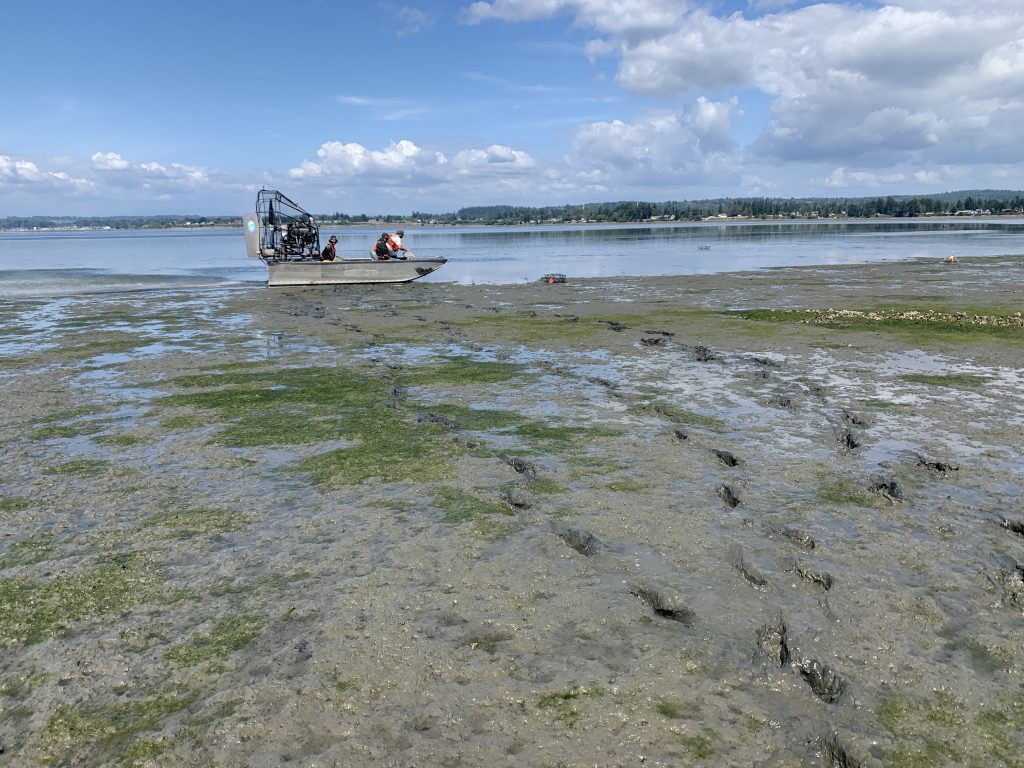
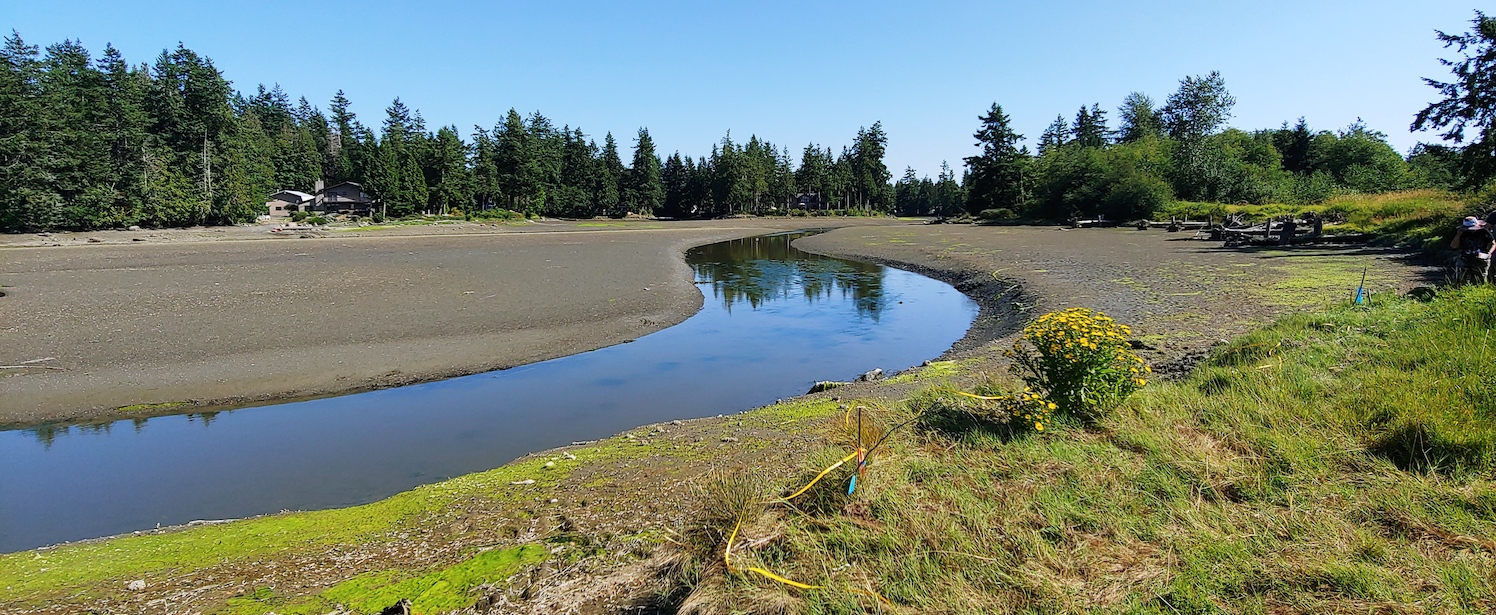
The monthly Crab Team monitoring site at Drayton Harbor was originally established at the mouth of California Creek in 2017, where volunteers and staff at a partner organization, RE Sources, have continued to set six monthly traps, from April through September for the past five years. From the beginning, Drayton Harbor had an important role to play in the Crab Team network, as the northernmost monitoring site and literally within sight of the Canadian border. Making this site work has not been without challenges, but for every challenge, the right people have seemed to pop up at just the right time to meet it. First, the location of the site at California Creek is on private property, and it is never a given that we can reach someone to request permission, let alone that they will be OK with having folks on their property. Surprisingly, the owners at that time not only responded to our letter, and gave Crab Team the go-ahead to monitor, but they also drove across the border from their home in Canada to give staff a personal site tour! Since then, Whatcom Land Trust and then Blaine-Birch Bay Parks and Recreation acquired the land and have continued to allow monitoring access as the activities are consistent with their desire to have a protected natural environment.
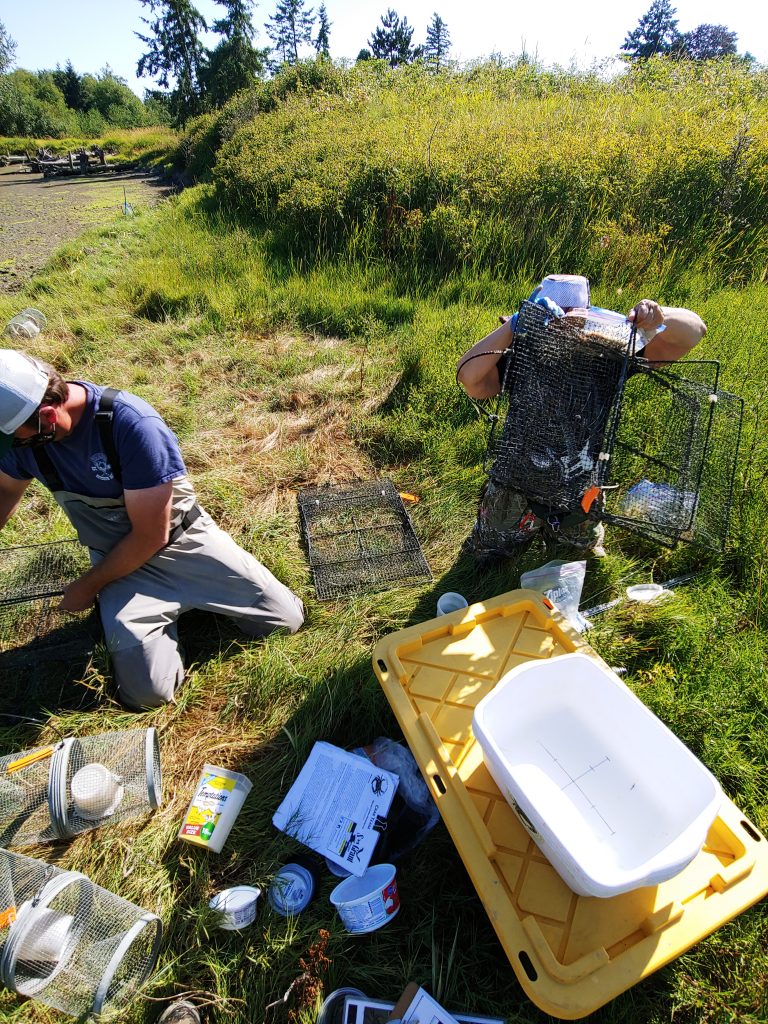
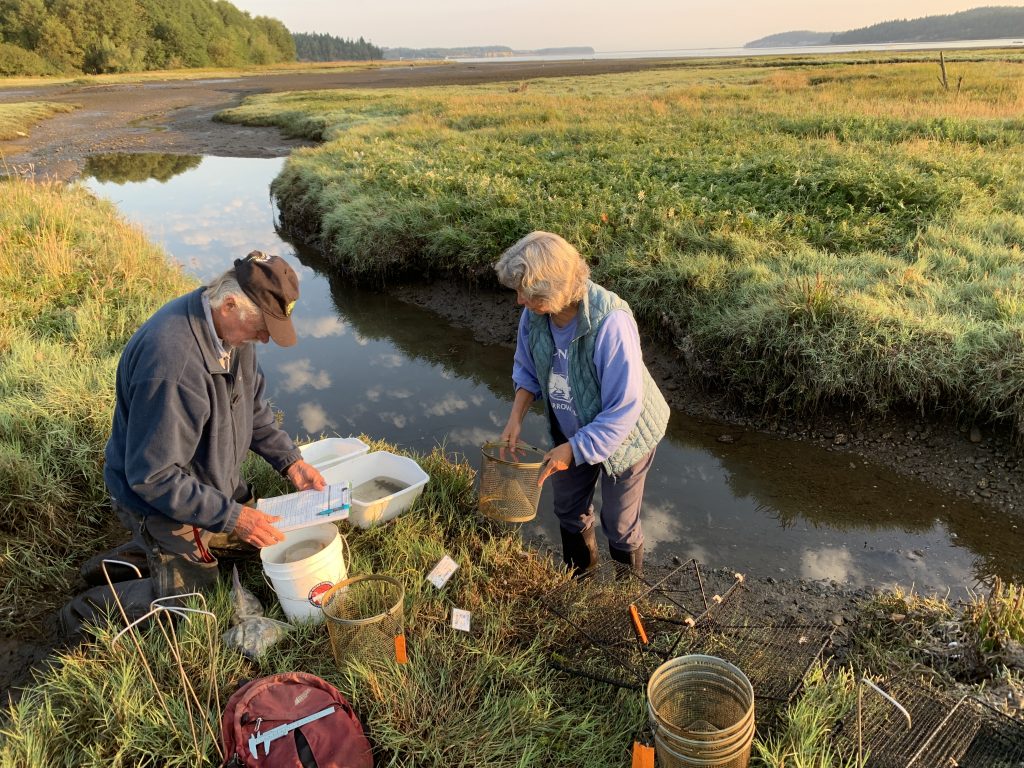
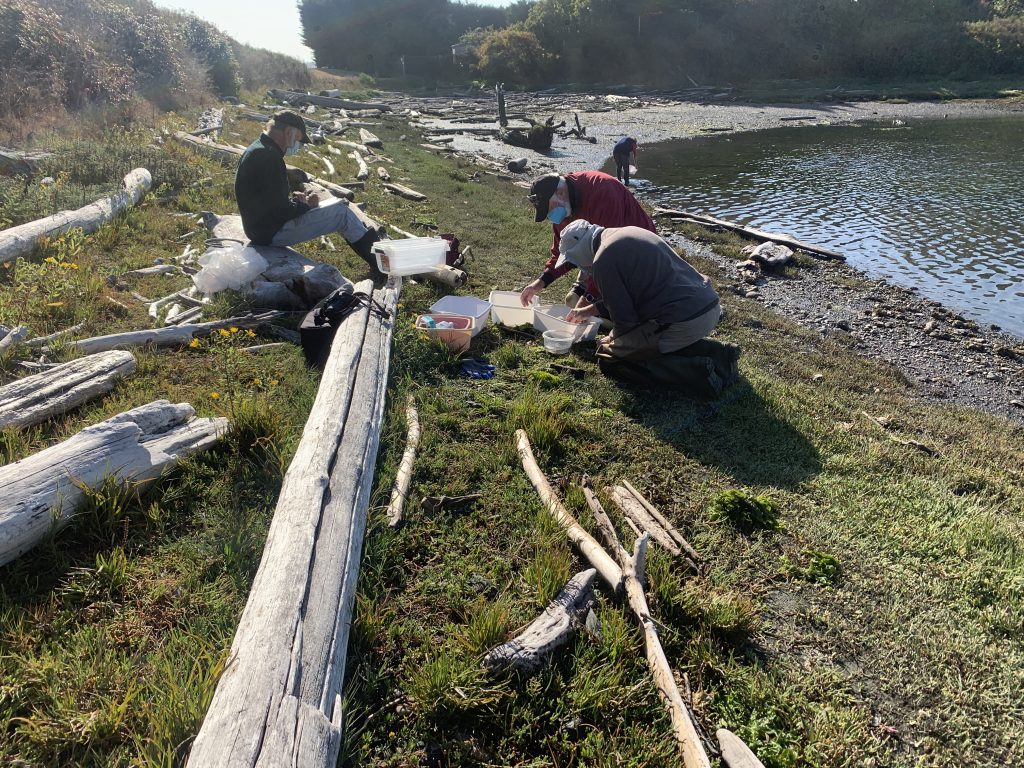
Drayton Harbor Crab Team volunteers (Rob D. and Margaret S.) wrangle traps and crabs during monthly monitoring at Crab Team site at the mouth of California Creek. Photo courtesy of Rondi Nordal.
The second challenge with this location involves the topography of the site. Both the muddy bottom and limiting tides can be quite tricky to navigate. In fact, Crab Team wasn’t entirely sure the mud was doable at all – that is until Vanessa Guerra and Carrie Craig came along and offered to dive in. As two of the original volunteers at this site, Guerra had already gotten her hands on European green crab through her volunteer work in San Francisco, so she knew she was getting into. Both Craig and Guerra have strong backgrounds in biology and had moved to the area so that Guerra could continue her Ph.D. studies in biology at Simon Fraser University in British Columbia. They have expressed a deep professional and personal appreciation for estuaries and salt marshes, because as Craig said, they are “some of the most productive and vital habitats for wildlife.” Craig already had deep roots in the area, having grown up a few miles from Drayton Harbor and even recruited her mother, Barbara, to participate in monitoring. In reflecting on their experience with monitoring, Craig noted that they, “were excited to have the opportunity to monitor a site that didn’t seem to have green crabs yet, and hoped to be part of the safety net of early detection and monitoring.” This original team has since moved on to continue careers in biology and marine science, but Craig hopes that through the efforts of Crab Team volunteers and partners, “the biodiversity of the waters of Washington State can be protected.”
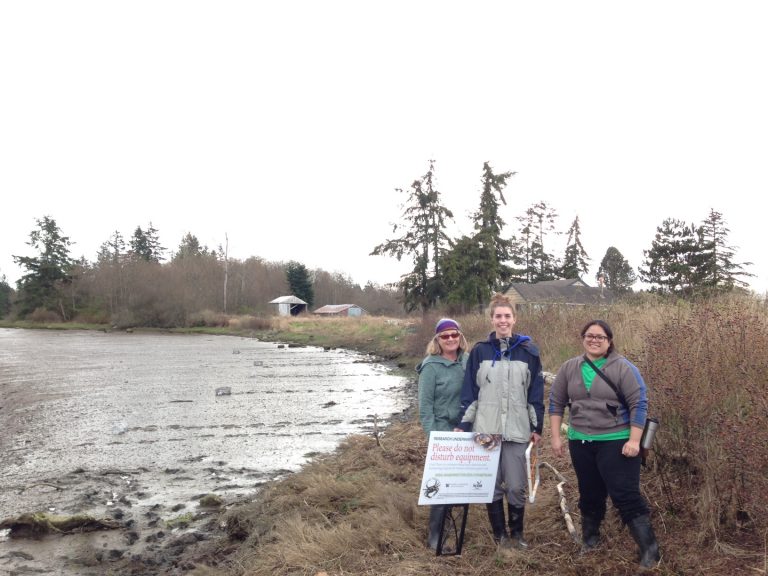
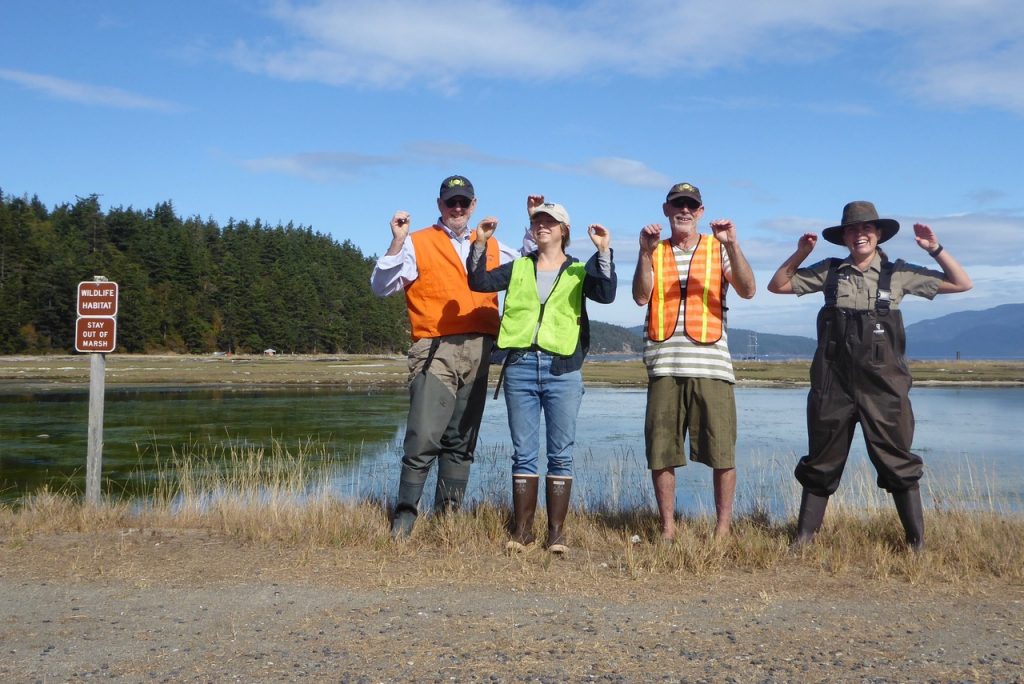
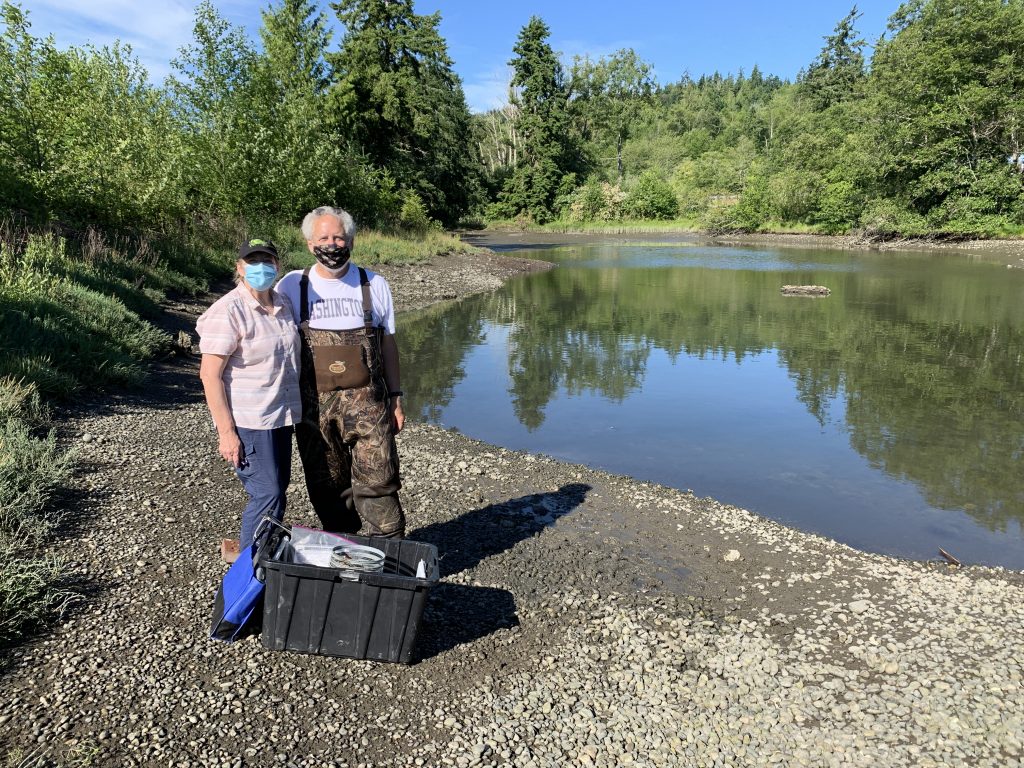
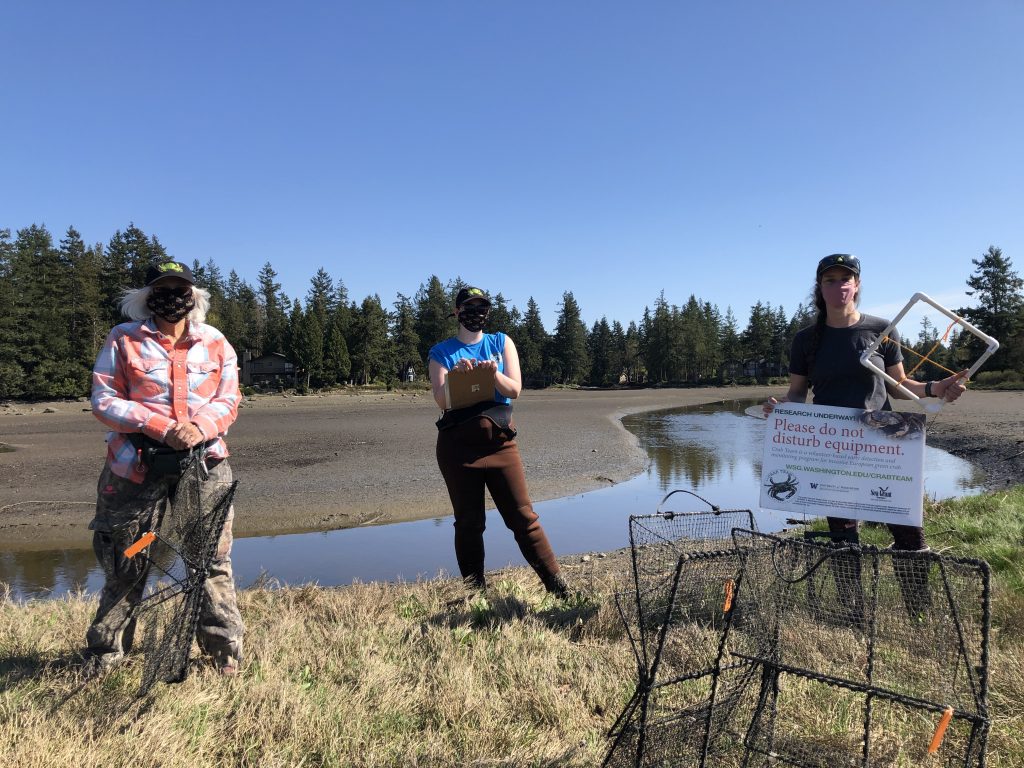
Original Crab Team volunteers at Drayton Harbor in 2017- Barbara Craig, Carrie Craig and Vanessa Guerra (left to right).
Monitoring Continues
A lot has changed at Drayton Harbor since this original trio conducted monthly monitoring, but the monthly Crab Team sampling protocols have continued just as before. Volunteers and partners have carried the torch through the years, maintaining a consistent record of all species caught in traps, habitat observations and molts collected. You might wonder, if the early detection function of the site has already been accomplished, why do we keep trapping? The Crab Team network and protocols were designed to collect data continuously, starting before and after the arrival of green crabs, to capture “baseline” data over several years, and then continuing afterward to track any changes in green crab numbers and native species that might occur if green crabs become abundant. Of course we hope they never do.
So, even as managers spend the trapping season criss crossing all of Drayton Harbor with traps, Crab Team volunteers set their three minnow and Fukui traps at the mouth of California Creek each month, just as they have since 2017. Santamaria, one of the eagle-eyed volunteers who spotted the original molt, said that she continues to contribute to these efforts because she is, “concerned about the impact green crab could have on native species.” Since the first detections in 2019, the Drayton Harbor monitoring team has captured two green crabs during Crab Team sampling, both during 2020, and everyone is relieved those numbers have stayed very low! This site has had other surprises for us though, in recent years, volunteers uncovered another non-native species in Drayton Harbor—Palaemon macrodactylus (or PAMA for Crab Teamers). Originally mistaken as broken back shrimp, this species had slipped under the Crab Team radar in part because its presence along Washington’s shorelines wasn’t well documented. This discovery is yet another example of how valuable consistent scientific monitoring can be in tracking larger ecosystem changes.
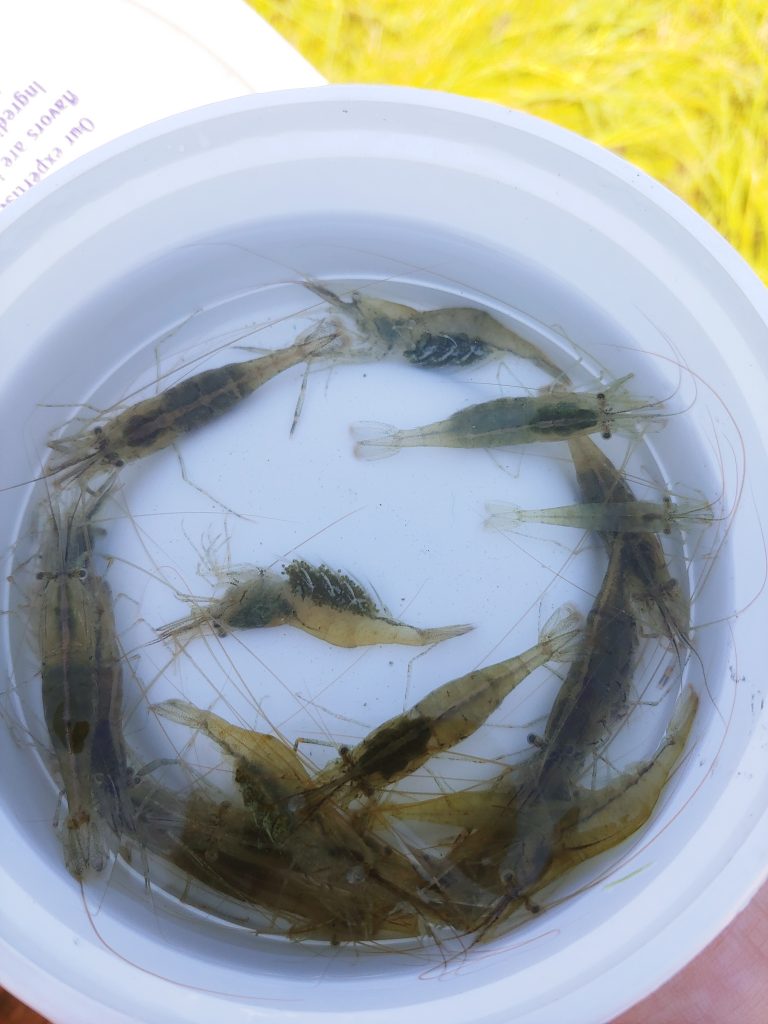
Non-native shrimp Palaemon macrodactylus captured in Crab Team trap during monthly monitoring. Photo courtesy of Rondi Nordal.
Critical Collaboration
In addition to Crab Team volunteers monitoring at this site, RE Sources staff have helped recruit many confident mud walkers from their North Sound Stewards community science program and coordinate logistics for Crab Team monitoring in Drayton Harbor. Their local leadership has made continuous monitoring at this site possible, especially considering the challenges involved in navigating the very sticky mud. Lead scientist Eleanor Hines has coordinated monthly monitoring efforts at the California Creek Crab Team site since 2018, and in 2021, a new AmeriCorps member Rondi Nordal stepped into this role. Reflecting on her experience, Nordal noted that “Crab Team addresses such an important issue. Being part of a program that’s that impactful is really cool, especially at a site that we see [European green crabs].” Nordal also highlights the important role volunteers play in this work, because, “we don’t have enough staff scientists to do this work without volunteers.” With 55 Crab Team monitoring sites across the Puget Sound, we couldn’t agree more! Volunteers truly are the heart of this work, making it possible to keep tabs on a much wider geography than would be possible by staff alone.
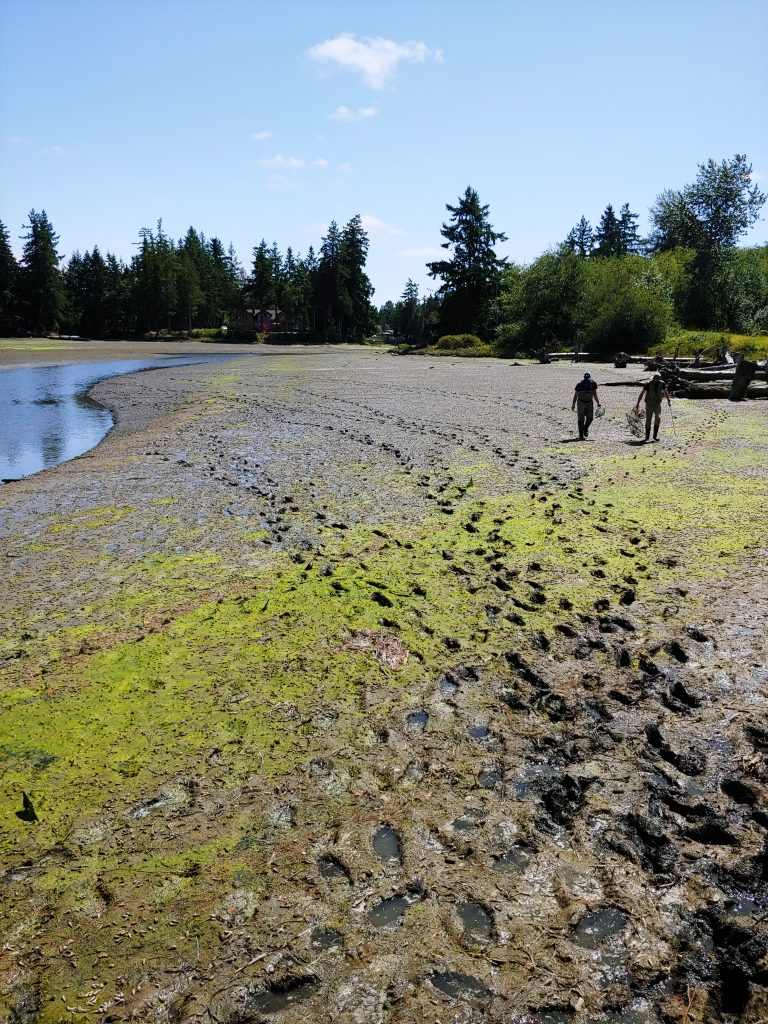
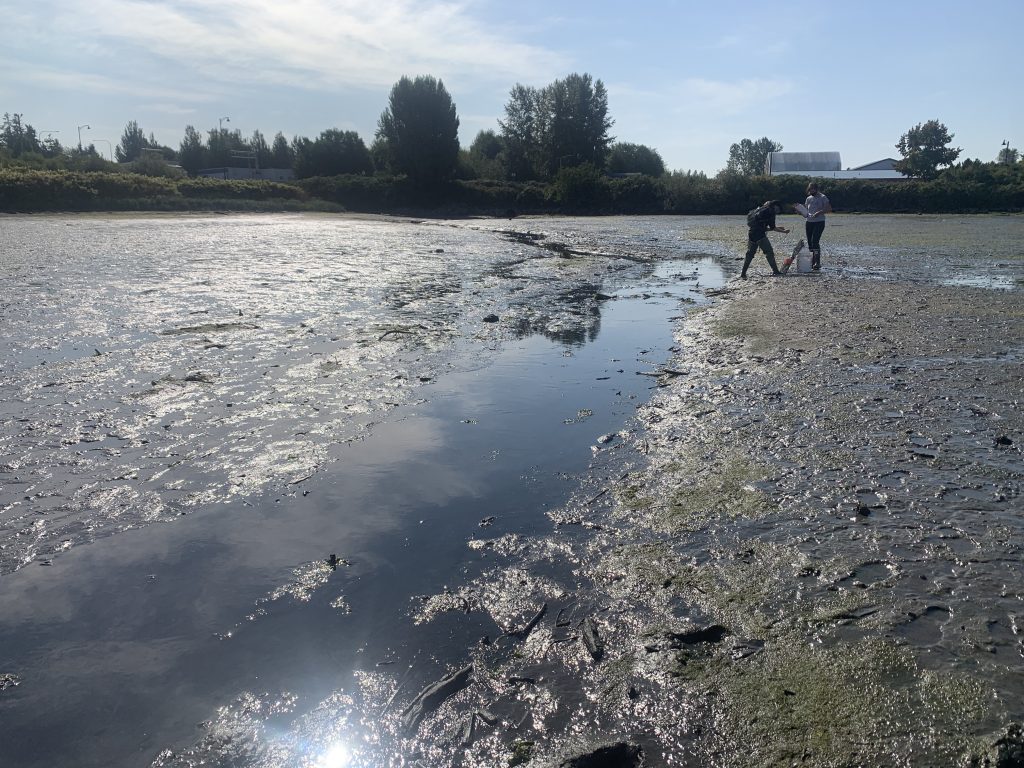
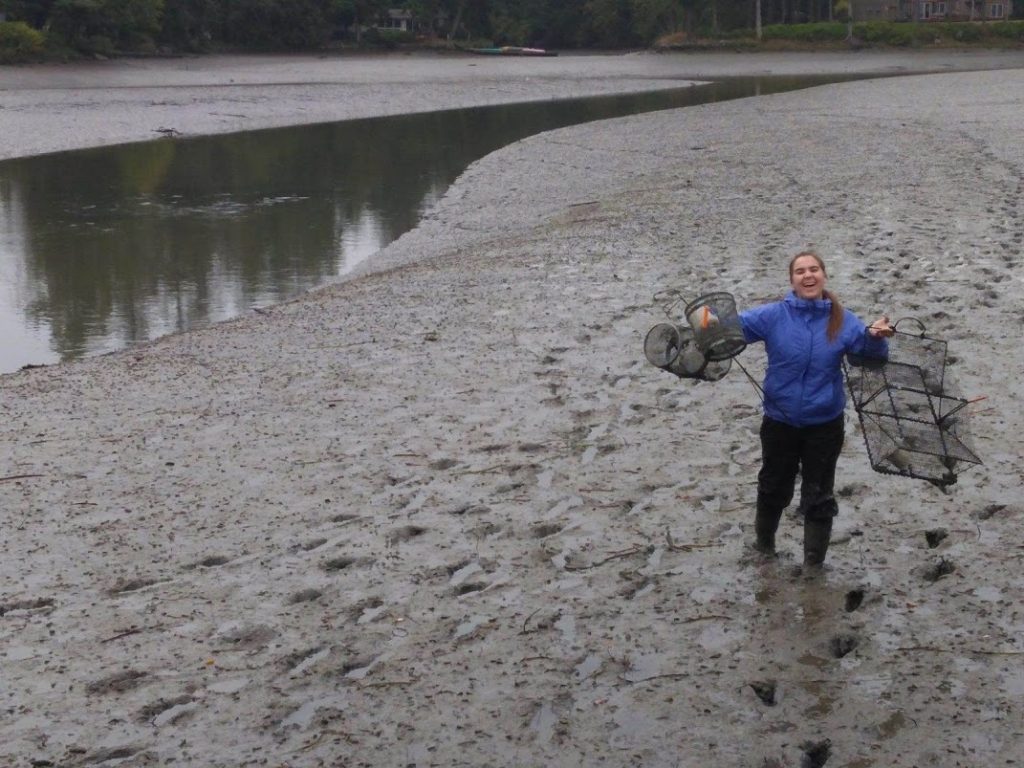
Sticky, muddy terrain makes setting traps challenging at Drayton Harbor, for volunteers and staff alike! Pictured here are Crab Team volunteers Cameron S. and Rob D. Photo courtesy of Rondi Nordal
Right Place, Right Time, Right Team
Drayton Harbor is a great example of how citizen science monitoring networks can support management efforts to find invasive species early, not only through the trapping capacity, but through the human capacity. We call monitors like Santamaria and Grant “Super Volunteers,” not just because they are fantastic, but also because they are cross-trained in multiple ecological projects, in this case Crab Team and COASST. They made the detection while doing monitoring for COASST, but they were only able to do so because they had training about green crab identification. Crab Team is lucky to have a lot of Super Volunteers in the mud with us who also work with programs like SoundToxins, Salish Sea Stewards, Kitsap Beach Naturalists, and the list goes on. By learning about “their beach” from several angles, Super Volunteers develop a really deep level of shoreline knowledge, are able to draw connections across the multiple domains they work in, and get engaged with the agencies that can help. In doing so, they become better able to advocate for the protection of their home beaches. It’s truly impressive to see the impact volunteers can make when they dive into their back yard lagoons!
Since volunteers sounded the alarm in 2019, the story that has continued is a perfect demonstration of the power of collaborative rapid response and management. The rapid assessments and collaborative removal efforts (Read More: Part 1, Part 2) that have been conducted since that time have drawn on multiple agencies and helped managers develop efficient removal techniques that can be used at other sites. While Crab Team monitoring is consistent, removal trapping is adaptive and managers used what was observed in 2020 to strengthen trapping strategies in 2021. Already this strategy of adaptive management is showing promise and early findings suggest that trapping has effectively decreased the green crab population in Drayton. As this year’s field season comes to a close, we look forward to digging more into what lessons were learned through a second year of targeted removal trapping at this unique site in the Salish Sea. Stay tuned!
–Amy B. Linhart
Photo Gallery
We love to get the virtual experience of monitoring with all of the Crab Team volunteers. Do you have a photo to share? Send it to crabteam@uw.edu. (Click on arrows to scroll, and photos to enlarge for more detail.)