
The European green crab (Carcinus maenas) is a small shore crab whose native distribution is in the northeast Atlantic Ocean and Baltic Sea, ranging along coasts from northern Africa to Norway and Iceland. Green crabs have spread to temperate shorelines across the world, including the Pacific Coast of the U.S. Why? Human activities, like marine shipping and commercial fishing, have unknowingly transported green crab far beyond their native range.
Green crab preys on smaller species, competes with larger species for food and habitat and disturbs sediment, leading to habitat degradation. When it becomes abundant, green crab can significantly disrupt native ecosystems. For example, scientists blame green crab for harming the soft shell clam industry in the eastern U.S.
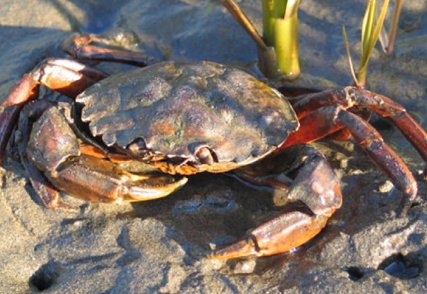
Green Crab in Washington
The presence of green crab in Washington could threaten native habitats and species. This leaves many people with questions about how green crab got here in the first place — and what we can do about it.
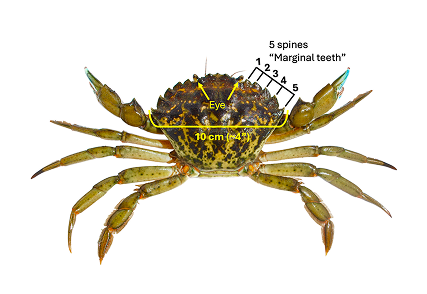
Identifying European Green Crab
This resource summarizes the distinctive features of European green crab and links to additional identification resources.
Distinguishing Features
Although called “green” crab, color is not a distinguishing feature, as the shell (carapace) color of the “green” crab can vary widely. In addition, in the Pacific Northwest we have several native crabs that are also green. The key distinguishing feature of this species are the five spines found to the outside of the eye on the shell. This number of spines is different from any other crab you are likely to see on the beach in our area.
Another distinguishing feature of green crab is its size: at about three inches across the shell, it is much smaller than adult Dungeness or rock crab.
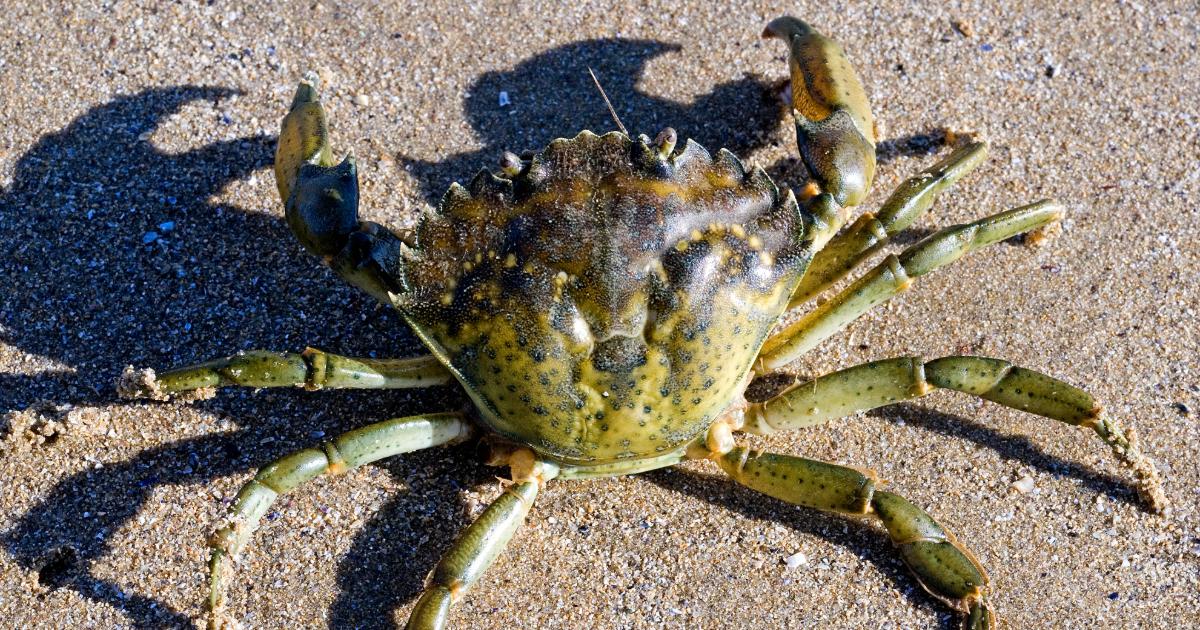
A Crab by Any Other Name…
There are many common names for Carcinus maenas. In Europe, it is simply called the “shore crab” because it is the most common species of shore crab in the native range. This is similar to how we, in the Pacific Northwest, refer to Hemigrapsus species as “shore crabs,” but it can cause confusion when we talk about crabs with our European colleagues. The Latin name Carcinus maenas translates as “raving mad crab.” Thus, the French know this crab both as “le crabe vert” and “le crabe enragé.” In Germany, it is the “strandkrabbe” or “beach crab.” Perhaps the name with the biggest ‘cool factor’ is “Joe rocker,” another common name used in Europe. Recently, the name ‘five-spined crab’ has been proposed, in reference to the distinguishing feature in our region.
Fact Sheet

This two-page informational handout provides an accessible introduction to the green crab. It is designed to be printed so you can keep it with you in the field or easily share it with family, friends and neighbors.
Additional Resources
- Washington Department of Fish & Wildlife: WDFW is the state agency responsible for management of European green crab. They have a number of helpful online resources that provide a statewide perspective on the green crab topic, including the Green Crab Hub.
- U.S. Geological Survey: This site includes a fact sheet, references, maps, and georeferenced data on distribution.
- National Invasive Species Information Center: A host of resources, links, and references on the green crab invasion in the U.S.